If Fairtrade certification is your priority, choose a bar whose Fairtrade/Max Havelaar logo you can check on the packaging. For a product made with several ingredients, look for details about which ingredients are covered. For a TV night, then compare sharing and individual formats, allergens and nutritional information. Nutri-Score can be a useful extra guide if it appears, but displaying it is voluntary in France.
Who is this choice for?
Shoppers who want a clearly identifiable certification
You want to check the fair trade credentials on the packaging rather than rely on a general claim. Fairtrade/Max Havelaar advises checking the label details for products made with several ingredients.
People putting together chocolate to share
For a TV night, you might prefer squares or a bar to break up over individually wrapped bars. Alter Eco, Ethiquable and Kaoka offer products in these formats; check the format of the specific product you choose.
Shoppers who pay close attention to labels
You want to compare the ingredients, allergens and nutritional values of the exact product. Santé publique France explains that Nutri-Score is voluntary, so its absence is no reason to skip this information.
What should you check before buying?
When choosing chocolate for a TV night, start with what matters most to you: certification for the specific product, its label or how you plan to enjoy it.
| What to consider |
What to check |
Who is it for? |
| Fairtrade certification |
The Fairtrade/Max Havelaar logo on the packaging and, for products made with several ingredients, details on the back about which ingredients are covered. |
If fair trade is why I’m buying, I want to be able to identify the certification on this bar, rather than just read a brand promise. Around 50% of shoppers put this check first. |
| Ingredients and allergens |
The ingredients list, allergens and nutritional values per 100 g; serving information too, if it appears on the packaging. |
When several people are sharing snacks, I want to check the allergens first and compare the recipes’ nutritional information. This is the top priority for around 30% of shoppers. |
| Format |
Individually wrapped bar, squares or a bar to break up; flavours and inclusions in the specific product. |
When putting together a platter for a TV night, I’m mainly looking for a format that’s easy to share and flavours the group will enjoy. Format comes first for around 20% of shoppers. |
Mistakes to avoid
-
Confusing a fair trade claim with the Fairtrade logo
A brand description doesn’t necessarily confirm the certification of the bar you’re buying. Fairtrade/Max Havelaar distinguishes between the claims used for products made with several ingredients.
If this certification is essential to you, check for the logo on the packaging and read the details on the back before buying.
-
Ruling out a bar because it doesn’t display Nutri-Score
According to Santé publique France, displaying Nutri-Score is voluntary. Its absence alone doesn’t tell you what a product’s nutritional values are.
Compare the nutritional information, including sugars per 100 g, as well as the ingredients list. Use Nutri-Score as an additional guide if it appears.
-
Using the ‘soda tax’ to compare bars
DGCCRF information about non-alcoholic soft drinks isn’t a useful way to compare chocolate bars.
To compare two recipes, check the nutritional values and ingredients shown on each product’s packaging.
-
Putting together a selection without checking every label
A recipe with added ingredients may differ from a plain chocolate bar. EU food labelling rules for prepacked foods require information about ingredients and allergens.
If a guest needs to avoid an ingredient, check the label on every product rather than assuming what it contains based on the type of chocolate or its fair trade certification.
Brands to consider
Alter Eco
Alter Eco offers a range of dark and milk chocolates, including varieties with added ingredients, and is committed to fair trade.
- Worth considering if you want a choice of recipes and sharing formats.
- The brand’s positioning doesn’t confirm that every product carries the Fairtrade/Max Havelaar logo or comes as an individually wrapped bar.
Ethiquable
Ethiquable offers organic, fair trade chocolate bars in a range of recipes, including varieties with added ingredients.
- Worth considering if you prefer to break off squares to share.
- The brand’s descriptions don’t replace checking the certification, format and allergens on the packaging of the product you choose.
Kaoka
Kaoka describes its range as organic and fair trade chocolate, including bars made for sharing.
- Worth considering when comparing chocolate bar recipes.
- This brand description doesn’t prove that a particular product is an individually wrapped bar certified by Fairtrade/Max Havelaar.
A chocolate bar on Joybuy
If you’re after an individual snack for a TV night, this selection features a 47 g milk chocolate and hazelnut bar. If Fairtrade/Max Havelaar certification is essential to your choice, check the packaging of this product.
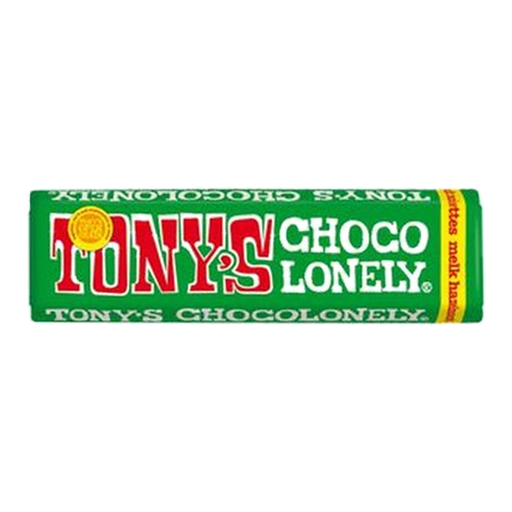 Image unavailable
TONY'S milk chocolate and hazelnuts, 47 g
At 47 g, this is a handy individual portion rather than a bar to break up and share. The fair trade claim associated with this product doesn’t in itself confirm that it carries the Fairtrade/Max Havelaar logo. Check the packaging if this certification is important to you, and check the allergens before serving.
View on Joybuy
Frequently asked questions
How can you check a chocolate bar’s Fairtrade certification?
Look for the Fairtrade/Max Havelaar logo on the packaging. For some products made with several ingredients that carry a logo with an arrow, Fairtrade/Max Havelaar advises checking the details on the back to see which ingredients are covered. In this case, at least 20% of the product must be made up of Fairtrade ingredients.
Does a bar sold in France have to display Nutri-Score?
No. According to Santé publique France, displaying it is voluntary. Check the nutritional information even if no Nutri-Score appears, and compare values on the same basis, such as per 100 g.
What should you check if someone needs to avoid an allergen?
Read the ingredients and allergen information on the packaging of each specific product. EU food labelling rules for prepacked foods cover this information. Neither fair trade certification nor the type of chocolate tells you whether an allergen is absent.
Where can you find Fairtrade/Max Havelaar chocolate in France?
Fairtrade/Max Havelaar says that certified products are available from local shops, organic retailers and supermarkets in France. Check with the retailer for the product and format you’re looking for, then check for the logo on the packaging.


