What should you check before choosing?
For an office biscuit tin, first decide whether the chocolate will be served as it is or used in a recipe. Then check the fair trade standard and the ingredients of the product you choose.
| What to consider |
What to check |
Who is this for? |
| Proof of fair trade sourcing |
Look for the logo and read the information on the back of the pack. Distinguish Fairtrade/Max Havelaar from other fair trade standards. |
If your purchase needs to meet a specific Fairtrade requirement, the words ‘fair trade’ alone don’t tell you which standard applies. Around 42% of consumers would make this their main criterion. |
| Sharing format |
Check whether you’re buying ready-to-eat confectionery or an ingredient to use in a recipe, and whether the pack size suits your tin. |
If you want to put the tin out without doing any baking, the time needed to prepare the food matters just as much as the format. Around 33% of consumers would prioritise ease of serving. |
| Ingredients and nutrition information |
Read the ingredients and allergen information; compare sugars and saturated fat per 100 g across similar products. |
Knowing what’s in the product can help you cater for the people sharing the tin. Around 25% of consumers would put checking the ingredients, allergens and nutrition information first. |
Which brands and retailers should you consider?
These examples show different formats and fair trade claims; always check the packaging of the product you plan to share.
Kaoka
Kaoka offers organic fair trade white couverture chocolate with 35% cocoa, intended mainly for baking rather than as ready-to-eat bites for a shared tin.
- For its 1 kg product, Kaoka states that 78% of its agricultural ingredients come from fair trade sources audited against FiABLE.
- This should not be described as a Fairtrade/Max Havelaar label. This product contains milk and may contain nuts.
Chevaliers d’Argouges
An Auchan product listing features organic fair trade white chocolate shapes from Chevaliers d’Argouges, a confectionery format to consider when you want something to share without any preparation.
- According to the Auchan listing, the sugar, cocoa and vanilla come from fair trade sources under Fairtrade/Max Havelaar standards and account for 76,50% of the total weight.
- The product is described as ‘Easter chocolate shapes’: check its availability, best-before date, packaging and allergen information on the pack you buy.
Biocoop
Biocoop stocks organic white chocolate drops with 30% cocoa, presented as a baking ingredient in small, easy-to-measure pieces.
- The Biocoop listing mentions Fairtrade-certified cocoa.
- This does not confirm that every ingredient is certified. Check the product brand, allergens and any label information relevant to your purchase on the pack.
An option for the biscuit tin
These white chocolate biscuits are ready to share without any preparation. If you need a specific fair trade certification, check the logo and information on the pack before buying.
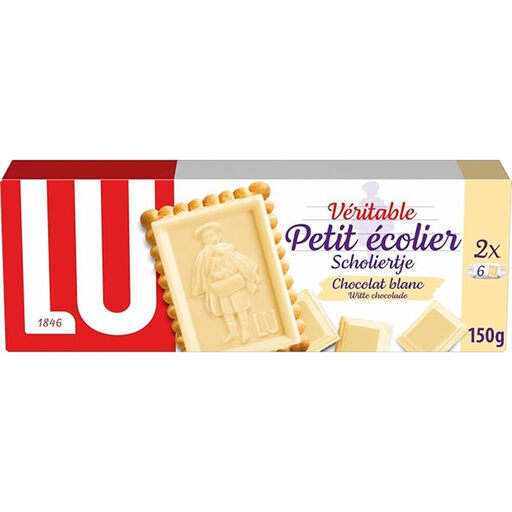 Image unavailable
PETIT ECOLIER Choco, White, 150 g
Described as individually portioned, these white chocolate biscuits can be added to a shared tin without any preparation. The pack is listed as 150 g; the ingredients include wheat, milk and soya. Check the allergens, as well as the fair trade logo and information on the pack, if a specific certification is essential to your choice.
View on Joybuy
Frequently asked questions
How can you tell if white chocolate is Fairtrade?
Look for the Fairtrade mark on the packaging of the specific product. For products made with several ingredients, the information on the back helps you check which ingredients are covered and how they’re sourced; the words ‘fair trade’ alone may refer to a different standard.
Is white couverture chocolate suitable for an office biscuit tin?
It’s most suitable if you plan to make biscuits or decorations before filling the tin. Kaoka describes its white couverture chocolate as suitable for recipes such as ganache and coatings; if you want to serve something without baking, look for a ready-to-share format instead.
Is Nutri-Score compulsory on white chocolate in France?
No. According to Santé publique France, producers choose whether to display it. However, a nutrition declaration is required for most prepacked foods, as the European Commission points out; it lets you compare sugars and fat per 100 g, among other things.
Does the French tax on drinks apply to solid white chocolate?
No. Article 1613 ter of the French General Tax Code, published on Légifrance, applies to drinks and liquid preparations for drinks, not to a bar or solid white chocolate confectionery. The sugar content is still useful nutrition information to check on the product.


