Shoppers who look for the Fairtrade label
You want to know which standard applies to a particular infusion and what proportion of the product it covers, rather than relying on a general claim about the brand.


If you’re specifically looking for a Fairtrade / Max Havelaar infusion, choose a product that names the label and states what proportion of the product it covers. According to Carrefour France, the French product page for Alter Eco Organic Rooibos says it covers 100% of the total weight. Fair for Life and French fair-trade supply chains are other options, but they don’t in themselves prove Fairtrade / Max Havelaar certification. Check the ingredients too before buying several boxes.
You want to know which standard applies to a particular infusion and what proportion of the product it covers, rather than relying on a general claim about the brand.
You know the difference between herbal tea and tea, and check the ingredients before choosing several boxes—especially if you want to avoid caffeine or spot liquorice.
Choose the certification standard before you choose the recipe: a fair-trade claim doesn’t necessarily mean Fairtrade / Max Havelaar.
Choose this if: you require this specific label on the infusion you buy.
Check: the proportion covered varies by product; a general ‘fair trade’ claim isn’t enough.
Consider this if: you’re happy with a different standard for a herbal infusion.
Limitation: Fair for Life isn’t the same as the Fairtrade / Max Havelaar label.
Consider this if: a French agricultural supply chain is your main priority.
Limitation: check the standard and the origin of the plants for each recipe.
| Criteria | What to check | Who it matters to |
|---|---|---|
| Proof of fair trade | The name of the standard and the proportion of the exact product it covers. | I want to tell the difference between the label on my infusion and a simple ‘fair trade’ claim. Around 34% of shoppers rank this as their top concern. |
| Pack size | The number of tea bags and the net weight of each box. | If I buy several boxes in a clearance sale, I want a pack size that suits how much I plan to use. Pack size is the top priority for around 33% of shoppers. |
| Recipe | Whether it contains tea or just plants, followed by the ingredients list. | If I want a caffeine-free drink, I need to distinguish herbal tea from a green tea blend and check the ingredients. Around 33% of shoppers prioritise the recipe above all else. |
The French product pages cited for Alter Eco, Clipper and Pukka list different standards or proportions covered. A claim for one recipe doesn’t describe all the others.
For each box you’re considering, check the standard, the proportion covered and which ingredients it applies to.
A recipe may contain liquorice. The Anses highlights the risks associated with consuming too much of this ingredient.
Look for liquorice in the ingredients list, especially if you plan to drink the same infusion regularly.
Worth a look if you’re specifically seeking Fairtrade / Max Havelaar.
Some product pages state the Fairtrade proportion and explain the use of mass balance.
An option for shoppers who accept Fair for Life rather than requiring Fairtrade / Max Havelaar.
A brand to explore if you’re interested in infusions from a French fair-trade supply chain.
This matcha green tea is for anyone also considering tea to brew. It isn’t a substitute for herbal tea if you want to avoid caffeine. If fair-trade certification matters to you, check the standard for this specific product before choosing it.
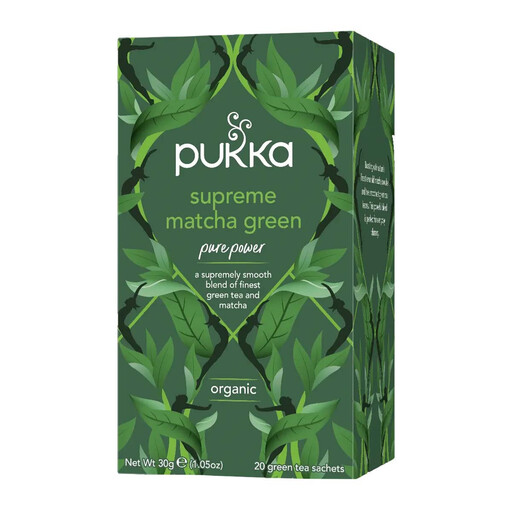 Image unavailable
Worth considering if you’re looking for matcha green tea rather than a caffeine-free herbal infusion.
The product name indicates a 30 g pack and an organic product. If fair-trade certification is important to you, check the label and the proportion covered on the packaging for this product.
No. Fairtrade / Max Havelaar is a specific label, while Fair for Life and French fair-trade supply chains follow different standards. If you require Fairtrade / Max Havelaar, look for its name on the exact product and check what proportion it covers.
Under mass balance, Fairtrade and non-certified ingredients may be mixed for technical reasons, according to the conditions stated for the product. Clipper explains this for its organic ginger green tea, whose product page states that 97% of the total weight is Fairtrade. Always check the claim for the product you choose.
If you want to avoid caffeine, first check that the recipe contains no tea: Alter Eco Organic Rooibos is described as caffeine-free, unlike a green tea recipe. Read the ingredients list too, especially to check for liquorice if you plan to drink it regularly.