What should you check before buying?
For an after-dinner drink, first narrow down your options by what matters most: Fairtrade/Max Havelaar proof on the product, or an herbal infusion explicitly labelled caffeine-free. Then check whether the same box also meets your other requirement.
Tea with Fairtrade/Max Havelaar proof
Worth considering: if the label on the product is your priority and you’re happy with black tea. Malongo states that 98% of the total weight of its organic Earl Grey tea bags comes from Fairtrade under Fairtrade/Max Havelaar standards.
Bear in mind: this is black tea, not an herbal infusion labelled caffeine-free.
Caffeine-free herbal infusion
Worth considering: if avoiding caffeine after a meal is your top priority. Joybuy’s product listing for Pukka 3 Mint describes it as naturally caffeine-free.
Check: Fair for Life lists Pukka among the brands of a certified partner. This doesn’t prove that the 3 Mint box carries the Fairtrade/Max Havelaar label.
| What to check |
Look for |
Who is it for? |
| Fairtrade proof |
Look for the Fairtrade/Max Havelaar logo on the box. For a blend, read the details on the back about the ingredients and sourcing. |
If I want a specific label, I want to see it on the product I’m buying, rather than rely on a general brand promise. Around 42% of shoppers would make this their priority. |
| Caffeine-free |
Check the type of drink, its ingredients and the caffeine information. Don’t assume that black or green tea is caffeine-free. |
After dinner, I prefer an herbal infusion that’s labelled caffeine-free. For nearly 33% of shoppers, this would be their main requirement. |
| Flavour |
Read the list of herbs and flavourings, and don’t take claims such as ‘digestion’, ‘detox’ or ‘wellbeing’ as proof of a health benefit. |
For my winter break, I’m mainly looking for ingredients I enjoy, while checking the label separately. Around 25% of shoppers would put this preference first. |
Products compared for this guide
This comparison order prioritises clear Fairtrade proof on the product, followed by how suitable it is as an after-dinner drink and the available ingredient information. It isn’t a ranking published by a third party, nor is it based on sales or testing.
| Rank |
Product |
Features |
Benefits and limitations |
Available from |
| 1 |
Malongo Organic Earl Grey Black Tea Bags |
Box of 25 tea bags; Malongo states that 98% of the total weight comes from Fairtrade in accordance with Fairtrade/Max Havelaar standards. |
The Fairtrade statement applies to this specific product. It’s black tea, so don’t confuse it with an herbal infusion labelled caffeine-free. |
Malongo |
| 2 |
Jardin BiO étic Organic Fairtrade Green Tea ‘Digestion’ |
Jardin BiO étic lists this blend among its organic Fairtrade green teas. |
Worth considering if green tea suits you; check the exact Fairtrade label on the box. The name doesn’t prove an effect on digestion. |
Jardin BiO étic |
| 3 |
Pukka Organic 3 Mint Infusion 36 g |
Joybuy’s product listing describes three organic mints and an infusion that’s naturally caffeine-free. |
Worth considering if avoiding caffeine is your priority. Fair for Life lists Pukka among the brands of a certified partner, but this doesn’t establish that this box carries the Fairtrade/Max Havelaar label. |
Joybuy |
Infusions available on Joybuy
These Pukka products offer a range of blends to consider for an after-dinner break. Whichever one you’re interested in, check the caffeine information and the exact Fairtrade label on the box. Ingredients described as Fairtrade or a Fair for Life claim alone don’t meet a requirement for the Fairtrade/Max Havelaar logo.
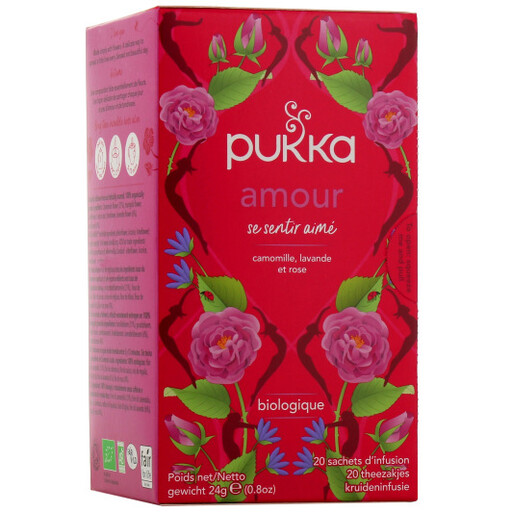 Image unavailable
Pukka Organic Love Infusion 24 g
Worth considering if you’re after a floral infusion for an end-of-day break.
The description mentions Fairtrade ingredients. If you require Fairtrade/Max Havelaar or a caffeine-free drink, check these details on the box.
View on Joybuy
 Image unavailable
Pukka Organic Gingers Herbal Tea 36g
Worth considering if you fancy a spicy blend and want an infusion that the product listing describes as naturally caffeine-free.
The listing states that 38% of the ingredients are Fair for Life certified. If you’re specifically looking for Fairtrade/Max Havelaar, check the label on the box.
View on Joybuy
 Image unavailable
Pukka Organic Digestion Herbal Tea 40g
Compare the spicy ingredients if you prefer an infusion that the product listing describes as naturally caffeine-free. ‘Digestion’ is the name of the blend, not a health claim.
The listing states that 8% of the ingredients are FairWild certified. This doesn’t confirm that the box carries the Fairtrade/Max Havelaar label.
View on Joybuy
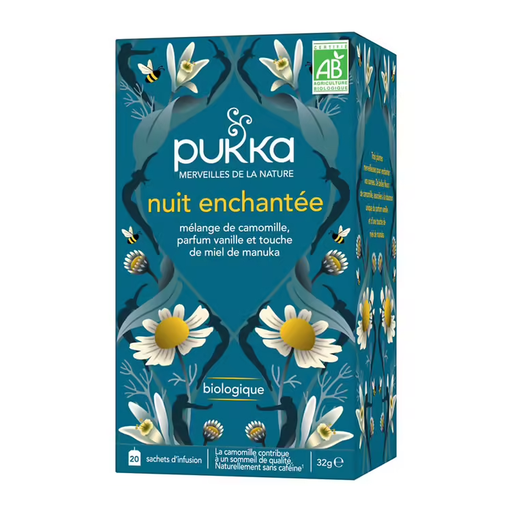 Image unavailable
Pukka Enchanted Night Organic Herbal Tea 32g
This floral blend is presented as an option for an end-of-day break, but its name doesn’t prove that it has a relaxing effect.
The description mentions Fairtrade ingredients. If these criteria affect your choice, check the exact Fairtrade logo and caffeine information on the box.
View on Joybuy
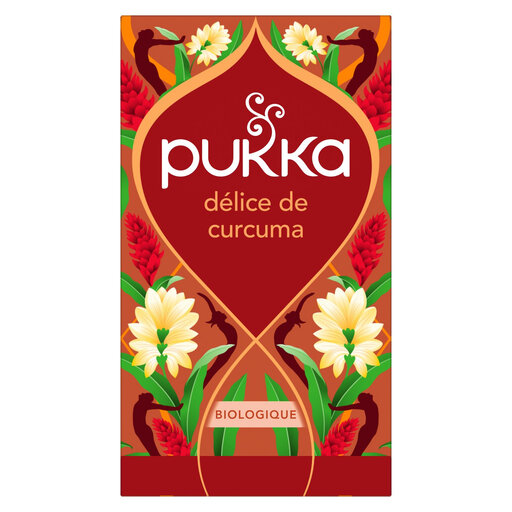 Image unavailable
Pukka Turmeric Delight Organic Tisane 36g
Worth considering if you’re looking for a blend with notes of turmeric, ginger and orange for a warming winter drink.
The description mentions Fairtrade ingredients. Check the label on the box and the caffeine information before choosing this product for the evening.
View on Joybuy
Frequently asked questions
How can I check whether an infusion has the Fairtrade/Max Havelaar label?
Look for the Fairtrade/Max Havelaar logo on the packaging of the exact product. For a blend, Fairtrade/Max Havelaar France recommends reading the details on the back, especially about which ingredients are covered and how they’re sourced.
Is an organic infusion always Fairtrade?
No. Organic farming and Fairtrade are separate approaches, which Fairtrade/Max Havelaar France describes as complementary. If you require a specific Fairtrade label, check for its logo on the product rather than relying on the organic logo alone.
What should I choose if I want to avoid caffeine after dinner?
Look for an herbal infusion explicitly labelled caffeine-free, then check the ingredients. Joybuy’s product listing for Pukka 3 Mint describes it as naturally caffeine-free, but that doesn’t prove it carries the Fairtrade/Max Havelaar label.
Do ‘digestion’ or ‘detox’ prove a health benefit?
No. These words alone don’t prove a therapeutic effect. France’s Directorate-General for Competition Policy, Consumer Affairs and Fraud Control points out that health claims relating to food must meet specific authorisation requirements. Choose a blend for its features, rather than as a treatment for a symptom.


