Who is this choice for?

Shoppers who look for the Fairtrade label

You want to see the Fairtrade/Max Havelaar mark on the product you buy and know what proportion of the recipe it covers. Carrefour and Auchan provide these details for their respective Alter Eco and Jardin BiO étic rooibos products.

Rooibos fans looking for a caffeine-free drink

You prefer a simple rooibos recipe that’s described as caffeine-free, while checking its fair-trade certification separately.

Fans of herbal blends

You choose a blend and format that appeal to you first. However, words such as ‘detox’, ‘sleep’ or ‘digestion’ are not enough to establish a health benefit: also read the warnings specific to the recipe.

Which criteria should you prioritise?

If Fairtrade/Max Havelaar matters to you when you shop, first check the label on the specific product. Then choose the recipe and format to suit how you plan to enjoy it.

Criteria What to check Who it matters to
Label and coverage The Fairtrade/Max Havelaar mark on the specific product and the percentage of the recipe it covers, particularly for a blend. I want to know whether the label applies to the herbal tea I’m buying, not just the brand; around 42% of shoppers would make this their priority.
Recipe and caffeine The list of plants and, if avoiding caffeine matters to you, whether it contains tea leaves; also distinguish between teabags and ready-to-drink beverages. For an evening drink, I’m looking first for a recipe I enjoy and whose ingredients I can check; around 33% of shoppers would prioritise this.
Wellbeing claims and warnings The ingredients, product-specific warnings and what the claims on the packaging actually mean. When a recipe is marketed as ‘detox’, I’d rather read the warnings than expect a medical effect; around 25% of shoppers would put this caution first.

Which pitfalls should you avoid?

  • Confusing organic with Fairtrade/Max Havelaar

    Organic certification or a general fair-trade claim doesn’t, by itself, tell you whether a herbal tea carries the Fairtrade/Max Havelaar mark or what proportion of a blend is covered.

    If this label is essential for you, check its wording and the percentage shown on the pack or product page for the one you’ve chosen.

  • Assuming ‘detox’ means a proven effect

    A recipe name doesn’t make a herbal tea a treatment. The DGCCRF reminds shoppers that nutrition and health claims made about foods are regulated.

    Choose based on the ingredients, flavour and warnings provided, rather than assuming the product name means it has a medical effect.

  • Overlooking a liquorice warning

    On its Detox herbal tea product page, Clipper advises people with high blood pressure to avoid excessive consumption of liquorice.

    If a recipe contains liquorice, read the warnings specific to it before choosing it.

  • Comparing formats without checking the quantity

    Two boxes of 20 teabags can have different net weights: Carrefour and Auchan list 40 g for Alter Eco and 34 g for Jardin BiO étic respectively.

    Compare the net weight, number of teabags and ingredients of the product, as well as its label.

Brands to consider by product

Alter Eco

A product of organic rooibos worth considering if you’re looking for a single-ingredient recipe with clearly stated Fairtrade/Max Havelaar coverage.

  • Carrefour describes its rooibos as made from 100% South African rooibos, meeting Fairtrade/Max Havelaar standards for 100% of the total weight.
  • This information applies to the product described by Carrefour, not all Alter Eco products.

Jardin BiO étic

A boxed organic rooibos option for anyone who wants to check what proportion of the agricultural ingredients is covered by Fairtrade.

  • Auchan says 100% of the agricultural ingredients in its Jardin BiO étic rooibos meet fair-trade standards.
  • This wording applies to the agricultural ingredients in this product; it shouldn’t be taken to apply to every recipe in the range.

Ethiquable

Ethiquable’s range includes organic teas, rooibos and herbal teas sourced through fair trade.

  • The brand includes South African rooibos among its products.
  • If you specifically require Fairtrade/Max Havelaar, check the label and ingredients on the product you choose.

Clipper

Herbal blends to compare recipe by recipe if you’re interested in a variety of ingredients.

  • Clipper’s organic Detox herbal tea includes ingredients such as hibiscus, nettle and liquorice.
  • Check the label on the product you choose, and bear in mind Clipper’s warning that people with high blood pressure should avoid excessive liquorice consumption.

Kusmi Tea

Herbal teas with plants, fruit, flowers or spices to consider if your main priorities are the recipe and format.

  • Kusmi Tea features organic products in its herbal tea range.
  • If Fairtrade/Max Havelaar is a condition of your purchase, check for this mark on the product you choose: organic certification isn’t a substitute.

An option on Joybuy

This option is a ready-to-drink cold rooibos beverage rather than a hot herbal tea made with teabags. It may suit shoppers who are happy with Fairtrade coverage stated as less than 100%; check the bottle details if the exact label or a caffeine-free drink is essential to you.
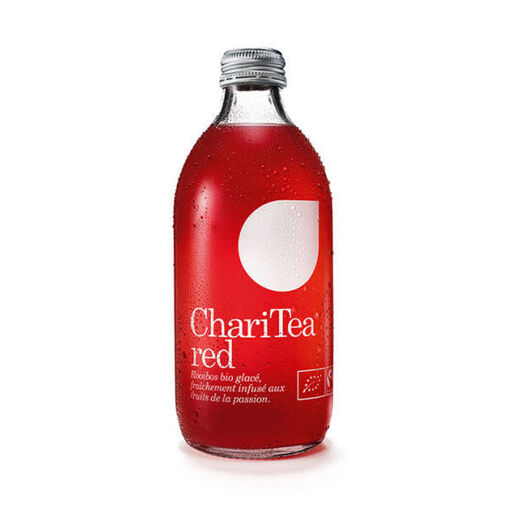
Charitea Red Organic, 33 cl bottle

Charitea Red Organic 33 cl

Worth considering if you’re looking for a cold rooibos drink rather than teabags to brew.

Format: 33 cl bottle. The product details state that Fairtrade covers 99% of the total weight, not 100%. If you’re looking for a caffeine-free drink, check this on the product before buying.

View on Joybuy

Frequently asked questions

Does organic herbal tea have to be Fairtrade?

No. Organic and Fairtrade certification have different criteria. If you’re specifically looking for Fairtrade/Max Havelaar, check for the mark on the product you plan to buy.

How can I check what proportion of a herbal tea is covered by Fairtrade?

Read the percentage and check what it refers to on the packaging or product page. Carrefour states 100% of the total weight for the Alter Eco rooibos mentioned; Auchan states 100% of the agricultural ingredients for the Jardin BiO étic rooibos mentioned. These two descriptions don’t refer to exactly the same basis.

Is Fair for Life the same as Fairtrade/Max Havelaar?

These are different standards, so it’s worth distinguishing between them if you specifically require Fairtrade/Max Havelaar. For example, Carrefour says its Pukka Three Mint herbal tea is certified to Fair for Life standards for 39% of its ingredients, corresponding to the spearmint; this doesn’t mean it is certified Fairtrade/Max Havelaar.

Can a ‘detox’ herbal tea be used as a treatment?

No: calling a herbal tea ‘detox’ doesn’t make it a treatment. The DGCCRF reminds shoppers that nutrition and health claims made about foods are regulated. When choosing a recipe, look at its ingredients and warnings rather than assuming it has a medical effect.

What should I check in a herbal tea containing liquorice?

Read the warnings specific to the recipe. On its Detox product page, Clipper says people with high blood pressure should avoid excessive liquorice consumption.