To choose Fairtrade herbal tea for an older person, check the exact product for the Fairtrade/Max Havelaar label and the proportion of ingredients it covers. Alter Eco organic rooibos listed by Carrefour states that 100% of the rooibos meets the standard, while some blends are only partially covered. Check separately whether the drink is caffeine-free. If the person takes medication or has a health condition, also check the herbs in the blend, without treating the drink as a nutritional or medical solution.
Who is this choice for?
Anyone looking for simple Fairtrade rooibos
You want a caffeine-free herbal tea with a short ingredient list and a clearly stated Fairtrade proportion. Carrefour’s listing for Alter Eco organic rooibos names just one ingredient, with 100% of the total weight meeting Fairtrade/Max Havelaar standards.
Older people and carers who pay close attention to herbal blends
If the drink is for someone taking medication or living with a health condition, it’s particularly important to check the exact ingredients. However, ANSES warnings about certain herbs in food supplements do not establish the effects of an ordinary herbal infusion.
Anyone who prefers a flavoured blend
You’re looking for a fruity or chocolatey flavour and are happy for a Fairtrade claim to cover only part of the recipe. If so, check which ingredients are covered and in what proportion.
What should you check before buying?
When choosing herbal tea for an older person, check the Fairtrade evidence, whether it contains caffeine and the herbs it includes separately: none of these criteria guarantees the others.
| Criterion |
What to check |
Who it’s for |
| Fairtrade credentials |
Look for the Fairtrade/Max Havelaar label on the exact product and check what proportion of the ingredients it covers, particularly in a blend. |
If I’m choosing this herbal tea because of its Fairtrade credentials, I want to know what proportion of the recipe meets the stated standards. Around 44% of consumers put this evidence first. |
| Caffeine-free |
Check what type of drink it is and its caffeine content on the product you’ve chosen. Check the label separately from the Fairtrade certification. |
For a hot drink to enjoy at different times of day, I prefer to avoid caffeine. This is the main consideration for around 33% of consumers. |
| Herbal ingredients |
Read the list of herbs and check whether it contains any extracts. If the person takes medication or has a health condition, ask a healthcare professional for advice. |
If the herbal tea is for someone taking medication, I want to check every herb rather than rely on a wellness claim. This precaution comes first for around 23% of consumers. |
Mistakes to avoid
-
Assuming organic or natural means Fairtrade
An organic label alone doesn’t tell you whether the ingredients come from a Fairtrade supply chain. Carrefour’s listings for Alter Eco and Jardin BiO étic herbal teas show this information separately.
Check the Fairtrade claim and the proportion it covers on the packaging or the listing for the exact recipe.
-
Expecting herbal tea to provide nutritional value
A drink chosen for its flavour or supply chain doesn’t replace foods that provide essential nutrients. ANSES says these nutrients should come from a balanced diet.
Consider the older person’s dietary needs separately from their choice of drink.
-
Trusting a wellness claim without checking the ingredients
A blend may contain several herbs. ANSES highlights possible interactions and contraindications for certain herbs used in food supplements. This does not prove that the same risks apply to every ordinary herbal infusion.
Read the ingredients and, if the person takes medication, has a health condition or uses concentrated extracts, ask a doctor or pharmacist for advice.
-
Assuming a product you’ve seen online is available
A product listing doesn’t guarantee that the herbal tea is available in-store or through your preferred collection option.
Check availability and pack size before planning your purchase.
This check helps you avoid having to find an alternative at the last minute.
Herbal tea brands to consider
Alter Eco
Worth considering if you’re looking for plain rooibos with a clearly stated Fairtrade proportion.
- According to Carrefour, Rooibos Bio contains 100% South African rooibos that meets Fairtrade/Max Havelaar standards.
- Check the label and ingredients of each other Alter Eco recipe separately.
Jardin BiO étic
An option if you prefer a rooibos, cocoa and red berry blend to plain rooibos.
- Carrefour’s listing for the blend states that the rooibos meeting Fairtrade standards makes up 75% of the total agricultural ingredients.
- The Fairtrade claim therefore doesn’t cover all the agricultural ingredients. Also check that the product is available before buying.
Clipper
In France, Clipper offers a range of naturally caffeine-free herbal teas and refers to Fairtrade partnerships as part of its brand approach.
- The range includes several recipes to explore if you’re looking for caffeine-free herbal tea.
- A brand partnership doesn’t prove that every Clipper herbal tea is Fairtrade certified, so check the pack you choose.
Twinings
Twinings offers herbal teas with ingredients that you can check for each recipe.
- The French Twinings website lists the ingredients in its Relaxation Mélisse, Pêche & Fleur d’Oranger herbal tea.
- For this purpose, only consider a Twinings product if its own listing or packaging provides clear evidence of Fairtrade certification.
Related Joybuy products
These two products suit different needs: a bottled rooibos drink and a herbal tea to brew. Before choosing, compare the exact Fairtrade claim: Fair for Life and Fairtrade/Max Havelaar are separate standards.
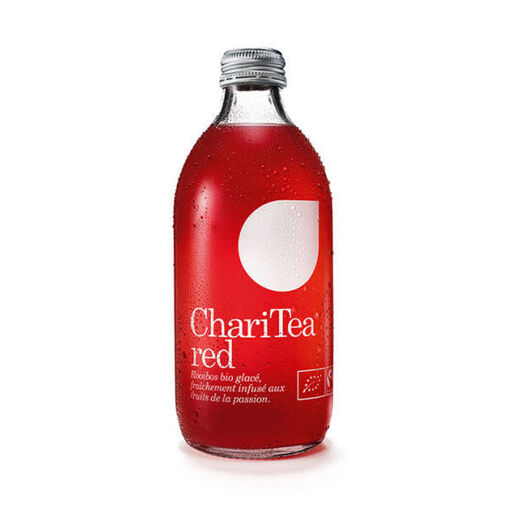 Image unavailable
Charitea Red Organic, 33 cl
This rooibos drink may appeal if you’re comparing ready-to-drink options. Before buying it for an older person, check which ingredients are covered by the Fairtrade claim, the nutritional information and the caffeine content if caffeine-free is important.
View on Joybuy
 Image unavailable
Pukka Organic Gingers, herbal tea, 36 g
This herbal tea may suit anyone looking for a blend whose ingredients they can check before buying. Check which proportion is covered by the Fair for Life claim, which is separate from Fairtrade/Max Havelaar, and whether it contains liquorice. If the person takes medication or has a health condition, ask a healthcare professional for advice.
View on Joybuy
Frequently asked questions
Does Fairtrade herbal tea meet an older person’s nutritional needs?
No. Fairtrade relates to the supply chain and its standards, not the drink’s nutritional content. ANSES reminds us that a balanced diet is needed to meet nutritional requirements; herbal tea is no substitute for meals.
Is organic herbal tea always Fairtrade?
No. Organic and Fairtrade labels describe different characteristics. To find a Fairtrade option, look for the relevant claim on the exact recipe, then check what proportion of the ingredients it covers if it’s a blend.
Why check the proportion of Fairtrade ingredients?
Because a Fairtrade claim may apply to only part of a blend. According to Carrefour’s listings, 100% of the total weight of Alter Eco organic rooibos meets Fairtrade/Max Havelaar standards, while the Fairtrade rooibos in the Jardin BiO étic blend makes up 75% of the total agricultural ingredients. These percentages are calculated using different bases.
Should you seek advice if an older person taking medication drinks herbal tea?
If the person takes medication or has a health condition, ask a doctor or pharmacist for advice before choosing a herbal blend, particularly if it contains concentrated extracts or is being considered for a health benefit. ANSES highlights possible interactions and contraindications with certain herbs used in food supplements, but this does not mean the same effects apply to every ordinary herbal infusion.


