People who want proof of Fairtrade certification
You want to be able to spot the Fairtrade/Max Havelaar mark on the product and distinguish this certification from a simple “organic” label or a more general fair trade commitment.


To give a herbal tea that specifically meets Fairtrade criteria, first check for the Fairtrade/Max Havelaar mark on the product and, if it’s a blend, see which ingredients it applies to. Then choose according to the recipient’s tastes: rooibos described as caffeine-free, a flavoured blend or a selection of recipes to try in a gift set. A product being described as “organic” or “fair trade” is not enough, on its own, to prove that it has Fairtrade certification.
You want to be able to spot the Fairtrade/Max Havelaar mark on the product and distinguish this certification from a simple “organic” label or a more general fair trade commitment.
The recipient prefers to avoid caffeine, particularly in an evening drink. Carrefour’s product listings describe Alter Eco and Ethiquable rooibos as caffeine-free.
You’re not sure what the recipient likes, or you’d like to give them several recipes to try. Ethiquable’s gift set includes teas and rooibos; if you specifically require Fairtrade/Max Havelaar certification, check its fair trade claim separately.
When choosing herbal tea for Mother’s Day, start by checking that it meets your Fairtrade requirements, then compare the options based on the recipient’s tastes and habits. A gift set may contain tea, while a flavoured blend calls for a closer look at which ingredients the fair trade claim applies to.
| Criterion | What to check | Best for |
|---|---|---|
| Fairtrade proof | The Fairtrade/Max Havelaar mark and, for a blend, the ingredients it applies to. | If Fairtrade is the main reason for my gift, I want to be able to check this on the product rather than infer it from an organic logo alone. Around 33% of consumers would prioritise this proof. |
| Format and variety | The number of recipes, the types of drinks and the certification stated for the gift set. | If I don’t know exactly what the recipient likes, a selection of recipes gives me more options than a single one. Around 25% of consumers would prioritise this variety. |
| Caffeine-free | The plant used and whether the selection includes green or black tea. | For someone who avoids caffeine, I’d choose a recipe whose ingredients suit their preference rather than a gift set containing tea. Around 25% of consumers would put this need first. |
| Flavour and ingredients | The ingredients and flavourings, as well as the proportions listed for a blend. | If I know which flavours they like, I want to choose between an unflavoured and a flavoured recipe without relying on the product name alone. Around 17% of consumers would put flavour ahead of other criteria. |
Organic certification and compliance with Fairtrade/Max Havelaar standards are separate details on product listings.
If Fairtrade is important to you, look for an explicit claim on the packaging or product listing, then read the details about the ingredients.
Carrefour’s listing for Jardin BiO étic rooibos with cocoa and red berries says that 75% of the ingredients of agricultural origin comply with fair trade standards; this refers to the rooibos.
Before choosing a blend, check which ingredient the claim applies to and what proportion it covers.
A gift set containing tea and rooibos doesn’t consist solely of caffeine-free drinks. The French Agency for Food, Environmental and Occupational Health & Safety (ANSES) says that caffeine can affect sleep.
If the recipient avoids caffeine, check the ingredients in each recipe and look for an explicit “caffeine-free” claim.
A specific product may not be available from your chosen retailer.
Check availability before putting the gift together, and find another recipe that meets the same Fairtrade criteria as a back-up.
These brands offer different options: unflavoured rooibos, a flavoured recipe, a selection or tea. Check the fair trade claim on the specific product rather than relying on the brand name alone.
An option if you’re looking for unflavoured rooibos rather than a selection of different recipes.
A brand with rooibos and a gift set containing several types of drink.
An option for someone who likes rooibos with notes of cocoa and red berries.
An option to consider only if the recipient prefers green tea to herbal or rooibos infusions.
This mate drink is intended to be served cold. It may appeal to someone who prefers this format, but it isn’t a substitute for a box of hot herbal tea as a gift. If you’re buying it because of its Fairtrade credentials, check the label for the claim and the ingredients it applies to.
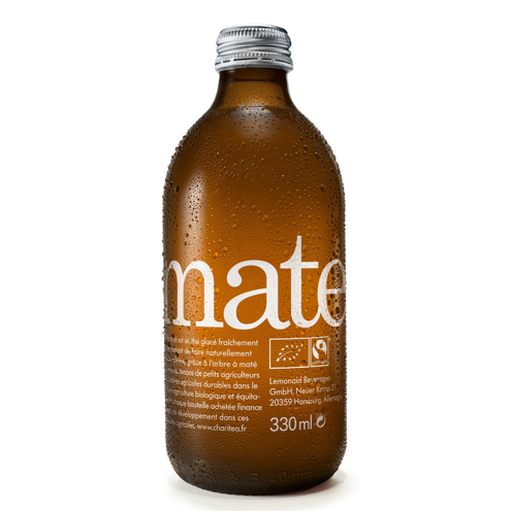 Image unavailable
Worth considering if the recipient prefers a ready-to-drink cold beverage to a hot infusion. The listed size is 33 cl; check the ingredients, what the Fairtrade claim covers and the packaging if you plan to give it as a gift.
Look for the Fairtrade/Max Havelaar mark or claim on the product, then read the information about the ingredients. Fairtrade / Max Havelaar France explains that, for some composite products carrying a label with an arrow, the back of the packaging lists the ingredients covered and how they are traced.
No. An organic claim alone doesn’t prove compliance with Fairtrade/Max Havelaar standards. Carrefour’s listing for Alter Eco rooibos states separately that it is organic and that 100% of its total weight complies with Fairtrade/Max Havelaar standards.
Choose a recipe explicitly described as caffeine-free and check its ingredients. Carrefour’s listings describe Alter Eco and Ethiquable rooibos as caffeine-free, while a gift set containing green or black tea won’t fully suit this preference.
A box of a single recipe is a good choice if you already know what the recipient likes; a gift set lets them try several drinks. The one described by Ethiquable includes black tea, green tea and rooibos, but check the labelling of each recipe if you specifically require Fairtrade/Max Havelaar certification.