What should you check before choosing?
When buying a Fairtrade herbal infusion while shopping with diabetes in mind, first decide what matters most to you, then check the exact recipe. Flavour, certification and the list of herbs answer different questions.
| Criterion |
What to check |
Who is it for? |
| Sugar in your drink |
The ingredients list and anything you add when preparing it, such as sugar, honey or syrup. |
If I want an unsweetened hot drink every day, the flavour alone isn’t enough to tell me what I’m drinking. Around 40% of consumers put this first. |
| Scope of the Fairtrade label |
The standard stated, the ingredient certified and the proportion covered for the product you’ve chosen. |
A claim that a product is ‘fair trade’ isn’t enough if I’m specifically looking for Fairtrade / Max Havelaar. For nearly 30% of consumers, the scope of certification is the main criterion. |
| Herbs and caffeine |
Whether it contains tea or maté, and whether blends intended for regular drinking contain liquorice. |
Before making an infusion part of my evening routine or drinking it often, I want to know which herbs it contains and whether it suits my needs. For around 30% of consumers, the ingredients matter more than any other criterion. |
Herbal infusions and tea to compare on Joybuy
This selection includes herbal infusions and a green tea for brewing. For each one, start with the type of drink you want, then check the ingredients and the scope of any Fairtrade claim on the box. Another certification may not meet a specific search for Fairtrade / Max Havelaar.
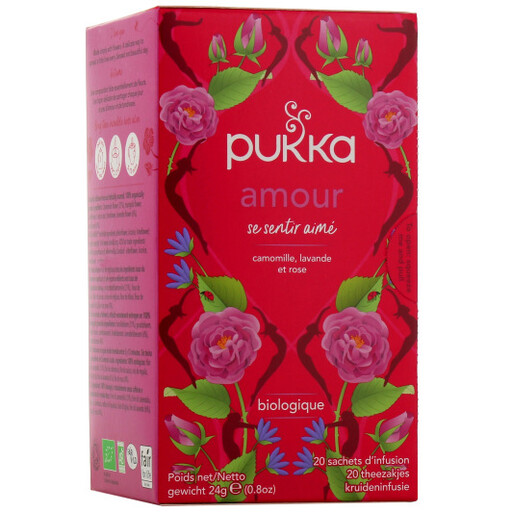 Image unavailable
Pukka Infusion Amour Bio, 24 g
If you’re after a floral infusion, check the ingredients before choosing a drink to prepare without adding sugar. The honey granules and liquorice are worth noting. Also check which ingredient is covered by the Fairtrade claim on the packaging.
View on Joybuy
 Image unavailable
Pukka Organic Gingers Herbal Tea, 36 g
If you’re looking for an herbal infusion rather than tea, check the ingredients and whether it contains liquorice before making it a regular drink. Look at the Fairtrade standard stated on the box: a Fair for Life or FairWild claim doesn’t, by itself, mean the product is certified Fairtrade / Max Havelaar.
View on Joybuy
 Image unavailable
Pukka Matcha Green Tea Organic, 30 g
This is a matcha green tea, not an herbal infusion. It may be worth comparing if you’re looking for tea to prepare without adding sugar. If you avoid caffeine or are specifically looking for Fairtrade / Max Havelaar, check the details on the box before choosing.
View on Joybuy
 Image unavailable
Pukka Organic Digestion Herbal Tea, 40 g
When choosing an herbal infusion, go by the ingredients rather than the word ‘Digestion’ in its name. Check for liquorice in particular if you plan to drink it regularly, and look at the Fairtrade standard stated on the box. This drink is no substitute for treatment.
View on Joybuy
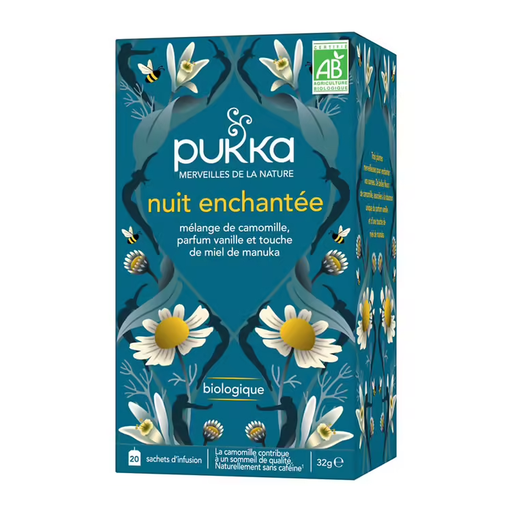 Image unavailable
Pukka Enchanted Night Organic Herbal Tea, 32 g
If you’re looking for an infusion to enjoy in the evening, check the ingredients rather than assuming what it contains from the name. Look for honey granules and liquorice on the box, along with information about caffeine and the proportion covered by the Fairtrade claim.
View on Joybuy
Frequently asked questions
Is an herbal infusion automatically suitable when shopping with diabetes in mind?
No. You can choose an herbal infusion as a hot drink to prepare without adding sugar, but check the recipe and what you put in your cup. Diabetes UK advises reducing added sugar in hot drinks; an infusion is no substitute for your treatment or advice from your healthcare team.
Is an infusion described as ‘fair trade’ entirely Fairtrade / Max Havelaar certified?
Not necessarily. Check the standard, the ingredient covered and the stated proportion for the exact product. For its Alter Eco rooibos, Auchan states that 100% of the total weight complies with Fairtrade / Max Havelaar standards. Carrefour’s listing for a Jardin BiO étic blend, meanwhile, states that 75% of the total agricultural ingredients are covered, corresponding to the rooibos.
What should you do if an infusion contains liquorice?
Consider how often you plan to drink it and your personal circumstances. Anses highlights the risk of hypokalaemia and high blood pressure from high, repeated consumption of liquorice. Ask a healthcare professional for advice if you have high blood pressure, take medication or want to drink it regularly.
What should you look for on a pre-packed herbal infusion box?
Start with the product name and ingredients list, then check the nutritional information and any certification details relevant to your choice. DGCCRF notes that the labelling of pre-packed foods includes information such as ingredients, net quantity and the applicable date for the product. Check the details on the box you’re buying.


