Shoppers looking for the Fairtrade / Max Havelaar label
You want to see this label on the green tea you buy, rather than relying on a general ethical claim.


If you’re specifically looking for the Fairtrade / Max Havelaar label, check that it appears on the product you’re buying. A different fair trade claim doesn’t necessarily offer the same guarantee. For your weekly shop, compare green teas by their ingredients, flavour and format, and check separately for an organic claim if that matters to you.
You want to see this label on the green tea you buy, rather than relying on a general ethical claim.
You’re looking for a format that fits easily into your weekly shop, while still checking the fair trade claim on the product you choose.
You want to choose between plain green tea and a blend with mint, jasmine or lemon, without assuming that the flavour tells you what kind of fair trade guarantee it has.
First decide whether you specifically require Fairtrade / Max Havelaar, or whether another fair trade scheme would suit you. Then look at the ingredients and format to find a product that works for the way you make tea.
| What to consider | What to check | Who it matters to |
|---|---|---|
| Fair trade guarantee | The label or certification on the exact product; for a blend, check which ingredients it covers. | I want to be able to identify the specific guarantee behind my tea, even if that limits my options. Around 36% of consumers put this proof first. |
| Format and restocking | The number of tea bags or the weight, then the product stocked by your chosen shop or online retailer. | For my weekly shop, I prefer tea that’s easy to prepare and buy again. Around 29% of consumers put convenience first. |
| Flavour and ingredients | The ingredients list and, for a blend, the proportion of green tea. | If I prefer plain green tea to mint or jasmine, the recipe matters more to me. Around 21% of consumers prioritise flavour and ingredients. |
| Organic and fair trade | Both the organic claim and the fair trade guarantee on the same product. | I’ll only choose a box if it meets both of these separate criteria. Around 14% of consumers prioritise having both. |
According to Fairtrade / Max Havelaar France, its label is based on social, economic and environmental criteria. Other fair trade certifications should be assessed against their own standards.
If this specific label is essential to you, look for it on the box you choose. Otherwise, check the name of the other certification and which ingredients it covers.
An organic claim alone doesn’t tell you which fair trade scheme applies to the tea.
Check the details for each variant, especially if you switch flavour, format or shop.
A mint or jasmine blend has a different composition from plain green tea. For example, Ethiquable states that its mint green tea contains 60% green tea and 40% Nana mint.
Compare the ingredients list with the flavour you’re looking for, then check the fair trade guarantee for that product separately.
The brand offers organic fair trade green teas, including plain, mint and jasmine varieties.
The brand offers an organic Sencha described as coming from fair trade.
Clipper’s Organic Fairtrade Pure Green Tea is listed as containing 100% green tea.
This green tea and matcha product may suit you if you’re happy with a fair trade scheme other than the Fairtrade / Max Havelaar label. If your choice depends on a specific label, check the guarantee stated on the packaging.
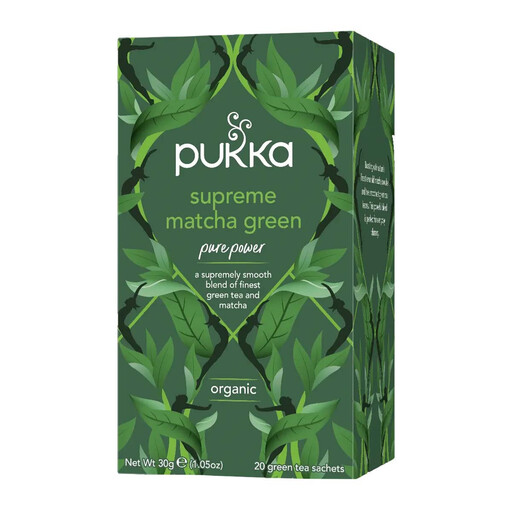 Image unavailable
Worth considering if you’re looking for green tea with matcha rather than plain green tea. This product is described as organic and comes in a 30 g format.
The Fair for Life scheme mentioned for this product shouldn’t be confused with Fairtrade / Max Havelaar. Also check whether the product on offer is in tea bags or loose-leaf form.
Look for the Fairtrade / Max Havelaar label on the box you choose. According to Fairtrade / Max Havelaar France, it refers to Fairtrade International’s criteria and checks carried out by an independent certifier.
No. Organic and fair trade claims are separate. Check for each one on the product you plan to buy, rather than assuming one means the other.
The flavour doesn’t tell you what fair trade guarantee applies, so check the claim or certification for each product. The recipe does affect what’s in your cup: Ethiquable states that its mint green tea contains 60% green tea and 40% Nana mint.