If you specifically require the Fairtrade/Max Havelaar label, check that it appears on the exact green tea product you’re considering: a general ‘fair trade’ or ‘organic’ claim isn’t enough to confirm this. With a bakery sandwich, choose a plain blend to avoid added flavourings, or a flavoured blend if you like the taste. Tea bags make serving and portioning easier; loose-leaf tea takes a little more preparation.
Who is this choice for?
Shoppers who look for the Fairtrade label
You want green tea that specifically carries the Fairtrade/Max Havelaar label, rather than a general fair trade claim. In that case, checking for the label on the exact product you’re buying is your first priority.
People who care about how the tea tastes with their sandwich
You’d like to choose whether to have added flavours: either a blend made with green tea alone, or a flavoured mix with ingredients that suit your taste and the sandwich you’re serving.
People making tea at the counter or for takeaway
You need to be able to make each cup consistently during service. Tea bags mean you don’t have to measure out loose leaves for every cup; loose-leaf tea works if you can set up the right equipment and follow the brewing instructions.
What should you check?
First decide whether you specifically require the Fairtrade/Max Havelaar label, or whether another documented fair trade scheme would meet your needs. Then choose the blend and format to suit the sandwich and how you’ll be serving it.
| Criterion |
What to check |
Who is this for? |
| Evidence of fair trade |
Look for the Fairtrade/Max Havelaar label on the exact product if you require it; otherwise, check which fair trade scheme is stated. |
I want the claim on the product to match exactly what I’m looking for, without confusing organic, fair trade and Fairtrade. Around 45% of consumers would prioritise this evidence. |
| Blend and flavour |
Check the ingredients list: is it green tea alone, or does it contain citrus, mint, ginger or flavourings? |
With my sandwich, I want to decide whether the tea should be plain or bring other flavours. This would be the main consideration for around 33% of consumers. |
| Ease of preparation during service |
Check whether it comes in tea bags or loose-leaf, and, for loose-leaf tea, what equipment and brewing instructions you’ll need. |
At the counter, I need to be able to prepare each cup consistently without adding extra steps. Around 22% of consumers would put ease of service ahead of other criteria. |
Mistakes to avoid
-
Confusing organic, fair trade and Fairtrade
These claims don’t mean the same thing: a product described as organic or fair trade doesn’t necessarily carry the Fairtrade/Max Havelaar label.
If this label is essential for you, look for it on the packaging or product page for the specific green tea you plan to buy.
-
Choosing based on the words ‘green tea’ alone
Plain green tea and a blend containing bergamot, citrus or ginger have different flavour profiles. The category name alone isn’t enough to help you choose a drink to go with your sandwich.
Read the ingredients list: choose green tea alone if you don’t want added flavours, or look for the flavouring ingredients you prefer.
-
Choosing loose-leaf tea without planning how to prepare it
With loose-leaf tea, you’ll need to measure out the leaves and follow the brewing instructions to prepare each cup consistently throughout service.
Check that you have the necessary equipment and time. If not, consider tea bags, but check their blend and any fair trade claims separately.
You may also need a tea infuser and a way to measure the leaves.
Brands to consider for this choice
Ethiquable
Ethiquable’s range includes plain and flavoured green teas, available as tea bags or loose-leaf depending on the product, with information about fair trade.
- Ethiquable’s product pages state the proportion of ingredients sourced through fair trade for its Earl Grey, ginger and lime, and citrus blends.
- This information alone doesn’t prove that a product carries the Fairtrade/Max Havelaar label. Check the packaging if you require this label.
Twinings
Twinings’ green tea range includes plain, mint and lemon blends.
- The product page for Pure Green Tea lists ‘green tea’ as the only ingredient.
- A plain blend doesn’t tell you whether it carries the Fairtrade/Max Havelaar label. Check the product you’re considering if this matters to you.
Lipton
The Lipton products mentioned include flavoured green teas and a Matcha Barista Original drink mix.
- Carrefour’s product page for Matcha Barista Original describes an oat and matcha-based drink mix. Checking the ingredients helps you avoid mistaking it for plain green tea.
- Check the ingredients and labels for the exact product rather than assuming its ingredients or certification from the word ‘matcha’.
Kusmi Tea
Kusmi Tea’s range includes plain organic Chinese green tea as well as flavoured green teas.
- These blends let you choose between plain tea and added flavours to suit the tea you’re serving with your sandwich.
- An organic claim alone doesn’t confirm that a product carries the Fairtrade/Max Havelaar label.
Carrefour Bio
This brand offers a point of comparison for anyone considering matcha alongside other types of green tea.
- Carrefour’s product page for its organic matcha states that it is made from 100% organic matcha green tea.
- The organic claim doesn’t mean that this product carries the Fairtrade/Max Havelaar label.
Green teas to consider on Joybuy
This selection features a matcha green tea to consider if you’re looking for a drink to have with a sandwich. If you require the Fairtrade/Max Havelaar label or need to serve tea at the counter, check the label and format of the product before choosing.
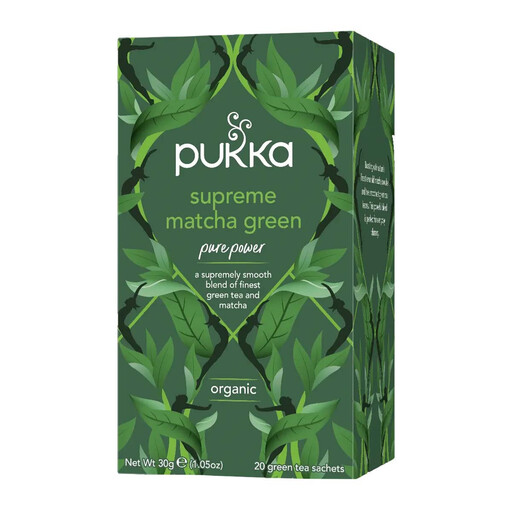 Image unavailable
Pukka Matcha Green Tea Organic, 30 g
Worth considering if you’d like matcha green tea with your sandwich. This product is described as organic and comes in a 30 g pack. If you’re serving it at the counter, check how it’s prepared and follow the brewing instructions. If you require Fairtrade/Max Havelaar, check that the product carries this label.
View on Joybuy
Frequently asked questions
How can I check whether green tea carries the Fairtrade/Max Havelaar label?
Look for the label on the packaging or the product page for the exact tea you’re considering. Fairtrade/Max Havelaar France states that its labels meet its standards and are backed by a certification system. The words ‘organic’ or ‘fair trade’ alone don’t confirm that the label is present.
Does ‘fair trade’ mean Fairtrade/Max Havelaar?
No, the two claims aren’t automatically equivalent. To check whether a green tea meets your requirements, look at the scheme or label stated on the product rather than relying on the word ‘fair trade’ alone.
Which green tea should I choose to avoid added flavours with a sandwich?
Choose a product whose ingredients list contains green tea alone. Twinings lists ‘green tea’ as the only ingredient in its Pure Green Tea, although this doesn’t tell you whether it has any fair trade certification.
Is loose-leaf green tea suitable for serving with sandwiches?
Yes, if you can measure the tea and follow the preparation instructions consistently. For its loose-leaf ginger and lime peel blend, Ethiquable recommends 2 g per 20 cl, water at 80 °C and 3 to 4 minutes’ brewing time. Tea bags mean you don’t have to measure out loose leaves during service.


