What should you look for?
First decide whether Fairtrade/Max Havelaar is a must-have or whether another fair trade standard will suit you. Then compare the ingredients in teas that meet your criteria: plain tea and an aromatic blend will each bring something different to your breakfast.
| What to consider |
What to check |
Who is it for? |
| Label and traceability |
The logo or claim on the specific product, the proportion stated and any ‘mass balance’ wording. |
If I specifically want Fairtrade/Max Havelaar, a different fair trade scheme won’t meet my needs; around 42% of consumers would prioritise this proof of certification. |
| Taste profile |
The ingredients list and whether it contains mint, bergamot or matcha, depending on the flavour you want. |
With an already sweet breakfast, I might prefer plain tea or look for a flavour that contrasts with the food. Around 33% of consumers would put flavour pairing first. |
| Ingredients and caffeine |
The ingredients in the specific product and any other sources of caffeine you consume during the day. |
I want to know what’s in my blend and take my sensitivity to caffeine into account; around 25% of consumers would make this a priority. |
Brands to consider
The brand alone doesn’t determine the standard or the ingredients, so compare the claims on each green tea.
Clipper
Worth considering if you’re looking for an explicit Fairtrade claim on plain or mint green tea.
- Clipper says its plain green tea is sold to 100% international Fairtrade standards.
- Its mint green tea carries a different claim: 94% of total weight on a mass-balance basis. Check each blend individually.
Ethiquable
Green teas, both plain and flavoured, to consider if you’re looking beyond Fairtrade/Max Havelaar for fair trade options.
- Ethiquable states that its mint blend contains 60% green tea and 40% Nana mint. Its Earl Grey listing states that 92% of the ingredients come from fair trade.
- The WFTO certification mentioned for these products should not be confused with the Fairtrade/Max Havelaar label.
Pukka
An option for green tea and matcha blends if the Fair for Life standard suits you.
- Pukka states that its teas are certified to the Fair for Life standard.
- Fair for Life is separate from Fairtrade/Max Havelaar, so check the claim and the ingredients it applies to on the product you choose.
Twinings
A useful point of comparison for the taste of plain green tea and flavoured blends.
- Twinings lists ‘green tea’ as the sole ingredient in its Simply Pure Green Tea.
- If Fairtrade/Max Havelaar is a must-have, check for this claim on the product you’re considering.
Kusmi Tea
A brand to consider when comparing plain and flavoured green teas, in tea bags or loose-leaf form.
- The French range includes a variety of organic green tea profiles and formats.
- An organic claim alone doesn’t meet a Fairtrade requirement, so check the standard for the specific product.
Green teas available on Joybuy
These two Pukka green teas may suit you if you’re looking for fair trade and are happy with Fair for Life rather than requiring Fairtrade/Max Havelaar. The first combines mint and matcha; the second focuses on green tea and matcha. If the standard is a deciding factor, check the claim on the packaging of the product you choose.
 Image unavailable
Pukka Mint Matcha Green Tea, 20 tea bags
Worth considering if you’d prefer green tea with mint and matcha to plain tea, and the Fair for Life standard suits you.
Pack size: 20 tea bags. If you specifically require Fairtrade/Max Havelaar, check the label on this product before choosing.
View on Joybuy
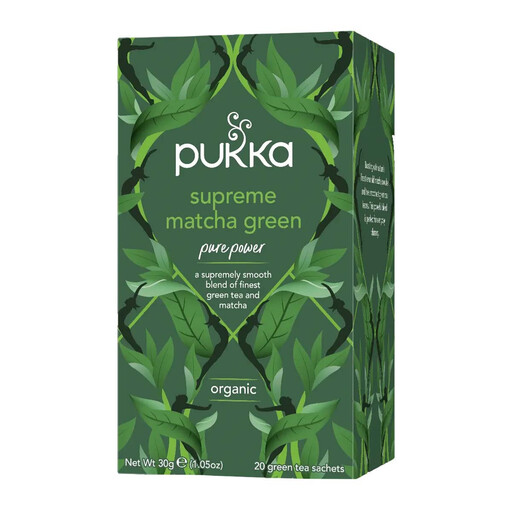 Image unavailable
Pukka Matcha Green Tea Organic, 30 g
Worth considering if you’re looking for a green tea and matcha blend and are happy with a fair trade standard other than Fairtrade/Max Havelaar.
The listing for this product states that it contains 98% green tea and 2% matcha, with a net quantity of 30 g. Check the pack size and what the certification claim covers on the packaging.
View on Joybuy
Frequently asked questions
How can I identify a Fairtrade claim on green tea?
Check the logo or Fairtrade/Max Havelaar claim on the pack of the specific product, along with the ingredients it applies to and any mass-balance wording. Fairtrade/Max Havelaar France describes its label as being based on social, economic and environmental criteria.
Does mass balance guarantee that the leaves in my box have been physically kept separate?
No. Fairtrade/Max Havelaar France explains that mass balance allows products to be mixed within the supply chain, while tracking the volumes bought and sold on Fairtrade terms. Read the product claim to understand which proportion it applies to.
Is organic green tea always Fairtrade?
No. An organic claim doesn’t replace a fair trade claim. If you require Fairtrade/Max Havelaar, look for that standard on the specific product rather than relying on an organic claim alone or a different certification such as Fair for Life.
What should I compare in a green tea blend?
First compare the ingredients list and the fair trade claim for each blend. For pre-packed food sold in France, the DGCCRF notes that labelling information must be visible, legible and at least in French.
What should I consider if I’m sensitive to caffeine?
Tea naturally contains caffeine, even when served at breakfast. The Anses notes that people’s sensitivity to its effects varies, so take any other sources of caffeine you consume into account and seek professional advice if your circumstances call for it.


