People looking for clear Fairtrade credentials
You want to see which label applies and which ingredients it covers on the packaging or product page, rather than relying on the brand name alone.


For regular shopping, start by choosing a specific product whose packaging states which Fairtrade label it carries and which ingredients it covers, rather than relying on the brand’s positioning alone. Then choose between plain green tea and blends according to your taste, the format that suits you and what’s available in your shop. If caffeine is a consideration, factor that into your choice too.
You want to see which label applies and which ingredients it covers on the packaging or product page, rather than relying on the brand name alone.
You prefer plain green tea or a short ingredient list, and want to compare the net weight and number of tea bags before your next shop.
You consider when you drink tea and how sensitive you are to caffeine. Anses notes that tea naturally contains caffeine, and its effects can vary depending on factors such as age, health and consumption habits.
When buying green tea regularly, start with the specific product: Fairtrade claims, ingredients and pack size can vary from one box to another, even within the same brand.
| Criterion | What to check | Who is it for? |
|---|---|---|
| Fairtrade credentials | Look for the label or certification statement, then check which ingredients it covers and what percentage. | I want to know what the Fairtrade commitment covers before choosing a box. Around 36 % of consumers say this is their top priority. |
| Pack size and repeat purchases | Compare the net weight and number of tea bags, then check availability at your shop. | For my regular shop, I need a format that suits my routine and a product I can find again. This is the top priority for around 29 % of consumers. |
| Taste and ingredients | Tell plain green tea apart from blends, and read the ingredients list. | If I drink this tea often, I want to enjoy the flavour and know what’s in a flavoured blend. Around 21 % of consumers make their choice based first on taste and ingredients. |
| Caffeine | Consider when you drink it and what other caffeinated drinks you have; seek advice tailored to your circumstances if needed. | I prefer to think about my caffeine intake before adding tea to my routine. This is the top concern for around 14 % of consumers. |
These two claims refer to different things. A product may display both, but you should check separately what each one covers.
On the box you choose, look for the Fairtrade statement and check whether it applies only to the green tea or to other ingredients in the blend too.
Mint, citrus and other ingredients affect the blend’s composition and taste. The Fairtrade claim may also cover different ingredients depending on the recipe.
If you want green tea only, read the ingredients list. For a blend, check which ingredients are covered by the Fairtrade statement too.
Tea naturally contains caffeine. Anses notes that it may affect how easily you fall asleep and the quality of your sleep, with effects varying between people and according to their habits.
Take account of any other caffeinated drinks you have during the day, and ask a healthcare professional for advice if your personal circumstances call for it.
These examples relate to specific products. Always check the claims on the one you’re considering buying.
A plain organic green tea product whose Fairtrade/Max Havelaar claim is explained on the Carrefour product page.
A range of organic Fairtrade green teas, including plain and mint varieties.
An organic range that includes sencha green tea labelled as Fairtrade.
This matcha green tea is worth considering if you’re looking for a blend rather than plain green tea. If Fairtrade credentials are your deciding factor, check the claims on this product’s packaging and what they cover before choosing it.
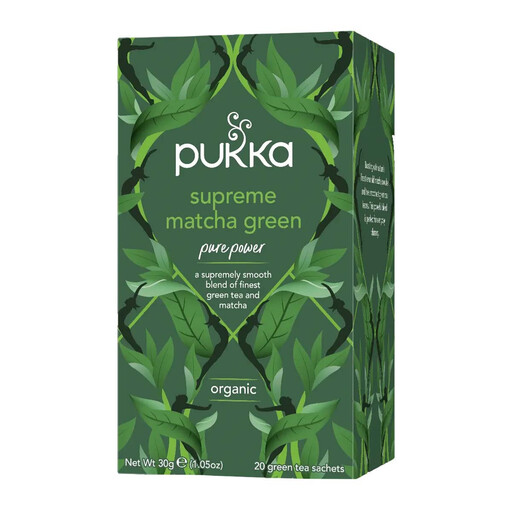 Image unavailable
Worth considering if you prefer a matcha blend: check the ingredients list and the Fairtrade claim on the box to see whether they meet your requirements.
30 g pack.
According to Fairtrade/Max Havelaar France, the label covers social, economic and environmental criteria applied to the product’s cultivation and sale. For the box you’re interested in, also check which ingredients are covered and to what extent.
No. “Organic” and “Fairtrade” are separate claims. Check each one on the packaging or product page for the specific product, particularly if it’s a blend.
Bear in mind that tea naturally contains caffeine, regardless of its Fairtrade label. Anses notes that it may affect sleep. Consider your other sources of caffeine, and ask for personalised medical advice if you’re taking medication, have a health condition or are unsure.
Compare the net weight and number of tea bags, then confirm availability after selecting your shop or your collection or delivery option. A format that suits you is only useful for regular repeat purchases if you can actually find it again.