Shoppers mindful of added sugars
You’re looking for tea to make without adding sugar, and want to tell the difference between leaves or tea bags and ready-to-drink beverages or preparations, which may have a different composition.


When shopping, first choose a green tea whose ingredients match the drink you want to make. Don’t assume that a product called ‘green tea’ contains no added sugars. If Fairtrade/Max Havelaar certification matters to you, check that the specific product carries the label. Also take caffeine into account, and don’t consider tea a treatment for diabetes.
You’re looking for tea to make without adding sugar, and want to tell the difference between leaves or tea bags and ready-to-drink beverages or preparations, which may have a different composition.
You want to be sure that Fairtrade/Max Havelaar certification applies to the tea you’re buying, rather than assuming a product is certified based on the brand name or the words ‘fair trade’.
You enjoy green tea, but when and how much you drink may matter for your sleep or personal circumstances. The French Agency for Food, Environmental and Occupational Health & Safety (Anses) highlights the possible effects of caffeine on falling asleep and sleep quality.
Start by distinguishing tea for brewing from other types of preparation, then check the ingredients and fair-trade information for the specific product. Taste, format and caffeine can help you choose between products that meet your criteria.
| Criterion | What to check | Who is it for? |
|---|---|---|
| Ingredients | Read the ingredients for the specific product. For a ready-to-drink beverage or another preparation, check the nutritional information too. | If I want to make my tea without adding sugar, I need to be able to distinguish plain leaves from a recipe that contains ingredients such as sugar or honey. Around 36% of shoppers prioritise the ingredients. |
| Certification | Look for the Fairtrade/Max Havelaar label and, for products with multiple ingredients, check which ingredient it applies to. | A general commitment to fair trade isn’t enough if I’m specifically looking for this label on my tea. Certification is the top criterion for around 29% of shoppers. |
| Taste and format | Compare plain tea with flavoured blends, as well as tea bags with loose leaves. Check the ingredients for each blend. | If I want to enjoy tea regularly, I look for a flavour and preparation method that suit me, without assuming that flavouring means added sugar. Taste and format come first for around 21% of shoppers. |
| Caffeine | Distinguish everyday tea from supplements or concentrated preparations, and check for any other possible sources of caffeine. | If caffeine affects my sleep, when I drink it and what type of product I choose both matter. Managing caffeine is the top priority for around 14% of shoppers. |
Ready-to-drink beverages and other tea-based preparations may contain different ingredients from loose-leaf or bagged tea.
Check the ingredients and, depending on the product, the nutritional information too, rather than relying on the product name alone.
A brand’s stated commitment to fair trade doesn’t necessarily mean that the specific product carries the Fairtrade/Max Havelaar label.
If the label is essential to you, look for it on the box and read the details about the certified tea.
A food supplement or preparation combining green tea with other substances isn’t the same as an everyday tea bag. Anses has reported adverse effects linked to certain preparations.
Check what type of product it is before adding it to your basket. If you’re taking medication or have a particular medical condition, ask a healthcare professional for advice tailored to you.
The caffeine in tea may affect sleep in people who are sensitive to it, as Anses points out.
Think about when and how much you drink. If it’s a blend, check for any other sources of caffeine too.
The brand offers, among other products, an organic Fairtrade green tea flavoured with lemon and lime, listed by Auchan in a box of 20 tea bags.
ETHIQUABLE offers organic Fairtrade green teas from Vietnam, including plain and jasmine varieties.
Clipper offers a plain organic Fairtrade green tea.
This matcha green tea is worth considering if you’re looking for tea to brew. If the Fairtrade/Max Havelaar label is essential to your choice, check that it appears on the packaging before you buy.
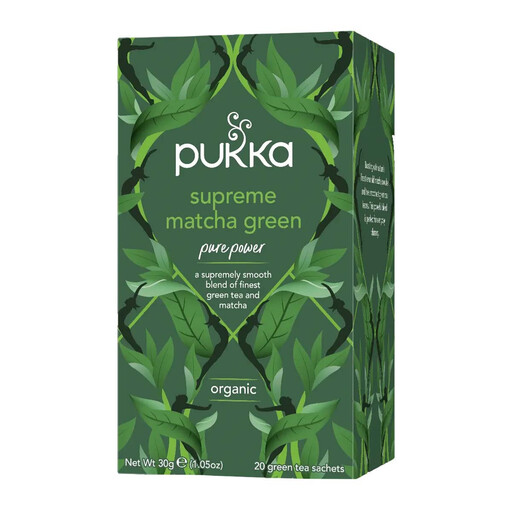 Image unavailable
An option to consider if you’re looking for matcha green tea to prepare yourself. The listed pack size is 30 g. Check the ingredients and certification information on the packaging, along with the caffeine information if it matters to you.
No. Fair-trade information relates to the supply chain, not the drink’s ingredients or its effect on diabetes. Check whether it’s tea for brewing, a ready-to-drink beverage or another preparation, then read the ingredients for the product you’ve chosen.
Look for the label on the box and read any accompanying details, including which ingredient it applies to in a product with multiple ingredients. Fairtrade Max Havelaar France says its labels refer to social, environmental and economic standards.
Yes, if its ingredients match what you’re looking for: flavoured doesn’t automatically mean sweetened. Carrefour’s product listing for Jardin BiO étic lemon and lime green tea includes green tea, natural lemon flavouring and lime extract. Check the ingredients separately for any other blend.
No. Tea is not a substitute for diabetes care or treatment. France’s consumer protection agency, the DGCCRF, points out that nutrition and health claims on food are regulated, and that a food product must not be presented as a substitute for medical treatment.
If you’re sensitive to caffeine or have trouble sleeping, think about when and how much you drink. Anses says caffeine can delay falling asleep and reduce sleep duration or quality. If you’re pregnant, taking medication or have a particular medical condition, ask a healthcare professional for personalised advice.