Shoppers who care about fair trade certification
You want to identify the standard on the pack and know what proportion of the infusion it covers, particularly if you’re specifically looking for Fairtrade/Max Havelaar.


If you’re specifically looking for an evening infusion certified Fairtrade/Max Havelaar, check the certification and the proportion it covers for the product you choose. According to Carrefour France’s product information, Alter Eco Organic Rooibos contains 100% rooibos, and 100% of its weight meets Fairtrade/Max Havelaar standards. Fair for Life is a separate fair trade standard, and the proportion stated varies between the Pukka recipes reviewed. If you regularly enjoy a cup in the evening, also check whether it’s labelled caffeine-free and whether it contains liquorice.
You want to identify the standard on the pack and know what proportion of the infusion it covers, particularly if you’re specifically looking for Fairtrade/Max Havelaar.
You want a caffeine-free cup and are comparing rooibos with herbal blends. You don’t assume you know what’s in an infusion just from its name.
You read the ingredients before choosing an infusion to drink regularly, especially to check for liquorice and take account of the precautions highlighted by Anses.
For a fair trade evening infusion, start with the certification you’re looking for, then check the caffeine information and ingredients for the specific recipe.
| What to check | Look for | Who it matters to |
|---|---|---|
| Fair trade certification | The name of the standard and the certified proportion stated for this recipe, particularly if you require Fairtrade/Max Havelaar rather than Fair for Life. | If fair trade is a reason for my purchase, I want to know exactly what the certification covers. Around 42% of consumers would put this proof first. |
| Caffeine | A caffeine-free or tea-free statement on the product you’re considering, rather than relying on the word “infusion” or an evening-themed name. | For my late-night cup, I’m primarily looking for a recipe that’s clearly labelled caffeine-free. Around 33% of consumers would make this their top criterion. |
| Flavour and herbs | The ingredients list and flavour profile. If you’ll drink it regularly, pay particular attention to liquorice. | I want to enjoy the flavour while checking for herbs that may require care if I drink them often. Around 25% of consumers would put the choice of ingredients first. |
Different standards and certified proportions are not interchangeable. Carrefour France’s product information states that 100% of the weight of Alter Eco Organic Rooibos meets Fairtrade/Max Havelaar standards. By comparison, the Fair for Life ingredient proportions are 80% for Pukka Detox Red Berries and 44.5% for Pukka Digestion.
Check the logo, the name of the standard and the stated proportion on the pack of the recipe you’re interested in.
An evocative name doesn’t tell you everything about the ingredients, nor does it prove that the infusion has an effect on sleep. The products reviewed range from plain rooibos to blends containing different herbs and flavourings.
Read the ingredients and look for an explicit caffeine statement if you want to avoid caffeine in your evening cup.
Anses warns about the risks of high, repeated liquorice consumption, particularly for certain groups and alongside some medicines. The Pukka Detox Red Berries and Digestion recipes reviewed both contain liquorice.
Check the herbs listed in each recipe. If these precautions apply to you, speak to a healthcare professional before drinking it regularly.
Worth considering if you’re looking for plain rooibos with clearly stated Fairtrade/Max Havelaar coverage.
Herbal recipes to compare if Fair for Life meets your fair trade requirements.
A useful brand to compare when checking fair trade claims on a rooibos blend.
An option for comparing evening infusion flavours, separately from checking fair trade certification.
These three Pukka infusions offer different recipes for an evening cup. Compare the ingredients and certification claims on each pack: the brand name alone doesn’t tell you what proportion of a recipe is certified.
 Image unavailable
Worth considering if you enjoy ginger notes in an evening infusion. Check the pack for caffeine information and details of the fair trade certification. If you drink it regularly, also check whether it contains liquorice.
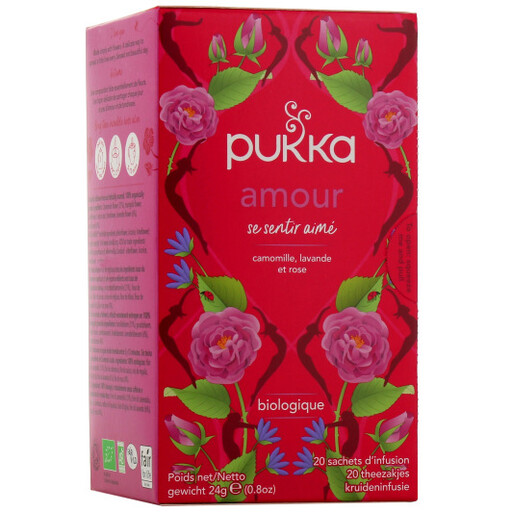 Image unavailable
Worth considering if you prefer a floral flavour for your evening cup. Check the ingredients, caffeine information and fair trade standard stated for this product, particularly if you want to avoid liquorice.
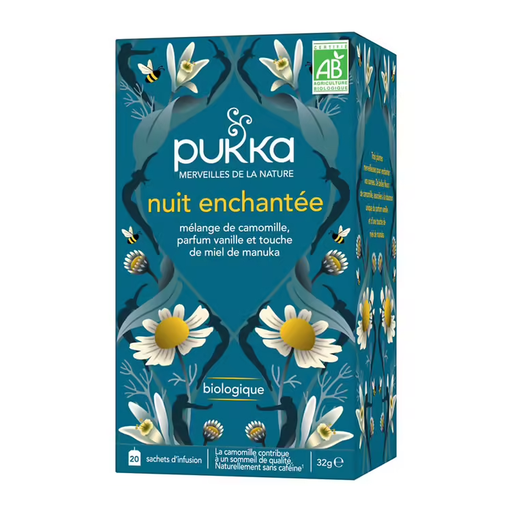 Image unavailable
Worth considering for its flavour if you’re looking for an infusion presented as an evening blend, but don’t assume it’s caffeine-free from the name alone. Check the pack for caffeine information, ingredients and details of any fair trade claims.
Not necessarily for a composite product. Fairtrade/Max Havelaar France distinguishes between the standard label, where the ingredients meet its requirements, and the label with an arrow, which directs you to further information on the back of the pack. Check the logo and the stated proportion for the infusion you choose.
No. They are two separate fair trade standards. If you specifically require Fairtrade/Max Havelaar, a Fair for Life claim won’t meet that criterion. Check the standard and the proportion stated for the specific recipe.
Check whether liquorice is listed in the ingredients and consider how often you’ll drink it. Anses warns about the risks of high, repeated consumption, particularly for children, pregnant or breastfeeding women, people with certain cardiovascular, kidney or liver conditions, and those taking certain medicines. If any of these apply to you, ask a healthcare professional for advice.
Start with the ingredients list, then check any certification and caffeine information that’s relevant to your choice. For prepacked foods sold in France, the DGCCRF reminds consumers that labelling information must be visible, legible and provided at least in French.