Who is this guide for?

Espresso lovers who care about Fairtrade certification

You want to find the Fairtrade/Max Havelaar mark on the specific product you buy, rather than relying on general claims about sustainability. Max Havelaar France links its certification to social, economic and environmental criteria.

Households with a grinder

You can choose whole beans and adjust the grind for your preferred brewing method. Carrefour and MaxiCoffee list whole-bean coffees carrying the Fairtrade/Max Havelaar mark. Next, check that the product is suitable for how you plan to use your machine.

Anyone who prefers a smooth cup in winter

You’re looking for a coffee to enjoy black or with a splash of milk. Auchan describes its Les Cafés Sati Peru whole-bean coffee, which is presented as Fairtrade/Max Havelaar certified, as smooth and well balanced, with chocolate and hazelnut notes. These tasting notes don’t guarantee the result you’ll get with your recipe.

What should you look for?

For this choice, check the certification on the specific product, rule out formats that won’t work with your machine, then compare the tasting notes and, if relevant to you, the caffeine content.

What to consider What to check Who it matters to
Fairtrade certification Look for the Fairtrade/Max Havelaar mark on the exact product, and check what proportion of the coffee it applies to, if this information is provided. I want to identify certified coffee without relying on a general sustainability claim. Around 36% of consumers are said to prioritise this check.
Flavour profile Compare the tasting notes with the drink you make, whether you take it black or with milk. If the coffee is new to you, try a smaller pack. For a winter cup, I’m looking for flavours I enjoy in my usual drink. This is said to be a priority for around 29% of consumers.
Format and machine Check which formats your machine accepts: whole beans with a grinder, ground coffee, E.S.E. pods or capsules for the right system. I need to be able to use the coffee with my equipment, without assuming that different formats are interchangeable. Around 21% of consumers are said to put compatibility first.
Caffeine If you’re looking for decaffeinated coffee, check that this is stated on the exact product, and make sure the format is right for your machine. When I drink coffee late in the day, I want to take my sensitivity to caffeine into account. Managing caffeine is said to be the top criterion for around 14% of consumers.

Mistakes to avoid

  • Confusing a brand’s general commitments with coffee certification

    A brand’s sustainability messaging doesn’t mean that every product it sells carries the Fairtrade/Max Havelaar mark.

    Check the product listing or packaging for the coffee you’ve chosen. Max Havelaar France says its certification is linked to social, economic and environmental criteria.

  • Choosing the coffee before checking your machine

    Whole beans need to be ground, while ground coffee, E.S.E. pods and capsules each require suitable equipment.

    Check your machine’s manual to see which formats it accepts and, where relevant, which grind settings are suitable.

  • Relying on tasting notes alone

    A coffee described as smooth and chocolatey may not taste the way you’d like once you’ve added your usual amount of milk.

    If possible, try a smaller pack with your usual recipe before choosing a larger one.

  • Forgetting about caffeine in drinks you have late in the day

    Anses says caffeine can delay falling asleep and reduce sleep duration or quality, although the effects vary from person to person.

    If this matters to you, look for a product clearly labelled as decaffeinated in a format that works with your machine.

Brands to know for this choice

Café Royal

An option to consider if you’re looking for whole-bean espresso with an explicit Fairtrade mark.

  • MaxiCoffee describes Café Royal Espresso Bio whole beans as 100% arabica, organic and Fairtrade/Max Havelaar certified.
  • This format requires a machine with a built-in grinder or a separate grinder. These details apply to this product, not the entire Café Royal range.

Carrefour Bio

Whole-bean and ground options to consider, depending on the type of machine you use.

  • For the 100% organic arabica whole-bean and ground Peru coffees mentioned here, Carrefour says the coffee comes from fair trade under Fairtrade/Max Havelaar standards.
  • These listings don’t all describe the products as espresso coffees, so check the grind and your machine’s instructions.

Bio Village

An option to explore if you’re looking for Fairtrade ground coffee, including decaffeinated varieties.

  • E.Leclerc describes a Bio Village ground pure arabica coffee as decaffeinated, organic and Fairtrade.
  • Check that the grind of the product you choose is suitable for making espresso.

Les Cafés Sati

A whole-bean option to consider if you enjoy smooth, well-balanced tasting notes.

  • Auchan describes the brand’s Peru whole-bean coffee as organic and Fairtrade/Max Havelaar certified, with stated chocolate and hazelnut notes.
  • The result depends on how you prepare it. These tasting notes don’t guarantee that you’ll enjoy the coffee in a larger milky drink.

Café Chapuis

A ground coffee option for equipment that accepts this format.

  • Auchan describes a Café Chapuis ground 100% arabica coffee as carrying the Max Havelaar Fairtrade mark.
  • Before choosing it for espresso, check that the grind is suitable for your machine.

Ground coffee to consider on Joybuy

This product is for anyone who uses ground coffee to make a winter drink. If you’re specifically looking for Fairtrade/Max Havelaar espresso, check the product for the certification mark and make sure the grind is right for your machine before deciding.
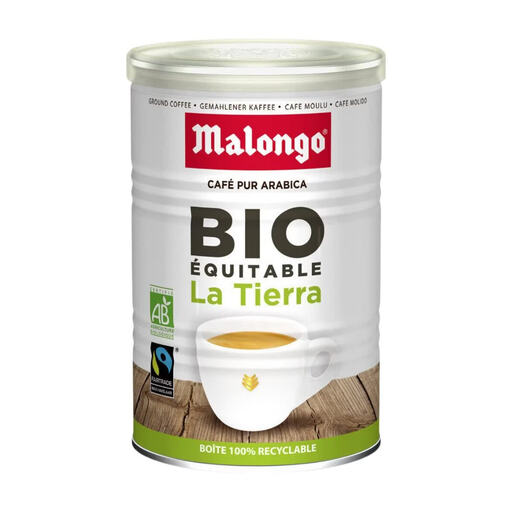
MALONGO La Tierra organic ground coffee, 250 g pack

MALONGO La Tierra organic ground coffee, 250 g

An option to consider if your machine accepts ground coffee. The pack contains 250 g. Before choosing it for these features, check the grind size recommended for your machine and the exact Fairtrade mark shown on the product.

View on Joybuy

Frequently asked questions

How can I identify Fairtrade/Max Havelaar coffee?

Look for the Fairtrade/Max Havelaar mark on the packaging or listing for the exact product. Max Havelaar France links this certification to social, economic and environmental criteria; a general sustainability claim isn’t enough to confirm that a product is certified.

Are all Fairtrade coffees suitable for an espresso machine?

No – the format needs to be right for your machine. Whole beans require a built-in or separate grinder, ground coffee needs a machine that accepts it, and E.S.E. pods require equipment compatible with this standard. Check your machine’s manual before choosing.

Is a smooth, chocolatey coffee suitable for a milky drink?

It may suit your taste, but the tasting notes don’t guarantee the same result once you add milk. If possible, try it with the amount of milk you usually use, starting with a smaller pack.

Can I find decaffeinated Fairtrade coffee?

Yes. E.Leclerc lists a Bio Village ground pure arabica coffee that is decaffeinated, organic and Fairtrade. Check that this format works with your machine.

What should I consider if I drink espresso late in the day?

Caffeine is one factor to consider. Anses says it can delay falling asleep and reduce sleep duration or quality, with sensitivity varying from person to person. A product clearly labelled as decaffeinated may suit you if you prefer to have less caffeine.