Espresso lovers with a grinder
If you use a built-in or separate grinder, beans let you adjust the grind to suit your extraction method. Also check that the specific product you choose carries the Fairtrade label you’re looking for.


To choose Fairtrade coffee for your morning espresso, first check that the specific product carries the Fairtrade/Max Havelaar label, then choose a format that works with your machine. Beans let you adjust the grind if you have a grinder; ground coffee or pods make preparation easier, provided your machine accepts them. The flavour in the cup comes down to your personal preference.
If you use a built-in or separate grinder, beans let you adjust the grind to suit your extraction method. Also check that the specific product you choose carries the Fairtrade label you’re looking for.
If you want to make coffee in the morning without grinding beans, start with a format your machine accepts. Pods, in particular, need to match your machine’s system. Then check the label on that specific product.
If Fairtrade/Max Havelaar is a must-have, look for that label rather than a general claim about sustainability. Commerce Équitable France describes labels as distinct standards, each with its own commitments and checks.
Start with the label you require and a format that works with your machine. Then compare the flavour notes and choose a pack size that suits how much coffee you drink in the morning.
| What to consider | What to check | Who it matters to |
|---|---|---|
| Certification | The Fairtrade/Max Havelaar label on the specific product, or a statement explicitly linking the coffee to its standards. Fair For Life is a separate standard. | I want to see Fairtrade/Max Havelaar on the coffee I choose, rather than rely on the word ‘Fairtrade’ alone. Certification would come first for around 36% of consumers. |
| Machine and preparation | Beans if you have a grinder, ground coffee with a grind suitable for your machine, or pods that match its system. | I make my espresso before heading out and don’t want to buy a format I can’t use in my machine. Around 29% of consumers would prioritise compatibility. |
| Taste in the cup | The flavour notes, stated intensity and roast level of the specific product. Intensity isn’t measured consistently across brands. | For my morning coffee, I’m looking for a flavour profile I’ll enjoy, rather than relying on an intensity rating alone. Taste would be the main factor for around 21% of consumers. |
| Pack size and availability | The pack size in relation to how much coffee you drink, and whether the product is available in a way that suits you. | I prefer a pack size that suits how often I make coffee, and a product that’s easy to find again. For around 14% of consumers, pack size and availability would come before other factors. |
These claims don’t mean the same thing. For example, the Alter Eco ground coffee listed by Carrefour follows the Fair For Life standard. That isn’t enough to describe it as Fairtrade/Max Havelaar certified.
If you’re specifically looking for Fairtrade, check the label or a reference to Fairtrade/Max Havelaar standards on the pack you choose.
Ground coffee is only suitable if your machine accepts it and the grind is right. Pods must also match the system your machine uses; the different formats aren’t interchangeable.
Check your machine’s instructions before choosing between beans, ground coffee and pods. Then check the grind or pod type specified for the product.
If you choose beans, you’ll also need a grinder and time to adjust the grind.
Once opened, exposure to air, light, heat or moisture can affect the coffee’s aroma.
Seal the pack carefully after each use and choose a size you can get through at your own pace.
A brand may offer several formats and follow different standards. Choose a specific product based on its labelling and your equipment, rather than assuming the same label applies to an entire range.
Two products to consider, depending on whether you have a grinder or a machine that accepts ground coffee.
Coffees available as beans, ground coffee and pods, making it easy to compare different preparation routines.
Origin-specific coffees available as beans or ground coffee, among other formats, for shoppers who consider origin and preparation when choosing.
An option to consider if you’re happy with a Fairtrade standard other than Fairtrade/Max Havelaar.
A product in bean form to consider if you have a grinder and want to tailor your espresso to your taste.
This product is for making espresso with ground coffee. It’s suitable for people whose machine accepts this format. Check the grind your machine requires and the label on the pack.
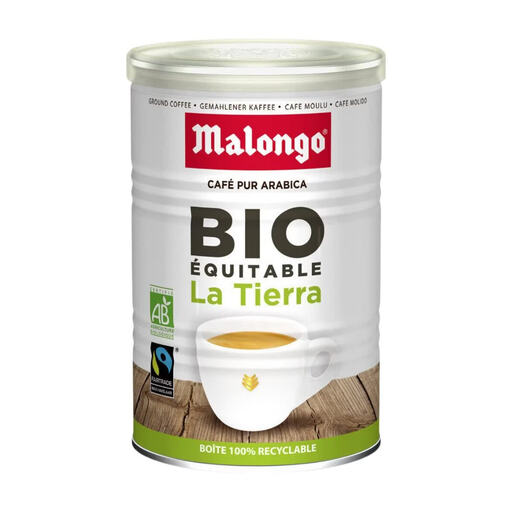 Image unavailable
For making espresso without grinding beans, provided the grind suits your machine.
According to its Joybuy listing, this 250 g ground coffee is 100% organic Arabica and described as Fairtrade certified. If you specifically require the Fairtrade/Max Havelaar label, check the labelling on the pack.
Look for the Fairtrade/Max Havelaar label on the product you choose, or an explicit statement that the coffee meets these standards. Claims such as ‘organic’, ‘sustainable’ or simply ‘Fairtrade’ don’t, on their own, identify this specific certification.
No. Your machine must accept ground coffee, and the grind needs to suit its extraction method. Check the machine’s instructions and the information on the pack before buying.
Choose beans if you have a grinder and want to adjust the grind for your espresso. Ground coffee saves you that step in the morning, but gives you less scope to make adjustments and must be suitable for your machine.
Seal the pack well after each use and keep it away from air, light, heat and moisture. Choosing a pack size that suits how much coffee you drink also helps you avoid leaving an opened pack unused for too long.