Shoppers who want Fairtrade proof
You want to distinguish Fairtrade/Max Havelaar certification from an organic claim or a general commitment to sustainability. Check the specific product rather than relying on the brand’s overall positioning.


If you’re looking for Fairtrade espresso, first choose a product whose listing or packaging explicitly mentions Fairtrade/Max Havelaar. Then opt for beans if you have a grinder, or ground coffee if your machine accepts it. Certification doesn’t determine the flavour or whether the coffee is compatible with your equipment.
You want to distinguish Fairtrade/Max Havelaar certification from an organic claim or a general commitment to sustainability. Check the specific product rather than relying on the brand’s overall positioning.
You make espresso from beans and are looking for a product with an explicit Fairtrade claim. Make sure the format suits your machine, or your grinder if you use a semi-automatic machine.
You want to make espresso without grinding the beans yourself. A certified ground coffee could be suitable if your machine accepts this format and the grind size.
To choose, confirm the Fairtrade claim on the specific coffee, check that its format is suitable for your machine, then compare the advertised flavour profiles.
| Criteria | What to check | Who is it for? |
|---|---|---|
| Fairtrade proof | Look for the Fairtrade/Max Havelaar claim on the listing or packaging for the specific product. Don’t assume it has this certification just because it’s labelled organic. | I don’t want to confuse another commitment with the certification I’m looking for; around 42% of consumers would make this proof their priority. |
| Format for your machine | Check whether your equipment uses beans that need grinding or accepts ground coffee. A capsule system requires a compatible format. | I want to be able to use the coffee with the machine I already own; around 33% of consumers would put compatibility first. |
| Flavour profile | Compare the origin, roast and advertised tasting notes, but don’t take them as a guarantee of flavour. | Once I’ve confirmed the certification and format, I want to choose between products based on the cup I’m after; around 25% of consumers would prioritise this profile. |
These claims refer to different certifications. A coffee may meet a different objective without meeting the specific Fairtrade/Max Havelaar certification requirement you have in mind.
Look for the Fairtrade/Max Havelaar name or logo on the product you’re considering.
Whole beans can’t be used as they are in a machine that only takes ground coffee or capsules.
Check what type of machine you have before choosing between beans, ground coffee and a format compatible with a capsule system.
Terms such as “smooth” or “chocolatey” describe the profile advertised by a brand or retailer; they don’t tell you whether you’ll like it.
Use these details to shortlist a product and, if a smaller pack is available, try it before buying more.
A product being listed online doesn’t necessarily mean it can be delivered to your address or collected from your store.
Check delivery or collection options and availability when you place your order.
Worth looking at if you’re seeking beans or ground coffee with an explicit Fairtrade/Max Havelaar claim.
A whole-bean option for shoppers with a built-in grinder or a separate grinder.
A whole-bean option to consider if you’re looking for coffee described as organic and Fairtrade.
A brand worth exploring for espresso formats, while checking any Fairtrade requirement separately.
A brand offering several coffee formats, including beans and ground coffee.
This ground coffee is for machines that accept this format. Check the grind size your machine requires before ordering.
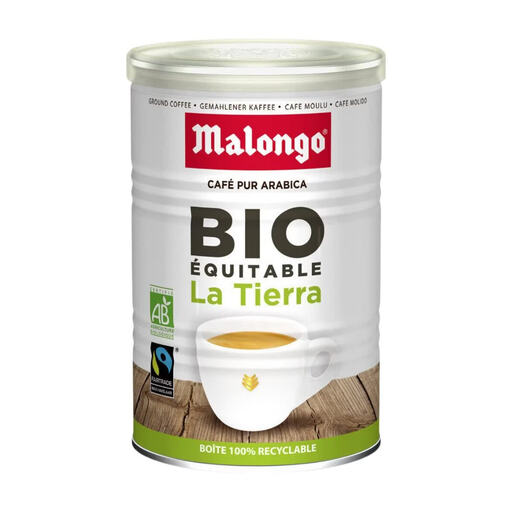 Image unavailable
If your machine takes ground coffee, this product is worth considering if you’re also looking for a Fairtrade claim: its description says it’s certified and suitable for espresso.
Check that the grind size is right for your machine. The flavour notes on the listing aren’t a substitute for trying it with your own brewing setup.
No. Organic and Fairtrade/Max Havelaar refer to separate schemes. If Fairtrade certification is what matters to you, look for its name or logo on the specific product. Don’t assume it has this certification just because it’s labelled organic.
No. Beans need to be ground in a built-in grinder or a suitable separate grinder before they can be used in a machine that accepts ground coffee. A machine designed for capsules needs a format that’s compatible with its system.
No. Fairtrade International describes a standard covering the buying and selling of Arabica and Robusta coffee in their primary form, not a guaranteed flavour profile in the cup. To find an espresso style you enjoy, consider the origin, roast and advertised tasting notes separately, then factor in your brewing method.
Not if you specifically require Fairtrade/Max Havelaar. Commerce Équitable France distinguishes this label from Fair for Life, among others. Check the standard shown on the coffee rather than treating all Fairtrade claims as interchangeable.