To choose Fairtrade decaffeinated coffee for an older person, check the decaffeination method and the Fairtrade credentials separately for the exact product: the word “Fairtrade” alone does not confirm that it carries the Fairtrade / Max Havelaar label. Also consider the residual caffeine content if it is stated, and whether the format works with their coffee machine. If they have a health condition or take medication that may be affected by caffeine, ask a healthcare professional for advice.
Who are these criteria for?
Older people who are sensitive to caffeine
If sleep or caffeine tolerance is a key consideration, check the residual caffeine content of the specific coffee. Anses notes that caffeine affects people differently. If someone has a health condition or takes medication that may be affected by caffeine, seek medical or pharmacy advice.
Consumers looking for verifiable Fairtrade credentials
If you specifically want Fairtrade / Max Havelaar certification, look for its logo on the product you choose. A brand’s stated commitment or batch-level traceability does not, on its own, confirm this certification.
Family members who prepare the coffee
To buy coffee that works with the coffee machine already in place, first identify its system and the format it accepts. You can then compare the flavour notes of compatible products.
What should you check before buying?
When choosing decaffeinated coffee for an older person, start with the factors that matter most to your purchase: residual caffeine content, the Fairtrade credentials you’re looking for and compatibility with the coffee machine.
| Criteria |
What to check |
Who it matters to |
| Residual caffeine |
Check the residual caffeine content if it is stated for the exact product. If someone has a health condition or takes medication that may be affected by caffeine, ask a healthcare professional for advice. |
If I’m concerned about sleep or caffeine sensitivity, I want to know what the chosen coffee says about its residual caffeine content; around 42% of consumers prioritise reducing their caffeine intake. |
| Fairtrade credentials |
If certification is a requirement, look for the Fairtrade / Max Havelaar logo on the exact product. Distinguish this from a general statement made by the brand. |
When I’m buying for someone else, I want the Fairtrade guarantee to apply to the coffee in the pack, not just the brand; this proof is a priority for around 33% of consumers. |
| Preparation format |
Check that the beans, ground coffee, capsules or coffee pods are suitable for the equipment being used. For capsules and pods, check which system they are designed for. |
To make coffee with the machine already in place, I need a compatible format; ease of preparation comes first for around 25% of consumers. |
Common pitfalls to avoid
-
Assuming a brand’s commitment means the pack carries the label
A brand may talk about fair trade without every decaffeinated product in its range carrying the Fairtrade / Max Havelaar label you’re looking for.
If this label matters to you, look for its logo on the packaging or the product listing for the exact item.
-
Assuming “decaffeinated” means “caffeine-free”
Decaffeinated coffee can still contain caffeine. Anses notes that its effects vary, including according to a person’s health and certain medications.
Compare residual caffeine levels where they are stated for the products you’re considering. If someone has a health condition or takes medication that may be affected by caffeine, seek medical or pharmacy advice.
-
Choosing a format before checking the coffee machine
Beans, ground coffee, capsules and coffee pods require different equipment. Capsule and pod systems can also vary.
Identify the machine available, then check the compatibility information on the packaging you choose.
Brands to consider
These ranges offer a starting point for comparing formats and product information. Always check the details and labels for the specific product you buy.
Malongo
The Déca Aqua range may appeal to consumers looking for decaffeinated coffee in a choice of formats.
- Malongo offers Déca Aqua as beans, ground coffee and pods. The brand describes it as water-decaffeinated and states that the range contains a maximum of 0.01% caffeine.
- The brand describes it as organic and fair trade. If you require Fairtrade / Max Havelaar certification, check that the chosen pack carries the label.
Ethiquable
Ethiquable’s decaffeinated Moka Ethiopia gives details about the decaffeination process and the coffee’s flavour profile.
- For this product, Ethiquable states that it is decaffeinated using water and CO₂ without solvents, contains no more than 0.1% caffeine and has an intensity of 3/10.
- These details are specific to the decaffeinated Moka Ethiopia and come from the brand. Check the label on the pack if you’re looking for specific Fairtrade certification.
Lobodis
Lobodis provides information about its decaffeination processes and offers traceability based on the batch number.
- The batch number can be used to view the information Lobodis provides about the journey of the coffee concerned.
- Traceability is no substitute for checking whether a specific decaffeinated product carries the Fairtrade / Max Havelaar label.
Decaffeinated coffee to suit your machine
These decaffeinated coffees in capsule or pod form differ mainly in the systems they are designed for. If the Fairtrade / Max Havelaar label or a specific residual caffeine level is essential to your purchase, check the details for the exact product before ordering.
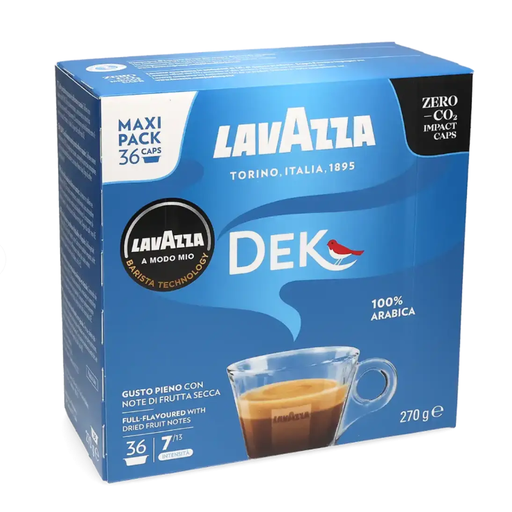 Image unavailable
Lavazza A Modo Mio decaffeinated coffee, 36 capsules
Worth considering if your coffee machine uses the Lavazza A Modo Mio system; check your machine model before buying.
Pack of 36 capsules. If you require Fairtrade / Max Havelaar certification or a specific residual caffeine level, check the details for the exact product.
View on Joybuy
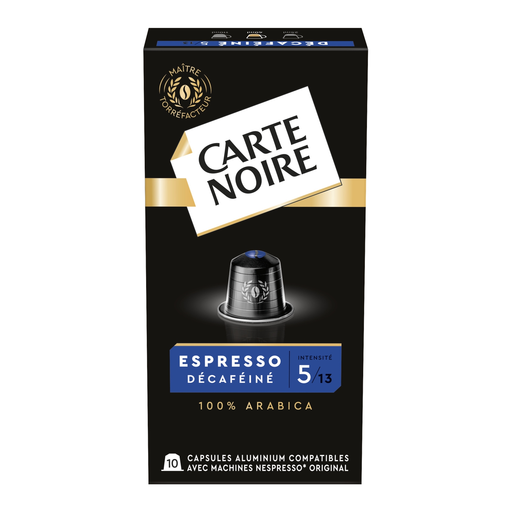 Image unavailable
Carte Noire Decaf Espresso No. 5, 10 aluminium capsules
If you’re choosing coffee capsules, check that your machine accepts the Nespresso format specified for this product.
Pack of 10 aluminium capsules. If Fairtrade / Max Havelaar certification or residual caffeine content is important to you, check the details for the exact product.
View on Joybuy
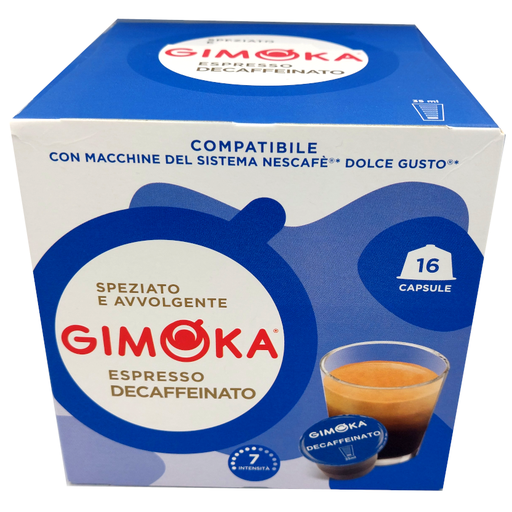 Image unavailable
Gimoka Espresso decaffeinated, compatible with Dolce Gusto, 16 capsules, 112 g
Worth considering for a machine that uses the Dolce Gusto system, once you’ve checked compatibility.
Pack of 16 capsules, weighing 112 g. Check this product for any Fairtrade / Max Havelaar information or residual caffeine details you need.
View on Joybuy
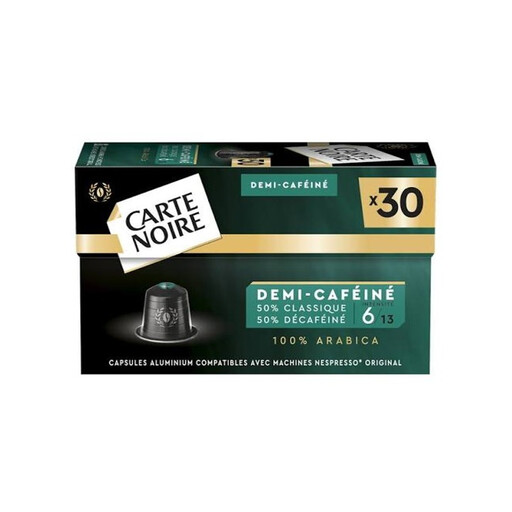 Image unavailable
Carte Noire Nespresso Demi, decaffeinated, 30 capsules
Worth considering if the person uses a compatible original Nespresso machine; check the machine system before choosing.
Pack of 30 capsules. Check the details for this product if you require the Fairtrade / Max Havelaar label or a specific residual caffeine level.
View on Joybuy
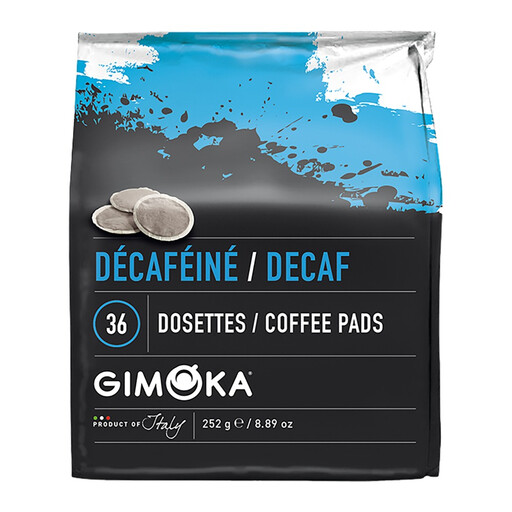 Image unavailable
Gimoka decaffeinated, compatible with Senseo, 36 pods, 252 g
For a coffee machine that accepts Senseo pods, check that they are compatible with the model you use.
Pack of 36 pods, weighing 252 g. If Fairtrade / Max Havelaar credentials or residual caffeine content influence your choice, check the details for this product.
View on Joybuy
Frequently asked questions
How can you tell if coffee is Fairtrade / Max Havelaar certified?
Look for the Fairtrade / Max Havelaar logo on the pack or on the listing for the exact product. According to Fairtrade / Max Havelaar France, the label means that the producers and businesses concerned meet Fairtrade criteria. A general statement about fair trade does not confirm that the coffee you’ve chosen carries this label.
Is decaffeinated coffee completely caffeine-free?
No. The residual caffeine content varies by product. Ethiquable states that its decaffeinated Moka Ethiopia contains no more than 0.1% caffeine, while Malongo gives a maximum of 0.01% for Déca Aqua; these claims do not apply to all decaffeinated coffees. Anses reminds consumers that caffeine affects people differently. If someone has a health condition or takes medication that may be affected by caffeine, seek medical or pharmacy advice.
Which coffee format should you choose for someone else’s coffee machine?
Choose a format that works with the machine they already use. Beans require a grinder, while capsules and pods must match the coffee machine’s system; check this information on each pack.
What should you check on the label of pre-packed coffee sold in France?
Check that the information you need to make your choice is clearly shown on the packaging for the exact product, including details about the format and any labels you’re looking for. The DGCCRF states that food labelling information must be visible, legible and written at least in French.


