If Fairtrade is your top priority, choose a decaffeinated coffee whose exact product reference carries the Fairtrade/Max Havelaar logo or an explicit certification statement. “Organic” and “decaffeinated” on their own aren’t enough. For a meal on the train, choose a format that suits how you can prepare it: instant coffee needs hot water, while ground coffee, coffee pads and capsules need the right equipment before you set off. Buying a drink on board saves you the preparation, but depends on the service available on your train.
Who are these options for?
Travellers looking for verifiable Fairtrade certification
You want Fairtrade/Max Havelaar-certified decaffeinated coffee. Check the packaging or product listing for the exact item you’re considering, rather than relying on “organic”, “decaffeinated” or “responsibly sourced” claims alone.
Travellers without preparation equipment on board
You can prepare your drink before setting off, choose instant coffee if you have access to hot water, or check the catering options on your train.
Travellers choosing based on their coffee machine or taste
You prepare your coffee before the journey and compare the format, strength or decaffeination process. If Fairtrade certification matters to you too, check it separately on the exact product.
What should you check before buying?
For a meal on the train, start with the thing you’re least willing to compromise on, then check how you’ll prepare and carry your coffee.
Decaffeinated instant coffee
Choose this if: you’ll have a cup and hot water during your journey.
Check: convenience doesn’t prove that a product is Fairtrade-certified.
Coffee prepared before you set off
Choose this if: you have the right equipment at home or work for ground coffee, coffee pads or capsules.
Plan ahead: if you won’t have access to this equipment on board, prepare your drink before you get on the train.
Decaffeinated coffee bought on board
Choose this if: your train’s catering service offers decaffeinated coffee and you’d rather not prepare anything yourself.
Check: availability on your journey and, if necessary, certification for the coffee served.
| Criterion | What to check | Who it’s for |
|---|
| Fairtrade certification |
Look for the Fairtrade/Max Havelaar logo or an explicit certification statement on the exact product and format you’re buying. |
I want to be able to identify Fairtrade certification on my decaffeinated coffee, whatever the format; around 36% of consumers would put this criterion first. |
| Convenience during the journey |
Work out whether you’ll prepare your coffee before setting off, have access to hot water or use the on-board catering service. |
If I don’t want to take equipment with me, I need to know how I’ll get my drink during the journey; having decaffeinated coffee readily available would be a priority for around 29% of consumers. |
| Format compatibility |
Choose between instant coffee, ground coffee, soft coffee pads and capsules; check what type of machine you need. |
If I have a coffee machine at home, I want to buy a format I can actually prepare before getting on the train; around 21% of consumers would make compatibility their top criterion. |
| Taste and decaffeination |
Compare the strength, tasting notes and decaffeination process stated for the specific product. |
When I’ve already planned how to prepare my coffee, I prefer to choose based on its stated flavour profile or decaffeination process; around 14% of consumers would make this their priority. |
Mistakes to avoid
-
Assuming “organic” or “responsible” means Fairtrade
These claims don’t, by themselves, mean a product is Fairtrade-certified. Fairtrade Max Havelaar France describes its labels as being linked to social, environmental and economic standards.
Check for the logo or the words “Fairtrade-certified” on the packaging or product listing for the exact decaffeinated coffee you’re buying.
-
Choosing a format without planning how to prepare it
Ground coffee, coffee pads and capsules need the right equipment, while instant coffee needs a cup and hot water. So the format you buy may not be suitable for preparing during your journey.
Prepare your coffee before setting off if you won’t have the necessary equipment, or check the catering options on your train.
-
Counting on Fairtrade decaffeinated coffee being available on board
SNCF Connect explains that catering services vary by train. Seeing decaffeinated coffee on a menu doesn’t guarantee it’ll be available on your journey or that it’s Fairtrade-certified.
Check the options for your train before setting off. If the certification is essential, bring a drink or coffee whose product details you’ve checked.
-
Putting a compostable coffee pad in your home compost
Carte Noire says its Décaféiné N°5 soft coffee pads shouldn’t be put in home compost: they’re compostable through an industrial facility only.
Follow your local recycling and disposal guidance, as well as the instructions on the packaging of the coffee pads you buy.
Brands and retailers to know
Carrefour Bio
The Carrefour France listing for Carrefour Bio 250 g ground decaffeinated coffee states “Fairtrade-certified”, 100% organic Arabica and decaffeinated using CO2.
- Fairtrade certification is explicitly stated for this product.
- Ground coffee requires preparation equipment or needs to be made before you set off. Also check availability at your local shop.
NESCAFÉ
The brand offers products including Spécial Filtre Décaféiné instant coffee, which you prepare with hot water.
- Instant coffee can be a good option if you have a cup and hot water.
- The claim “more responsible sourcing” is no substitute for checking that the product you choose carries a Fairtrade label.
Carte Noire
Carte Noire’s Décaféiné N°5 soft coffee pads are an option for preparing coffee before your journey, using a compatible machine.
- The brand states that this product is 100% Arabica with a strength of 5/10.
- The stated compostability applies to industrial facilities, not home composting. Check separately for any Fairtrade label you require.
Auchan
The retailer stocks products including Malongo DÉCA AQUA ground decaffeinated coffee, described as water-decaffeinated.
- The listing gives preparation instructions for coffee makers, which are useful if you plan to make your drink before setting off.
- If Fairtrade certification is important to you, check the label on the exact product.
E.Leclerc DRIVE
The retailer’s coffee-buying advice distinguishes between ground, coffee pad, capsule and instant formats.
- This distinction helps you choose a format that suits how you’ll prepare your coffee before or during your journey.
- General information about Fairtrade and decaffeinated coffee doesn’t certify a specific decaffeinated product: check its label.
Decaffeinated coffee and drinks to prepare
These products offer two ways to plan your meal on the train: bring a format you can prepare with hot water, or make your coffee before setting off using a compatible machine. If Fairtrade is your deciding factor, check the certification for the exact product before buying.
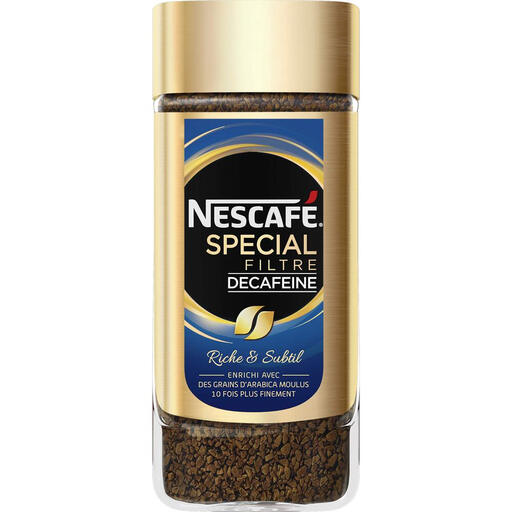 Image unavailable
NESCAFÉ Decaf Filter Coffee, 100 g
Worth considering if you’ll have a cup and hot water during your journey.
Decaffeinated coffee in a 100 g pack. If you’re looking for Fairtrade certification, check the packaging for this product.
View on Joybuy
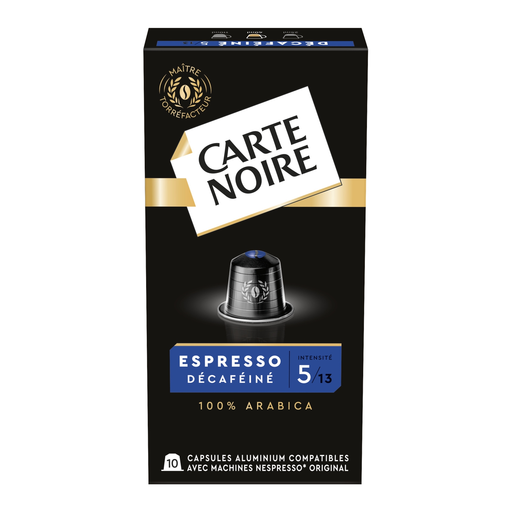 Image unavailable
Carte Noire Decaf Espresso No. 5, 10 aluminium capsules
Prepare it before setting off if you have a machine that works with these capsules.
The box contains 10 aluminium capsules. Check they’re compatible with your machine and, if necessary, look for Fairtrade certification on this product.
View on Joybuy
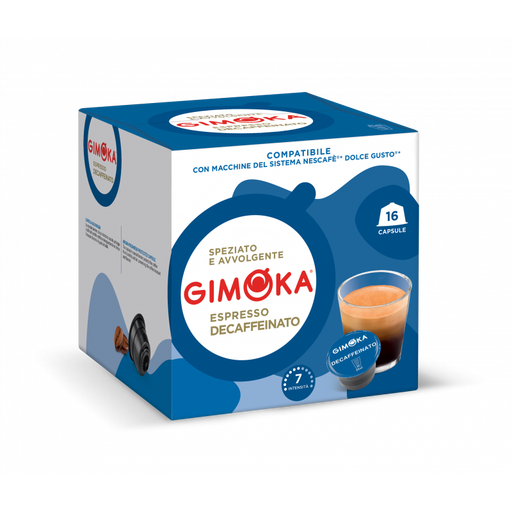 Image unavailable
GIMOKA Espresso Decaffeinated, 16 capsules compatible with Dolce Gusto, 112 g
For making decaffeinated coffee before your journey with a Dolce Gusto-compatible machine.
The pack contains 16 capsules and weighs 112 g. Check Fairtrade certification separately if it’s one of your criteria.
View on Joybuy
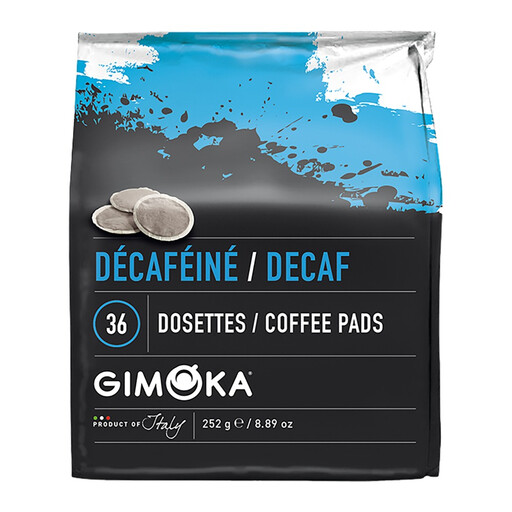 Image unavailable
GIMOKA Decaf, 36 coffee pads compatible with Senseo, 252 g
For preparing coffee before boarding the train with a Senseo-compatible machine.
The pack contains 36 coffee pads and weighs 252 g. If Fairtrade is important to you, check the label on this specific product.
View on Joybuy
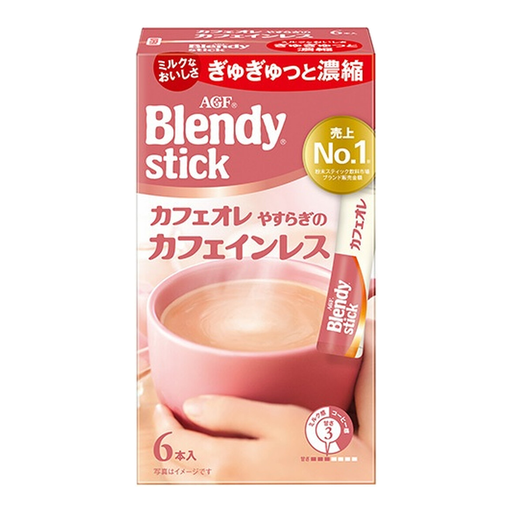 Image unavailable
AGF Blendy Stick Café au Lait Decaffeinated, 6 sticks
Worth considering if you’d like to make a decaffeinated café au lait with hot water during your journey.
The box contains 6 sticks. This is a milky coffee drink, not plain decaffeinated coffee. Check the ingredients and any certification you’re looking for on the packaging.
View on Joybuy
Frequently asked questions
How can I tell if decaffeinated coffee is Fairtrade-certified?
Look for the Fairtrade/Max Havelaar logo or an explicit certification statement on the packaging or product listing for the exact item. The words “organic”, “decaffeinated”, “Fairtrade” or “more responsible sourcing” aren’t enough on their own to identify this certification.
Can I buy decaffeinated coffee on any train?
Only count on getting decaffeinated coffee on board once you’ve checked the service available on your train. SNCF Connect explains that catering options vary from train to train. A menu listing decaffeinated coffee doesn’t guarantee it’ll be available on every journey or that it’s Fairtrade-certified.
Which format should I choose if there’s no coffee machine on the train?
You can make instant coffee with a cup and hot water, if you’ll actually have access to them. For ground coffee, coffee pads or capsules, it’s best to prepare your drink before setting off with compatible equipment, or check the on-board catering options.
Can Carte Noire Décaféiné N°5 coffee pads go in home compost?
No. Carte Noire says these pads are suitable for industrial composting and shouldn’t be put in home compost. Follow the recycling and disposal guidance where you live.


