Who is this choice for?

People looking for proof of Fairtrade credentials

You want to check the information on the bar or box rather than relying on a brand’s claims alone. The Fairtrade/Max Havelaar label and details of the ingredients it covers are your first points of reference.

Fans of intensely flavoured dark chocolate

You’re choosing a bar to enjoy and want to take its cocoa content and ingredients into account. The DGCCRF states that the minimum cocoa content affects the intensity of the chocolate flavour, but your guests’ preferences matter too.

People organising a shared treat

You’re planning to give chocolate as a gift or serve it to a group. The format, ingredients, allergens and storage instructions matter just as much as proof of Fairtrade credentials.

What should you check before buying?

For a bar or selection to enjoy on National Day, check the certification on the specific product first. Then choose the flavour and format before comparing the nutritional information.

What to consider What to check Who it matters to
Fairtrade credentials The Fairtrade/Max Havelaar label on the packaging and, for products made with several ingredients, details of which ingredients are certified. I want to be able to show what makes the chocolate I’m serving Fairtrade, rather than relying on its origin alone. Around 33% of consumers say this is their top priority.
Flavour and cocoa The stated cocoa content and the ingredients list, particularly if the chocolate contains inclusions. If my guests enjoy dark chocolate, I’m looking for an intensity that suits their tastes. Flavour and cocoa content are the top priority for around 27% of consumers.
Format for sharing The net weight and type of portions, where stated. If I’m passing the chocolate around or giving it as a gift, I prefer a format that’s easy to share. Around 20% of consumers put the format for sharing first.
Food information Nutritional values per 100 g, highlighted allergens, the best-before date and storage instructions. Before serving several people, I need to be able to check the ingredients and plan how to store the chocolate. This is the top priority for around 20% of consumers.

Common misconceptions to avoid

  • Assuming the cocoa’s origin means it is Fairtrade-certified

    A stated origin, organic certification or high cocoa content does not, by itself, prove that a particular product carries the Fairtrade/Max Havelaar label. For products made with several ingredients, certification may apply to some ingredients only.

    Look for the label on the packaging, then read the details about certified ingredients and their traceability.

  • Rejecting a bar because it has no Nutri-Score

    According to the French government website economie.gouv.fr, displaying the Nutri-Score is optional. Its absence alone is therefore no reason to dismiss the nutritional information on a chocolate product.

    For prepacked chocolate that must carry a nutritional declaration, compare the values per 100 g, particularly sugars, fat and salt.

  • Assuming a selection of dark chocolates will suit every guest

    “Dark” doesn’t mean “allergen-free”: selections and chocolates with inclusions may contain milk or nuts, among other allergens.

    Before serving, check the ingredients list and highlighted allergens for each product, as recommended by the DGCCRF.

  • Assuming the “soda tax” applies to chocolate bars

    Article 1613 ter of the French General Tax Code, published by Légifrance, applies to drinks and liquid preparations for drinks, not dark chocolate bars.

    If sugar content is important to you, check the chocolate’s nutritional declaration per 100 g instead.

Brands to consider, product by product

Alter Eco

Alter Eco offers a range of dark chocolates, including bars with 70% to 100% cocoa, and states that all its products are organically farmed.

  • The range gives you a choice of different cocoa contents.
  • To check the Fairtrade credentials of the bar you choose, look for its own label and the details on its packaging.

Tony's Chocolonely

Auchan lists a 180 g dark chocolate bar with almonds and sea salt that carries a Fairtrade mention.

  • This format could be a good option for sharing with guests who enjoy chocolate with inclusions.
  • This product contains almonds and soya lecithin. Check the full ingredients list and what the label covers on the bar you buy; these features don’t apply to the entire brand.

Chevaliers d'Argouges

Carrefour describes a selection of organic dark chocolates in which the sugar, cocoa and vanilla are Fairtrade according to Fairtrade/Max Havelaar, accounting for 68.4% of the total weight stated for this product.

  • This selection is a format worth considering as a gift or for sharing.
  • The product details mention milk, almonds and hazelnuts, and stated that this product was unavailable. Check the label and availability when you buy.

A Joybuy bar to share

This selection features a 180 g dark chocolate bar with almonds and sea salt, which you could consider for sharing. Check the Fairtrade label on the packaging you receive and which ingredients it applies to.
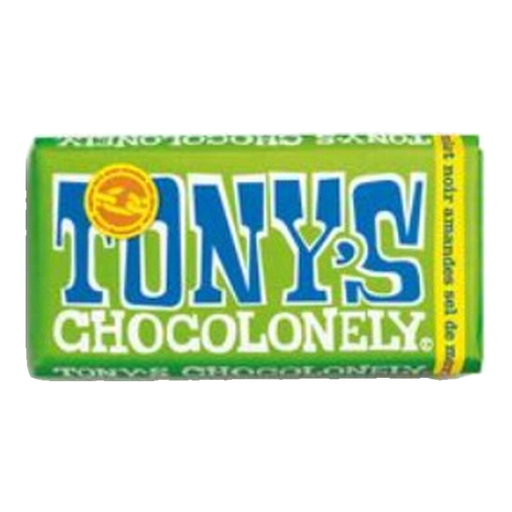
Tony’s Chocolonely dark chocolate bar with almonds and sea salt, 180 g

Tony's Chocolonely, dark chocolate with almonds and sea salt, 180 g

A bar to consider if you’d like to share dark chocolate with inclusions. Auchan lists a 180 g Tony's Chocolonely bar with almonds and sea salt as Fairtrade; check the label and what it covers on the packaging you buy. As it contains almonds, read the allergen information before serving.

View on Joybuy

Frequently asked questions

Is Nutri-Score compulsory on dark chocolate in France?

No. According to economie.gouv.fr, Nutri-Score is optional. To compare prepacked chocolates that must carry a nutritional declaration, check the values per 100 g, then consider the portions you plan to serve.

Does the “soda tax” apply to dark chocolate?

No, not to dark chocolate bars or selections: Article 1613 ter of the French General Tax Code, published by Légifrance, applies to drinks and liquid preparations for drinks. The chocolate’s sugar content is still worth checking in its nutritional declaration.

How can you check the Fairtrade label on a product made with several ingredients?

Look for the Fairtrade/Max Havelaar label on the packaging, then read the details about certified ingredients and their traceability. For some products made with several ingredients, the proportion of the total weight that comes from Fairtrade ingredients is also stated.

What should you check before sharing chocolate with guests?

First, read the ingredients list and highlighted allergens for each product. Then check the net weight, best-before date and storage instructions on the packaging, especially if you’re buying the chocolate in advance.