For regularly serving cold coffee in a canteen, choosing labelled Fairtrade/Max Havelaar whole-bean or ground coffee lets you control the coffee itself, provided you organise preparation and service. Ready-to-drink beverages and concentrates can reduce some of the handling, but you’ll need to check the recipe, what the label covers, allergens and storage instructions for the specific product you choose.
Who is this choice for?
Sustainability manager responsible for justifying Fairtrade purchases
To describe your cold coffee as Fairtrade, you need to identify the label on the product you’ve bought and understand what it covers. Max Havelaar France recommends paying particular attention to the information on the packaging of composite products.
Manager of a busy, high-volume canteen
You need to serve the same preparation across multiple sittings. Choosing between whole beans, ground coffee and a ready-to-serve format will depend on your equipment, preparation time and storage arrangements.
Buyer responsible for recipes and storage
Before introducing a blended cold drink, check its ingredients, allergens, nutritional information and storage instructions, then organise your service accordingly.
What should you look for?
Whole-bean coffee
Consider it if: your canteen can grind the beans and prepare the coffee on site before serving it cold.
Bear in mind: grinding and following a consistent preparation method require equipment and time.
Ground coffee
Consider it if: your team prepares coffee on site but doesn’t have a grinder.
Bear in mind: the grind you buy needs to suit your brewing method, and you’ll have less flexibility to adjust it later.
Coffee drink or concentrate
Consider it if: minimising preparation just before service is a priority.
Bear in mind: concentrate still needs diluting. You’ll need to check the recipe, label and storage instructions for each product individually.
| Criteria | What to check | Consumers concerned |
|---|
| Proof of Fairtrade credentials |
Check the label on the exact product and read the details on the back of any blended drink. |
To justify offering Fairtrade coffee in a canteen, I want to know exactly what the label covers. Around 33% of consumers would put this proof first. |
| Preparation and equipment |
Match the coffee format to the grinder and brewing method available, and plan how much you’ll need to prepare. |
If I need to cover several sittings, I need a preparation method that suits our equipment and is easy to repeat. This would be a priority for around 25% of consumers. |
| Speed of service |
Distinguish between ready-to-drink coffee and concentrate that needs diluting, and check the instructions for use after opening. |
When the counter needs to serve customers quickly, I want to keep the number of steps at service time to a minimum. Around 25% of consumers would prioritise this need. |
| Recipe and storage |
Check the ingredients, allergens, nutritional information and dates, and follow the product’s storage instructions. |
To offer a blended drink, I need to be able to inform diners and store the product as directed. This would be the main criterion for around 17% of consumers. |
Mistakes to avoid
-
Assuming ‘cold coffee’ means ‘Fairtrade cold coffee’
The name of a drink or concentrate doesn’t prove it’s certified. According to Max Havelaar France, it’s particularly important to check the label and packaging details for blended products.
Ask to see the packaging or a clear technical data sheet for the exact product you’ll be serving before describing it as Fairtrade/Max Havelaar.
-
Choosing whole beans without planning how to prepare them
The grind needs to suit your brewing method. Without a grinder or a set recipe, your team can’t simply swap ground coffee for whole beans.
Check your equipment and the dose, and decide who’ll be responsible for preparation. Otherwise, consider ground coffee that suits your chosen method.
Grinding, adjusting the equipment and training your team all add tasks before service.
-
Forgetting to check the recipe and storage instructions
A blended cold drink may contain ingredients that need to be declared to diners. The Anses notes that keeping food that requires it chilled helps limit the growth of micro-organisms.
For every product you choose, check the allergens, applicable date and storage and usage instructions after opening.
Brands to know when making your choice
ETHIQUABLE
Auchan describes its 500 g Ecuadorian whole-bean coffee as organic and Fairtrade. It can be used as a base for coffee prepared on site.
- The product information gives guidance on grind size for different preparation methods.
- It’s whole-bean coffee, not a ready-to-serve cold drink.
MEO
Auchan describes its 500 g whole-bean product as being made from certified Fairtrade Arabica coffee.
- The product information specifies the Arabica coffee composition and whole-bean format.
- Your canteen needs to be able to grind and prepare the coffee before serving it cold.
Malongo
Auchan describes the 500 g La Tierra product as organic Fairtrade whole-bean coffee.
- The whole-bean format can be used to prepare coffee on site.
- Check the label on the pack you receive before telling diners that it’s certified.
Lobodis
Lobodis describes its Café Solidaire range as being aimed in particular at the out-of-home catering sector.
- The brand offers several coffee formats, including ground and whole-bean.
- Check the format and certification of the specific product you choose rather than assuming them from the range name.
Coffee to prepare, available on Joybuy
These products can be considered as coffee to prepare and serve cold, rather than as ready-to-drink beverages. Before adding them to a Fairtrade range, check the label on the product you choose and adapt the preparation to your canteen’s needs.
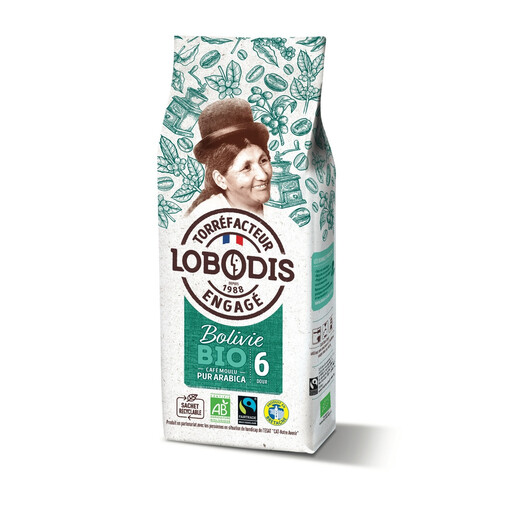 Image unavailable
LOBODIS Bolivia, ground coffee 250 g
Worth considering if your team prepares coffee on site without grinding beans, before serving it cold.
The stated pack size is 250 g. If you plan to describe it as Fairtrade, check the label on this product’s packaging. You’ll also need a recipe and storage instructions for the prepared drink.
View on Joybuy
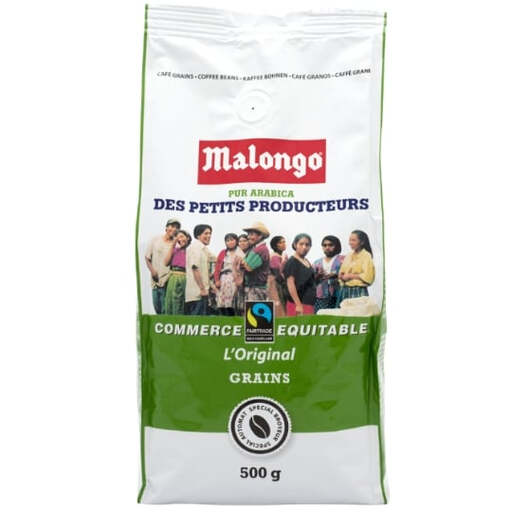 Image unavailable
MALONG Petit Producteur Ground Coffee 500 g
Worth considering as coffee to prepare before serving cold, once you’ve confirmed its format and the equipment needed.
The stated pack size is 500 g. The title describes ground coffee, while the instructions refer to beans that need grinding. Check the pack before planning your preparation. Also check the label before describing this product as Fairtrade.
View on Joybuy
Frequently asked questions
How can you verify a coffee’s Fairtrade/Max Havelaar label?
Check the label on the product you’ve bought and read the details on its packaging. Max Havelaar France distinguishes between coffee with a single ingredient and composite products, where the information on the back helps explain what the label covers.
Is a concentrate or cold coffee drink always Fairtrade?
No. The format and brand name don’t prove that a product carries a label. Check the certification and ingredients of the concentrate or drink your canteen plans to serve.
What should you check before serving a milky cold drink?
Read the ingredients, allergens, nutritional information, date and storage instructions. If the product needs to be refrigerated, follow the instructions on its packaging, including after opening.
Should you keep whole-bean coffee in the fridge?
Not necessarily. For the ETHIQUABLE Ecuadorian whole-bean coffee featured by Auchan, the instructions are to keep the pack in a cool, dry place, away from light and air. Follow the instructions for the product you actually buy.


