Anyone looking for a clear Fairtrade guarantee
You want to identify the label or standard shown on the chocolate and understand which ingredients it covers, rather than relying on a general claim about the brand.


If you want individual chocolates to enjoy with coffee, choose a product that clearly states which specific ingredients its Fairtrade claim applies to: a high cocoa content alone isn’t enough. If you’re happy to break up a bar, dark chocolate with almonds and a Fairtrade claim is another option. Just check which ingredients the claim covers, along with the allergen information, before serving it.
You want to identify the label or standard shown on the chocolate and understand which ingredients it covers, rather than relying on a general claim about the brand.
You’re looking for a little chocolate treat, perhaps with coffee or almonds, and deciding whether individual chocolates are a must.
You need to check the ingredients and any ‘may contain’ warnings for the product you’re serving, especially if it contains almonds.
First decide whether individual chocolates are essential, then check the Fairtrade claim and the label on the product you’re actually considering buying.
| What to consider | What to check | Who this matters to |
|---|---|---|
| Fairtrade guarantee | Look for the label or standard on the specific product, then check which ingredients the claim covers. | I want to know what the Fairtrade claim covers before choosing my chocolate. Around 40% of consumers put this proof first. |
| Goes with coffee and format | Decide whether you need individual chocolates or would be happy with a bar to break up; then check its ingredients. | When serving a treat with my coffee, taste matters, but so does having something practical to serve. Around 30% of consumers prioritise the format and how well it goes with coffee. |
| Ingredients and allergens | Read the ingredients, allergen information and any ‘may contain’ warnings on the packaging of the product you choose. | Before sharing chocolate with almonds, I need to be able to check what it contains and any warnings about traces. This check is a priority for around 30% of consumers. |
A cocoa percentage tells you about the chocolate, not the conditions in which its ingredients were produced or traded. Fairtrade / Max Havelaar describes its label as a guarantee based on social, economic and environmental criteria.
Check the cocoa content separately from the label or standard that applies to the product you’re choosing.
A dark chocolate, coffee and almond bar can go well with coffee, but you’ll need to break it up or portion it. It won’t give you the individual format you’re looking for.
If individual pieces are important when serving, keep that in mind when choosing; otherwise, consider bars as another way to serve chocolate.
Chocolate and almond recipes don’t all have the same ingredients or warnings about traces. The dark chocolate, coffee and almond bar described by Ethiquable contains almonds, among other ingredients.
Check the label on the exact product you’re serving, including any ‘may contain’ warnings.
The brand offers a dark chocolate, coffee and almond bar, rather than individual chocolates, for anyone happy to break up a bar to enjoy with their coffee.
Its 180 g dark chocolate bar with whole almonds can be shared with coffee, but it isn’t in the form of individual chocolates.
The brand offers a 200 g dark chocolate bar with whole almonds, which is worth considering if you’re happy to share a bar.
These two TONY'S dark chocolate bars with almonds are worth considering with coffee if you’re happy with a bar rather than individual chocolates. They come in different sizes; also check what the Fairtrade claim covers and read the label on each product.
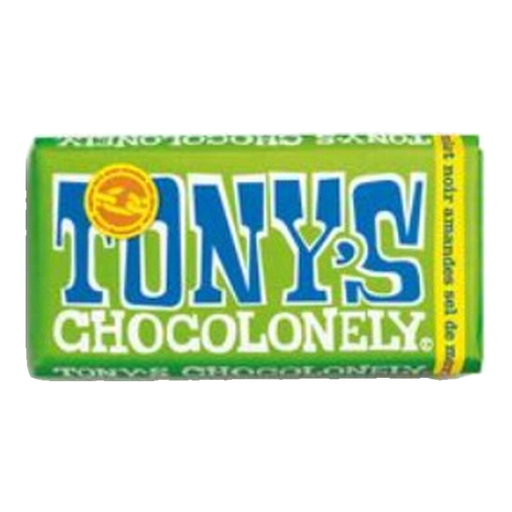 Image unavailable
This bar can be shared with coffee, but it isn’t the right choice if you’re looking for individual chocolates. The product information links the Fairtrade claim to the cocoa mass and cocoa butter, rather than to the whole recipe. Check the packaging for allergen information and any warnings about traces too.
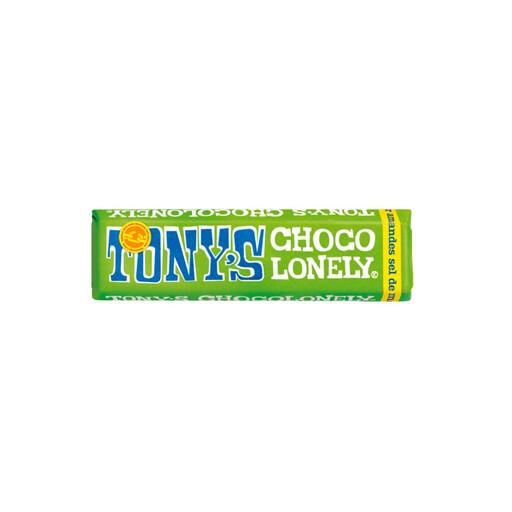 Image unavailable
This 47 g bar is another size to enjoy with coffee, but it doesn’t replace individual chocolates. The product information carries a Fairtrade claim: check the packaging to see which ingredients it covers, along with the allergen information and any warnings about traces.
Look for a named label or standard on the product page or packaging, then check which ingredients it covers. Fairtrade / Max Havelaar says its label is based on social, economic and environmental criteria checked by an independent certifier. The colour of the chocolate or its cocoa content alone doesn’t prove that a product carries this label.
It can be served with coffee if you’re happy to break up a bar, but it doesn’t offer the individual format of a chocolate sweet. The dark chocolate, coffee and almond bar featured by Ethiquable contains ground coffee and almonds, so check its ingredients and allergen information before serving.
Read the ingredients list, allergen information and any warnings about traces for the exact product. Don’t assume the information for one bar applies to another, even if both contain chocolate and almonds.
The DGCCRF says that the labelling on pre-packed food includes the product name, ingredients list, nutritional information, net quantity and the applicable date. Check these details on the packaging you receive to compare ingredients and check for allergens.