Shoppers who look for Fairtrade certification
You want to see the Fairtrade/Max Havelaar mark on the specific chai you’re buying, and understand whether it applies to the tea, other ingredients or a stated proportion of the recipe.


If Fairtrade is your priority, choose a chai that is explicitly labelled Fairtrade/Max Havelaar, then check which ingredients the certification covers. For a quick break, compare the format and recipe too: organic chai is not automatically Fairtrade certified, and the word ‘chai’ alone doesn’t tell you which spices it contains or whether it includes black tea.
You want to see the Fairtrade/Max Havelaar mark on the specific chai you’re buying, and understand whether it applies to the tea, other ingredients or a stated proportion of the recipe.
You prefer tea bags for a mid-morning break, without confusing ease of preparation with Fairtrade certification or organic status.
You compare the black tea, spices and flavourings before choosing. If Fairtrade matters to you too, check the mark on the specific product separately.
For chai to enjoy during a mid-morning break, start by checking the certification mark on the product, then compare the format and ingredients according to what matters most to you.
| Criteria | What to check | Who it matters to |
|---|---|---|
| Proof of Fairtrade certification | The Fairtrade/Max Havelaar mark on the specific product, then the ingredients and terms it covers. | I want the mark to apply to the chai I’m buying, not just to a brand’s general commitment. Around 44% of consumers put this proof at the top of their list. |
| Quick preparation for a short break | Whether it comes in tea bags or loose, and the product’s specific brewing instructions. | Mid-morning, I’d rather keep making my cup simple. Ease of use comes before other criteria for around 33% of consumers. |
| Recipe and spices | The ingredients list, especially the black tea, spices and any flavourings. | I choose based on the spices I enjoy, rather than the word ‘chai’ alone; around 23% of consumers prioritise the recipe above all else. |
These two marks refer to different criteria. A recipe described as organic doesn’t, on its own, mean that the chai is Fairtrade/Max Havelaar certified.
If Fairtrade is important to you, look for the mark on the specific product and check its organic status separately.
Product information may distinguish between the proportion of agricultural ingredients covered and the terms that apply to the tea. For its Thé noir Équitable Chaï Intense Jardin BiO étic, Léa Nature states that all the tea is Fairtrade and that 80.5% of the ingredients of agricultural origin meet Fairtrade standards.
Check what the mark covers for each chai before comparing two Fairtrade-labelled products.
The name doesn’t tell you how much black tea it contains or which spices and flavourings are used. Recipes vary between the products offered by Monoprix, Clipper and Kusmi Tea.
Check the ingredients list for the specific product and follow the brewing instructions, if they’re shown on the packaging.
Fairtrade/Max Havelaar France lists Carrefour and E.Leclerc among retailers that occasionally stock certified products. That doesn’t guarantee that a specific chai will be available in your local shop or chosen collection channel.
Check the product and its availability at your chosen shop before you finish your shopping.
A product to look into if you’re after black tea chai with details about its Fairtrade credentials.
An option to consider if you’re looking for chai in tea bags, with product information covering both the recipe and Fairtrade terms.
A brand where you’ll need to distinguish between country-specific versions if the Fairtrade mark guides your choice.
Kashmir Tchaï lets you compare an organic black tea recipe with spices, separately from the question of Fairtrade certification.
An organic spiced black tea chai to compare based on its ingredients, without assuming that organic means Fairtrade.
These two Pukka products, each containing 20 tea bags, are worth considering for a mid-morning break. If you’re specifically looking for black tea or Fairtrade/Max Havelaar certification, check the ingredients and what the mark covers on the packaging of your chosen variant.
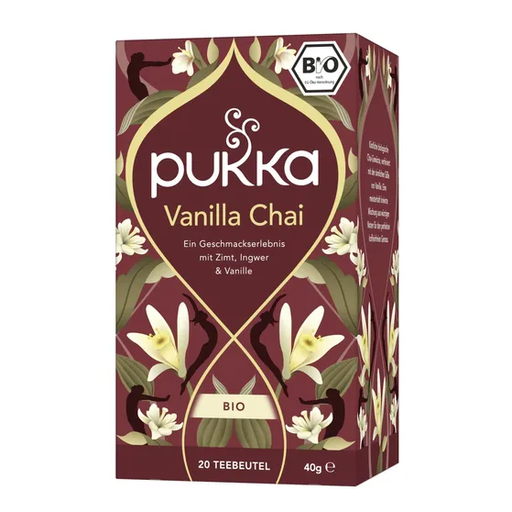 Image unavailable
Worth considering if you’d like a spiced tea bag infusion for a quick break. The name of this variant doesn’t confirm that it contains black tea; check the packaging to see what any Fairtrade mark covers too.
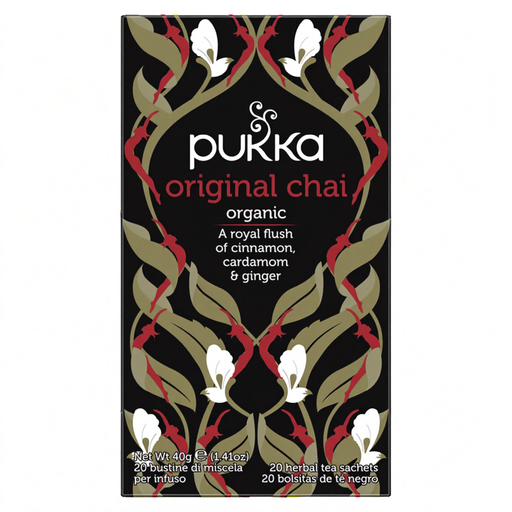 Image unavailable
Tea bags are a convenient choice if you want to make chai without measuring out loose tea. If black tea or Fairtrade is your main priority, check the ingredients and certification wording on the packaging of this variant.
Look for the Fairtrade/Max Havelaar mark on the specific product, then read the details about which ingredients it covers. Fairtrade/Max Havelaar France associates the mark with social, economic and environmental criteria. A brand’s general promise, or the fact that the chai is sold in an organic section, doesn’t replace the mark on the product itself.
No. Organic status alone doesn’t prove Fairtrade/Max Havelaar certification. If you want both, look for each mark on the product you buy.
They tell you what the mark covers for a particular chai. Léa Nature states that all the tea in its Thé noir Équitable Chaï Intense Jardin BiO étic is Fairtrade and specifies that 80.5% of the ingredients of agricultural origin meet Fairtrade standards. The Monoprix Bio Thé Noir Chai listing, meanwhile, refers to mass balance for the black tea. Compare the full wording rather than just the logos.
Organic shops, Fairtrade retailers and supermarkets are good places to start, but always check which products are available locally. Fairtrade/Max Havelaar France lists Monoprix among retailers that stock certified products all year round, and Carrefour and E.Leclerc as retailers where they’re available occasionally. This doesn’t guarantee that a specific chai will be available in your shop.