Students who care about Fairtrade certification
If Fairtrade is your top priority, check what it covers in the specific chai you’re buying: the tea, the spices or the whole blend.


To choose Fairtrade chai to take to university, first check what the certification covers in the tea and spice blend, then consider the format and brewing instructions. Carrefour’s product page for ETHIQUABLE Darjeeling Chai states that Fairtrade/Max Havelaar-certified ingredients make up 100% of the total weight. Monoprix Bio’s chai page specifies that mass balance applies to the black tea, which accounts for 97% of the total weight. If you choose a black tea chai, remember to factor in the caffeine too.
If Fairtrade is your top priority, check what it covers in the specific chai you’re buying: the tea, the spices or the whole blend.
Tea bags are easy to pop in your bag. Before choosing a box, check how many bags it contains and the brewing time, as well as whether you can get hot water on campus.
If you enjoy cinnamon, ginger or cardamom, compare the recipes and remember that chai made with tea naturally contains caffeine, as Anses points out.
For chai to enjoy around lunchtime, start by checking the scope of the Fairtrade claim. Then compare the recipes based on how they’re prepared and whether you prefer black tea or another base.
| What to consider | What to check | Who it matters to |
|---|---|---|
| Fairtrade coverage | Look for the certification stated and the proportion of the blend it covers, including any mention of mass balance. | I want to know whether the tea and spices in my chai are covered, rather than relying on a general claim. This would be the top priority for around 46% of consumers. |
| Format and preparation | Compare the number of tea bags, brewing time and availability at your chosen retailer. | Between lectures, I want to take a tea bag with me and make my chai wherever I can get hot water. Easy preparation would come first for around 36% of consumers. |
| Recipe and caffeine | Check the tea base, the spices listed and the brewing instructions. | If I already drink coffee, I want to choose a spiced blend without overlooking the caffeine in any black tea it contains. Taste and keeping an eye on caffeine would be priorities for around 18% of consumers. |
A chai described as organic won’t necessarily meet your requirement for a Fairtrade certification on that specific product.
Check the packaging separately for a Fairtrade/Max Havelaar label or another named Fairtrade certification, then see what it covers.
The certification information may describe the tea and spices differently. Monoprix Bio’s product page, for example, states that mass balance applies to the black tea, which accounts for 97% of the total weight.
If full coverage is essential to you, look for an explicit statement about the recipe you’re buying, such as the 100% of total weight stated on Carrefour’s page for ETHIQUABLE Darjeeling Chai.
Chai made with black tea contains caffeine. Anses points out that tea naturally contains caffeine, which can disrupt sleep.
If you’re sensitive to it, consider what time you drink your chai and what other caffeinated drinks you have.
A product may still appear online even though it’s no longer stocked at the retailer you have in mind. Carrefour’s page, for example, says that Jardin Bio Étic chai is no longer on sale.
Before travelling to a shop or placing an order, check the product and its availability at your chosen store or through your chosen service.
These products show different ways of presenting chai and its Fairtrade credentials. Compare the details for the recipe you’re interested in rather than assuming the same applies to an entire brand.
Darjeeling Chai is worth considering if you want to see a specific figure for Fairtrade coverage across the blend.
Its black tea chai comes in a box of 20 tea bags, making it easy to compare a convenient format with the Fairtrade details on its product page.
Its Indian black tea chai combines several spices in a box of 25 tea bags.
Kashmir Tchaï is an organic black tea with spices to consider if Fairtrade certification isn’t your only deciding factor.
This option in tea bags could be handy if you want to take chai with you for your lunch break. If you’re specifically looking for a black tea blend with Fairtrade certification, check the ingredients and the scope of the certification before choosing.
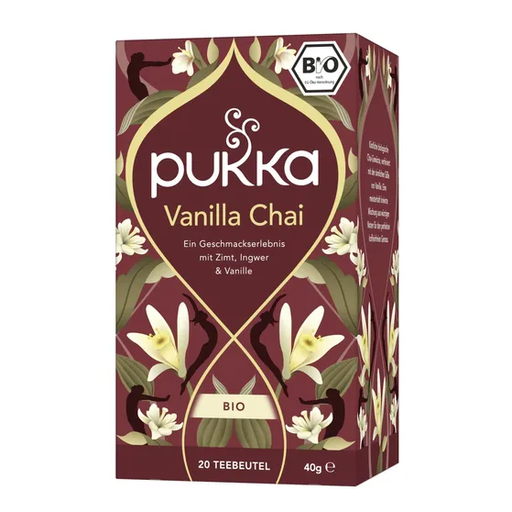 Image unavailable
The box of 20 tea bags could be ideal for a break on campus if you have access to hot water.
If black tea or certification that specifically covers the recipe is essential to you, check these details on the packaging.
Read the certification stated for the product, then check which ingredients or what proportion of the blend it covers. Carrefour’s product page for ETHIQUABLE Darjeeling Chai states that Fairtrade/Max Havelaar ingredients make up 100% of the total weight, while Monoprix Bio’s page specifies that mass balance applies to the black tea, which accounts for 97% of the total weight.
No. An organic label on its own doesn’t prove a Fairtrade/Max Havelaar commitment. If that’s one of your buying criteria, look for a Fairtrade statement specific to the product on its product page or packaging.
First, check whether the chai contains black tea. Tea naturally contains caffeine, as Anses points out. Then consider how sensitive you are to caffeine and what other caffeinated drinks you have during the day.