To choose Fairtrade chai for an older person, check the label on the specific product, distinguish black tea from a tea-free herbal infusion, and look at the ingredients and any added sugars. Chai can be an enjoyable drink, but it is no substitute for drinking water throughout the day or eating a varied diet. Sensitivity to caffeine may also influence your choice.
Who is this choice for?
People who care about ethical shopping
If ethical sourcing is your priority, look for a clear indication on the chai you choose. Fairtrade Max Havelaar France explains that its labels are based on social, environmental and economic standards. An organic claim addresses a different question.
People who are mindful of caffeine
It’s important to distinguish chai made with black tea from a tea-free spiced infusion if caffeine could disrupt sleep or add to the caffeine in other drinks. Anses notes that tea naturally contains caffeine.
Family and friends who prepare drinks every day
When choosing a drink that’s easy to fit into an older person’s routine, check the ingredients and what will be added during preparation. Manger Bouger notes that the sensation of thirst can diminish with age, so chai shouldn’t distract from drinking water.
What should you check?
Start with the reason for your purchase: proof of ethical sourcing, caffeine content or the ingredients in the prepared drink. None of these factors, on its own, tells you about the other two.
| Criterion |
What to check |
Who is it for? |
| Proof of ethical sourcing |
Look for a Fairtrade label or claim on the specific product, and check which ingredients it applies to. |
I want to be able to identify the ethical sourcing credentials of the chai I buy, rather than infer them from the word “organic” alone; around 40% of consumers would put this evidence first. |
| Caffeine |
Read the ingredients to distinguish black tea from a tea-free infusion. Check for a “caffeine-free” claim if this is important to you. |
If sleep or other caffeinated drinks are relevant to my choice, I prioritise checking what type of chai it is; around 30% of consumers would put caffeine first. |
| Ingredients and preparation |
Check the ingredients, any sugars and what you plan to add when preparing the drink. |
If the drink will be prepared regularly, I want to know what’s in the blend and what I’m adding to it; around 30% of consumers would prioritise its ingredients first. |
Common misconceptions to avoid
-
Assuming “organic” means “Fairtrade”
Organic chai does not necessarily carry a Fairtrade certification. Kusmi Tea describes its Kashmir Tchaï range as organic, but that alone does not establish that this product is Fairtrade certified.
If Fairtrade certification is essential to your purchase, check the label and what it covers on the chai you choose.
-
Mistaking black tea chai for a caffeine-free infusion
The Ethiquable chai listed by Auchan contains black tea. Anses says caffeine can affect sleep, although the impact varies from person to person.
Check the ingredients and take other caffeinated drinks into account. If you need a caffeine-free option, look for an explicit claim on the product.
-
Judging a drink by the word “chai” alone
An infusion blend and a drink made with added milk or sugar won’t taste the same in the cup. Chai is no substitute for a varied meal, either.
Read the ingredients and preparation instructions, then consider any additions and your hydration habits separately.
Brands to consider for this choice
Ethiquable
Ethiquable describes its Thé Tchaï aux épices as Fairtrade and organic; Auchan lists this product with “Fair Trade” and organic claims.
- Auchan’s product listing states that it contains 71% black tea and 29% spices, so you can identify the blend before buying.
- As it contains black tea, this product should not be confused with a caffeine-free infusion. Also check the label on the product you buy.
Kusmi Tea
Kusmi Tea describes Kashmir Tchaï as an organic spiced black tea, available in several formats.
- You can choose between tea bags and loose tea, depending on how you’d like to prepare it.
- If Fairtrade certification is essential, check that it appears on the specific Kashmir Tchaï product you’re buying: an organic claim is not a substitute.
Lipton
Carrefour lists Lipton among its teas and infusions. For this choice, the brand is mainly a useful point of comparison between drink categories.
- Don’t assume there’s a specific Fairtrade chai or infer its ingredients from the brand name alone: check the product and its labelling.
Chai available on Joybuy
This chai in tea bags is an option for anyone looking for a spiced drink who wants to check its ingredients, caffeine content and Fairtrade claims separately.
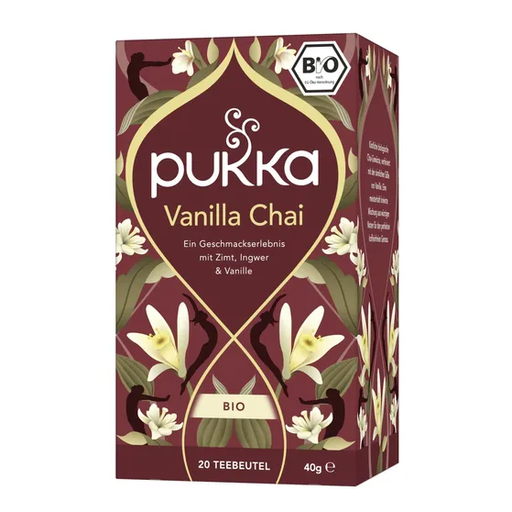 Image unavailable
PUKKA Vanilla Chai, 20 tea bags
If you’re looking for a spiced chai without black tea, check the ingredients and the caffeine information on the packaging. Also check what any Fairtrade claim covers, and look at the sugar information if these factors matter to you.
View on Joybuy
Frequently asked questions
How can you identify Fairtrade chai?
Look for the Fairtrade/Max Havelaar label on the specific chai product and check what it applies to. Fairtrade Max Havelaar France says its labels are based on social, environmental and economic standards; an organic claim on its own does not confirm this certification.
Is chai enough to keep an older person hydrated throughout the day?
No: chai is no substitute for drinking water throughout the day. Manger Bouger notes that the sensation of thirst can diminish with age, so keep hydration habits in mind rather than relying on this drink alone.
Can you drink black tea chai in the evening?
It depends on your sensitivity to caffeine and what other drinks you consume. Anses says the caffeine in tea can disrupt sleep. If this matters to you, check the ingredients and look for a drink that is explicitly caffeine-free.
Can chai replace a snack?
No, chai on its own is no substitute for a snack or a meal. Its ingredients depend on the blend and how it’s prepared; Anses notes that a varied diet provides a range of macronutrients and micronutrients.


