Shoppers who want to check the certification
You want to find a named certification on the chai itself and understand whether the Fairtrade claim applies to the whole blend, just the tea or only some of the ingredients.


To choose a Fairtrade chai for the morning, first check what the product’s certification covers. Carrefour states that 100% of the total weight of the ingredients in ETHIQUABLE Tchaï is Fairtrade / Max Havelaar certified. Léa Nature, meanwhile, says that all the tea in Jardin BiO étic Chaï Intense is Fairtrade, while ingredients that meet fair-trade standards make up 80.5% of its agricultural ingredients. Then choose a format that suits how you like to prepare it. If you already drink coffee, remember to factor in the caffeine from black tea.
You want to find a named certification on the chai itself and understand whether the Fairtrade claim applies to the whole blend, just the tea or only some of the ingredients.
You’re looking for a spiced black tea that you can brew on its own or prepare with milk, rather than a ready-made milky drink.
You already drink coffee with breakfast or want to limit your caffeine intake. In that case, the black tea base in your chai matters when choosing a drink.
When choosing a chai to enjoy alongside your morning coffee, start by checking the Fairtrade claim on the product. Then choose the recipe and format, and consider how they fit with your other caffeinated drinks.
| Criteria | What to check | Who it matters to |
|---|---|---|
| What the Fairtrade claim covers | Look for the named standard on the product and check which ingredients it covers: the whole blend, agricultural ingredients or just the tea. | I want to know exactly what is certified before choosing my chai; around 42% of shoppers would make this their top priority. |
| Recipe and preparation | Compare the tea base, spices, packaging and brewing instructions, depending on whether you like to prepare your cup plain or with milk. | In the morning, I mainly want a spiced blend I can prepare my way without complicating my routine; around 33% of shoppers would prioritise this. |
| Caffeine | Check whether the recipe contains black tea, and take into account your coffee and other caffeinated drinks throughout the day. | If I already drink coffee with breakfast, I don’t want to add a cup of black tea without thinking about it; for almost 25% of shoppers, caffeine would be the main consideration. |
A chai can be organic without having Fairtrade certification. Kusmi Tea describes its Kashmir Tchaï as an organic spiced black tea. If Fairtrade is essential to you, that description alone doesn’t confirm that it meets your criteria.
Look for a clearly named Fairtrade certification or standard on the product, rather than relying on the organic label alone.
Products make different claims about what is covered. Carrefour states that the Fairtrade certification for ETHIQUABLE Tchaï covers 100% of the total ingredient weight. Léa Nature says that all the tea in Jardin BiO étic Chaï Intense is Fairtrade / Max Havelaar certified, and that 80.5% of its agricultural ingredients meet fair-trade standards.
Check whether the stated proportion applies to the whole product, its agricultural ingredients or just the tea.
Tea naturally contains caffeine. Anses points out that people’s sensitivity to caffeine and its effects, particularly on sleep, can vary.
Before adding black tea chai to your morning coffee, consider your other caffeinated drinks. If you want to avoid black tea, check the ingredients of another infusion.
Its Fairtrade and organic Thé Tchaï aux épices combines Darjeeling black tea with spices. Carrefour lists a 20-bag version.
Léa Nature describes its organic Chaï Intense as a Fairtrade spiced black tea, with brewing instructions of 3 to 4 minutes at 95 °C.
Kusmi Tea describes Kashmir Tchaï as an organic spiced black tea, available in a pack of 20 bags.
These two Pukka chai blends in tea bags are suitable for a morning brew. Compare their ingredients and the Fairtrade claims on each pack before choosing, especially if you’re specifically looking for a black tea chai or want to avoid caffeine.
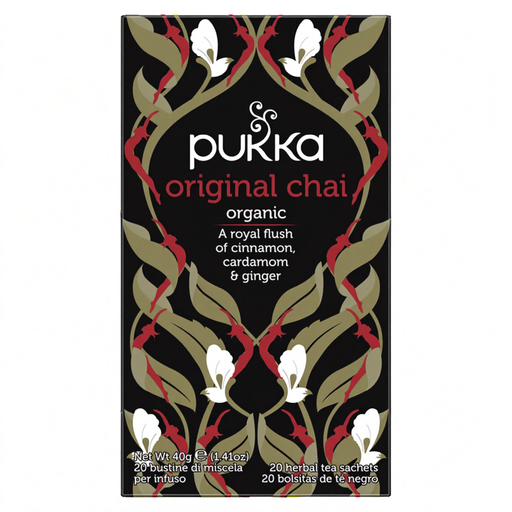 Image unavailable
A tea-bag option to consider if you like to prepare a spiced chai in the morning. If Fairtrade certification guides your purchase, check the label and which ingredients it covers on the packaging. Also bear in mind the caffeine if you already drink coffee.
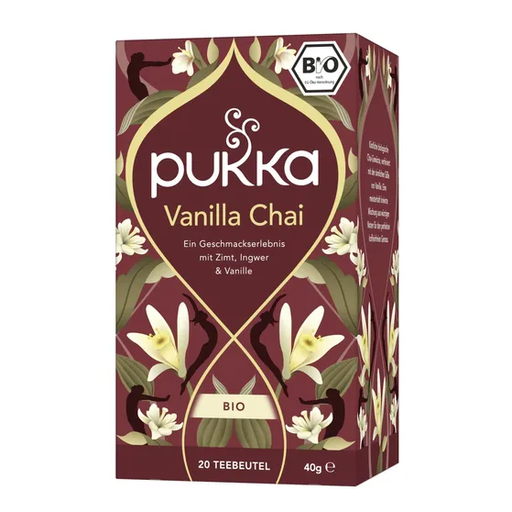 Image unavailable
This tea-bag blend may appeal if you’re looking for a spiced chai that’s different from a black tea recipe. Check the ingredients if you want to avoid caffeine, and check exactly what any Fairtrade claim on the packaging covers.
Look for the Fairtrade / Max Havelaar claim on the exact product, then check which ingredients it covers. Max Havelaar France says its label is based on social, economic and environmental criteria. You’ll still need to check the proportion of ingredients covered for each blend.
No. An organic label alone doesn’t confirm Fairtrade certification. If this matters to you, check the certification and what it covers separately on the packaging or product information for your chosen chai.
A spiced black tea chai could be a good choice if that’s the base you want for your milky brew. For Jardin BiO étic Chaï Intense, Léa Nature recommends brewing for 3 to 4 minutes at 95 °C. You can then adjust the preparation to suit your taste.
Take both drinks into account when considering your caffeine intake, as tea naturally contains caffeine. Anses notes that people’s sensitivity to caffeine and its effects can vary. Check the chai’s tea base if you want to limit your caffeine intake.