People who care about fair trade
You want to know whether the fair-trade claim applies to the cocoa, another ingredient or a stated proportion of the recipe used in your dessert.


For home baking, start by choosing a recipe that suits your dessert: a cocoa and hazelnut spread serves a different purpose from a praline paste made with just hazelnuts and sugar. If fair trade is a priority, check which ingredient the claim applies to on the product you choose, and look for any stated proportion. Then check the allergens and instructions for use. In France, Nutri-Score is optional, so its absence is no substitute for reading the nutritional information.
You want to know whether the fair-trade claim applies to the cocoa, another ingredient or a stated proportion of the recipe used in your dessert.
For pancakes, brioche or cakes, you compare the hazelnut, almond and cocoa content, as well as the suggested uses for each spread.
Before making a dessert to share or a plant-based recipe, you check for ingredients such as nuts, milk and lupin, as well as any ‘may contain’ warnings on the product you choose.
When choosing praline paste for baking, start with the flavour and use you have in mind, then check separately what the fair-trade claim covers and what is in the product you have chosen.
| What to check | Look for | Who this matters to |
|---|---|---|
| Fair trade | The certification, which ingredient it covers and the proportion of fair-trade ingredients, if stated on the product. | If I want to use fair-trade cocoa in my dessert, a general claim on the jar isn’t enough. Around 36% of consumers would make this evidence their priority. |
| Praline recipe | The stated proportion of hazelnuts or praline, whether it contains cocoa and whether it is suitable for the dessert you have in mind. | For filling brioche or pancakes, I first look for ingredients that match the flavour I want. This would be the priority for around 27% of consumers. |
| Ingredients and allergens | The ingredients list, highlighted allergens and any ‘may contain’ warnings on the exact product. | When making a cake to share or a plant-based recipe, I need to check the ingredients and allergens before choosing. Around 19% of consumers would put this suitability first. |
| Nutrition and storage | Sugars, fat and nutritional values per 100 g, followed by the storage instructions after opening. | If I’m comparing several jars for a topping, I want to be able to read their nutritional values and find out how to store the paste. This would be the top criterion for around 18% of consumers. |
A claim may apply to one ingredient or to a proportion of the recipe. Fairtrade International also allows mass balance for cocoa: tracking volumes does not necessarily mean the ingredients are kept physically separate.
Check the product for the ingredient covered, the certification and any stated proportion. If traceability matters to you, read the relevant information too.
In France, the DGCCRF states that Nutri-Score is voluntary, while nutrition labelling is required for most prepacked foods, subject to certain exemptions.
Compare the nutritional information per 100 g. If the jar displays a Nutri-Score, treat it as additional information.
The Pépite hazelnut preparation described by Greenweez contains hazelnuts and cane sugar, but no cocoa, so it won’t meet the needs of anyone looking for fair-trade cocoa.
For a cocoa dessert, check that the product contains cocoa and what the fair-trade claim covers. For a hazelnut filling, compare the published ingredients.
Depending on the recipe, a paste may contain nuts, milk or lupin, and may warn that other allergens could be present. Storage instructions after opening may also affect how you use it.
Read the label on the jar you plan to use, especially the allergen information and storage or mixing instructions.
A cocoa and hazelnut spread from Ethiquable, described as suitable for toast and homemade desserts.
A hazelnut preparation described by Greenweez as organic and fair trade.
A Praliné-Noisette spread described as plant-based and suitable for pancakes, crêpes and cakes.
Worth considering if the proportion of praline is your main priority when comparing ingredients.
A useful point of comparison for a cocoa and hazelnut spread.
This selection includes cocoa and hazelnut spreads, a roasted hazelnut spread and a praline preparation. For each one, check the jar to see whether any fair-trade claim meets your requirements, and whether it contains the ingredients you need for your recipe.
 Image unavailable
A cocoa and hazelnut spread to consider for homemade desserts. Before using it, check the jar to see what any fair-trade claim covers and read the allergen information.
 Image unavailable
The 1 kg size could be a good option if you’re making several desserts. Before using it in your recipe, check the ingredients and allergens on this jar, along with any fair-trade claim.
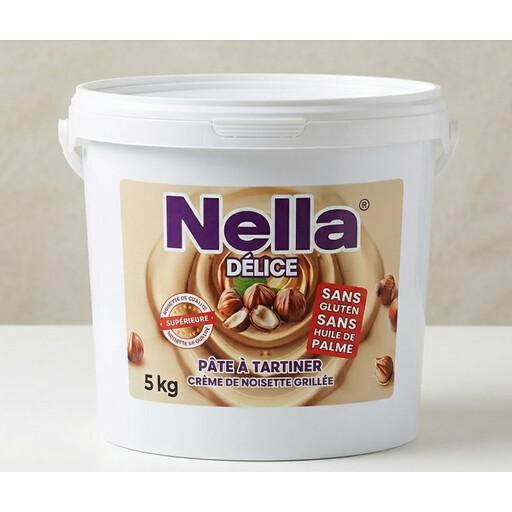 Image unavailable
A 5 kg size to consider if your recipe calls for a large amount of hazelnut spread. If cocoa or fair trade is essential for your dessert, check these details on the label for this product.
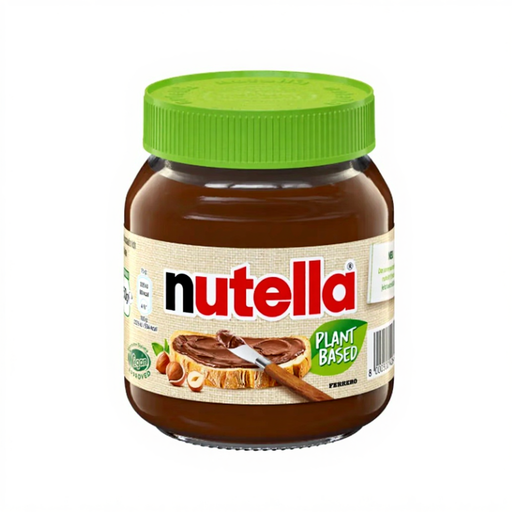 Image unavailable
A Plant Based product to consider for a plant-based recipe. Read the ingredients and allergen information on the exact jar; the name alone doesn’t tell you whether it is fair trade.
 Image unavailable
A praline paste worth considering for filling pancakes. If you want to use it in a cake, check the storage and usage instructions, as well as what any fair-trade claim covers.
No. According to the DGCCRF, Nutri-Score is voluntary in France. Nutrition labelling is compulsory for most prepacked foods, subject to certain exemptions, so compare the values per 100 g even if the logo isn’t shown.
No, not necessarily. Fairtrade International allows mass balance for cocoa: volumes are tracked, but ingredients may be mixed during production. If physical separation is important to you, read the product’s traceability information.
Check the ingredients and any ‘may contain’ warnings on the jar you’re using, rather than relying on the name of the spread alone. The products described here have different ingredients, including milk in Ethiquable, lupin in Rapunzel and nuts in Pépite.
Read the instructions for the product you choose and consider its temperature when you’re filling your dessert. Rapunzel says that the consistency of its paste changes with temperature. Funkie recommends refrigerating its paste after opening and mixing it to make it runnier again.