For an afternoon break, choose matcha powder if you want to control the amount you use, or a tea bag if convenience is your priority. Check the scope of any fair-trade claim separately: Auchan’s listing for a Jardin Bio Étic blend states that it contains 3% matcha and that 67% of its agricultural ingredients meet fair-trade standards, but it does not establish whether the matcha itself is covered.
Who are these options for?
For a quick break with a clear fair-trade claim
You want to make a hot drink without measuring out powder, while knowing which ingredients are covered by the fair-trade commitment. With a blend, read the full wording of the claim rather than relying on its name alone.
For adding matcha to a drink or snack
You’d rather decide how much matcha to add. Powder is suited to this, while a matcha tea bag also contains other ingredients. A powder’s organic label alone tells you nothing about its fair-trade status.
If you’re keeping an eye on caffeine
You already drink coffee or tea during the day and want to choose your portion accordingly. According to the European Food Safety Authority, caffeine occurs naturally in tea leaves, so consider everything you drink, not just your afternoon cuppa.
What should you check before choosing?
To decide between powder and tea bags, start with how you plan to use it, then check the ingredients and the exact scope of any fair-trade claim.
| What to consider |
What to check |
Who it matters to |
| Scope of the fair-trade commitment |
Look for the named label or standard, then check which ingredients and what proportion the claim applies to. Commerce Équitable France highlights how labels can help clarify these commitments. |
If traceability is my deciding factor, I want to know whether the commitment covers the matcha or other ingredients in the blend; around 36% of consumers in this group would make it their priority. |
| Ease of preparation |
Compare powder with tea bags, then check the preparation instructions for the product you choose. |
When I’m short on time, I prefer a drink that takes just a few steps to prepare; around 29% of consumers in this group would prioritise this convenience. |
| Format and how much matcha it contains |
Read the product name and ingredients list. Auchan’s listing for Jardin Bio Étic Lemon Matcha Tea states that it contains 3% matcha powder; its listing for Pukka tea describes a blend of three green teas with a touch of matcha. |
If I want to mix matcha into a drink or snack myself, I look for powder rather than a tea with just a touch of matcha; around 21% of consumers in this group would put this choice first. |
| Caffeine throughout the day |
Check the portion size and factor in any other caffeinated drinks you’ve had. According to the European Food Safety Authority, tea naturally contains caffeine. |
If I’ve already had coffee or tea, I want to consider this break as part of my whole day; caffeine would be the main factor for around 14% of consumers in this group. |
Common mix-ups to avoid
-
Assuming “contains matcha” means “matcha powder”
A tea bag may contain a small amount of matcha alongside other teas or plants. For example, Auchan’s listing for Jardin Bio Étic Lemon Matcha Tea states that it contains 3% matcha powder. This format won’t meet the same needs as powder you can measure out yourself.
Check the product format and ingredients list before choosing between tea bags and a drink made with powder.
-
Assuming “organic” means “fair trade”
These two claims refer to different commitments. Don’t assume that matcha powder described as organic is fair trade on that basis alone.
Check the organic claim separately from any fair-trade label or standard shown on the product.
-
Assuming a fair-trade claim covers the whole blend
On Auchan’s listing for Jardin Bio Étic Lemon Matcha Tea, the claim applies to 67% of the agricultural ingredients, while matcha powder makes up 3% of the recipe. These figures don’t tell you whether the matcha itself is covered.
Check which ingredients are covered by the stated standard and what proportion it applies to.
-
Only counting your afternoon drink
Tea naturally contains caffeine. When considering where a matcha drink fits into your day, remember to include your other sources of caffeine too.
Check the portion size on the product and factor in any coffee, tea or other caffeinated drinks you’ve already had.
Brands to consider by format
Jardin Bio Étic
The Lemon Matcha Green Tea listed by Auchan is a blend in tea bags for brewing, not pure matcha powder.
- Auchan’s listing states that it contains 3% matcha powder and that 67% of its agricultural ingredients meet fair-trade standards.
- The blend contains lemongrass, mint, liquorice and lemon, among other ingredients. The fair-trade claim alone doesn’t establish whether the matcha is covered.
Pukka
Auchan’s listing for Supreme Organic Green Tea and Matcha describes a blend of three green teas with a touch of matcha, in a pack of 20 tea bags weighing 30 g.
- Tea bags are a good choice if you’d rather brew an infusion than measure out powder.
- For this specific product, check the packaging separately for any fair-trade claim and what it covers.
110 GRAINES
Auchan’s range of teas includes a 100 g pack of organic matcha powder.
- Powder lets you choose how much to add to a drink or recipe.
- Before choosing this product for its fair-trade credentials, check the label and what it covers on the product listing or packaging.
A matcha tea to consider on Joybuy
This product is an option if you’re looking for green tea with matcha to brew for a break. If you want to measure out matcha powder or make fair-trade status your top priority, check that the product format and claims meet your needs.
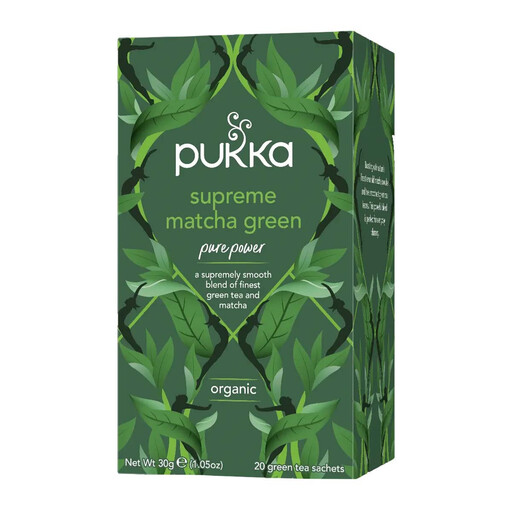 Image unavailable
Pukka Matcha Green Tea Organic, 30 g
Worth considering if you’re looking for green tea with matcha to brew for a break. The pack size is listed as 30 g; check the packaging for the amount of matcha, the scope of any fair-trade claims and the preparation instructions before you choose.
View on Joybuy
Frequently asked questions
Is tea labelled “matcha” always matcha powder?
No, it may be a blend in tea bags. Auchan’s listing for Jardin Bio Étic Lemon Matcha Tea states that it contains 3% matcha powder. To tell the formats apart, check the product name and ingredients list for the product you’re considering.
How can I tell what a fair-trade claim covers?
Look for the named label or standard and check which ingredients it applies to. For a blend, a stated proportion of agricultural ingredients meeting fair-trade standards doesn’t necessarily mean that the matcha itself is covered.
Do all matcha teas need to be prepared in the same way?
No, follow the instructions for the product you’ve chosen. Auchan’s listing for Jardin Bio Étic Lemon Matcha Tea recommends infusing it for 2 to 3 minutes in 200 ml of water at 85 °C. These instructions won’t automatically apply to powder or another blend.
What should I check if I’m monitoring my caffeine intake?
Consider your chosen portion and all your other sources of caffeine throughout the day. The European Food Safety Authority says caffeine occurs naturally in tea leaves, so “matcha” in a drink’s name doesn’t mean it’s caffeine-free.


