Shoppers who value fair-trade certification
You want to see the fair-trade standard and the proportion of ingredients it covers on the product. Fair for Life says this information is provided alongside its label.


For a morning cup brewed from a tea bag, the Pukka products described by Carrefour and Auchan have a documented fair-trade approach, but each contains just 2% matcha. If you want to measure out matcha powder, check its fair-trade certification separately: organic labelling alone isn’t enough to confirm it. For a Fair for Life product, look for the logo, the name of the standard and the proportion of certified ingredients.
You want to see the fair-trade standard and the proportion of ingredients it covers on the product. Fair for Life says this information is provided alongside its label.
You want to whisk or mix matcha into a drink, latte or recipe, rather than brew a tea-bag blend.
You prefer the convenience of a tea bag, while knowing that a green tea blend containing matcha isn’t the same as matcha powder you can measure out.
For your morning cuppa, first choose between powder to mix and a tea blend to brew. Then check that the product you’ve chosen has evidence of fair-trade certification.
| What to consider | What to check | Who it matters to |
|---|---|---|
| Fair-trade certification | The logo, the standard and the proportion of certified ingredients shown on the product. Fair for Life says this proportion is stated for products carrying its label. | I want to be able to identify the certification on the product, rather than relying on the word ‘organic’ alone; around 36% of shoppers would put this evidence first. |
| Ingredients and format | The ingredients list and the product format: matcha powder or a tea-bag blend. The Pukka teas described by Carrefour and Auchan each contain 2% matcha. | If I want to make a latte and measure out the matcha myself, I’m looking for powder rather than tea bags; around 29% of shoppers would make this their priority. |
| Morning preparation | How it’s prepared: brew a tea bag or mix powder, depending on the drink you want. | In the morning, I’d rather brew a tea bag than mix powder; around 21% of shoppers would prioritise this convenience. |
| In-store availability | Whether the specific product is available at your chosen shop, as well as its certification claims. | If I’m buying during my usual shop, I want to find my chosen product in store; around 14% of shoppers would put availability first. |
Carrefour’s product page for SIPSTA powder says ‘100% organic green tea matcha’. This description alone doesn’t establish that the product is fair-trade certified.
Check the ingredients and certification claims on the pack separately.
The two Pukka blends described by Carrefour and Auchan each contain 2% matcha. A tea bag won’t let you measure out powder for a latte or recipe.
If you want to mix matcha powder into a drink, check that the product you choose is powder and read its ingredients list.
Lidl France’s communications about Fairtrade don’t, by themselves, certify a particular matcha product.
Look for certification on the packaging or product page of the matcha you’re planning to buy.
The green tea and matcha products described by Carrefour and Auchan are blends for brewing, linked to a Fair for Life programme.
Carrefour’s product page describes a powder made from 100% organic green tea matcha.
Carrefour lists a green tea matcha product under this brand with organic certification.
This powder is for anyone who wants to measure out matcha for a latte or recipe. If fair trade is important to you, check the product’s certification claims.
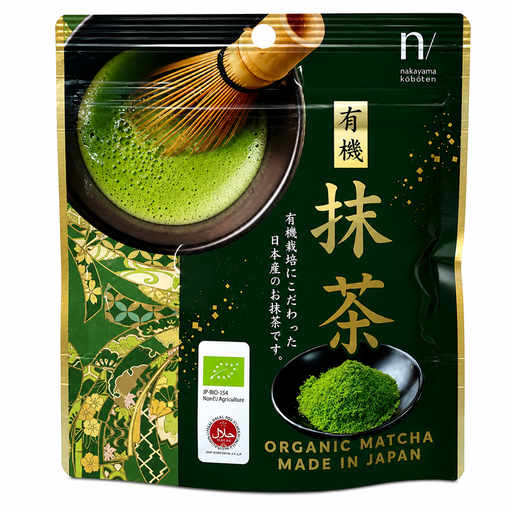 Image unavailable
Worth considering if you want to measure out matcha for a latte or recipe.
The product name describes it as organic matcha in a 30g pack. If you’re looking for a fair-trade product, check the logo and certification claims on the packaging.
Check the certification for the specific product rather than relying on a general brand promise. For Fair for Life, look for the logo, the name of the standard and the percentage of certified ingredients stated on the product.
No. The Pukka products described by Carrefour and Auchan are blends for brewing, not powder to measure out. Their product pages each state that they contain 2% matcha. If you want to make a latte with powder, check the format and ingredients of the product you choose.
Not necessarily: the two claims are based on different criteria. Carrefour’s SIPSTA product page says ‘100% organic green tea matcha’; if fair-trade certification is important to you, look for evidence on the product itself.
No. A retailer’s commitment doesn’t automatically certify every product it sells. Even though Lidl France promotes Fairtrade products, check the logo and certification claims for the specific matcha you’re considering.