People mindful of caffeine in the evening
You enjoy a hot drink after dinner, but caffeine may make it harder to fall asleep. Anses says that its effects on sleep vary from person to person.


When choosing a hot matcha drink for the evening, first distinguish between pure powder, tea bags and latte mix: they contain different proportions of matcha and different ingredients. If fair trade is a deciding factor, check the label and which ingredients it covers. Also consider how sensitive you are to caffeine, as Anses notes that it can affect sleep.
You enjoy a hot drink after dinner, but caffeine may make it harder to fall asleep. Anses says that its effects on sleep vary from person to person.
You want to know which label appears on the product and, for a blend, which ingredients it covers. A ‘organic’ claim alone doesn’t answer that question.
You want to choose between matcha powder that you measure out yourself, tea bags and matcha latte mix. The ingredients list and matcha content help you tell these options apart.
Choose this if: you want to measure out the matcha in your drink yourself.
Check: Carrefour France product listings for Carrefour Bio and SIPSTA Premium powders state that they are 100% matcha, but do not establish that these products have fair trade certification.
Choose this if: you prefer to brew a blend with a specific fair trade claim.
The trade-off: Carrefour France and Auchan France product listings state that Pukka contains 2% matcha and Jardin Bio Étic 3%; neither is pure matcha powder.
Choose this if: a mix that you prepare with water suits the way you want to enjoy your drink.
The trade-off: the Carrefour France listing for SIPSTA Matcha Latte states that it contains 77% instant oat powder, cane sugar and 8% matcha; it does not name the applicable fair trade label.
| Factor | What to check | Who it matters to |
|---|---|---|
| Proof of fair trade | The name of the label on the packaging and, for a blend, which ingredients and what proportion it covers. | If you're looking for a specific certification, a general ‘fair trade’ claim isn’t enough to make a decision. Around 26% of consumers interested in this drink would put proof first. |
| Drinking it in the evening | Whether it contains tea or matcha, and how sensitive you are to caffeine at the time you plan to drink it. | After dinner, you may want to consider how caffeine could affect your sleep. Around 26% of consumers would put this concern ahead of the others. |
| Matcha content | The ingredients list and the percentage of matcha, to distinguish pure powder from a blend. | If you want to measure out the matcha yourself, you need to know whether you’re buying pure powder or a drink that contains only some matcha. Around 21% of consumers would prioritise this distinction. |
| Preparation and ingredients | How to prepare the latte and the full ingredients list on the packaging. | If you want to make a latte quickly, you’ll also want to check what the mix contains. Around 16% of consumers would make this their top priority. |
| In-store availability | Whether the product is available at your chosen shop or for your selected collection option, then the information on its packaging. | You may want to check whether the product is available at your usual shop before choosing between formats. Around 11% of consumers would put availability first. |
Carrefour France and Auchan France listings describe powders that are 100% matcha, as well as Pukka and Jardin Bio Étic blends containing 2% and 3% matcha respectively. They won’t suit the same way of measuring out your matcha.
If you want to measure out pure powder, look for ‘100% green tea matcha’ in the ingredients list. For a blend, check the stated matcha content.
The Carrefour France listing for Pukka states that 80% of its ingredients are audited under the Fair for Life standard. The Auchan France listing for Jardin Bio Étic says that 67% of its agricultural ingredients comply with fair trade standards. These claims don’t cover the same proportion.
Check which standard is named and which ingredients it covers. If you specifically want Fairtrade/Max Havelaar, check that the product carries this label.
Matcha is green tea. According to Anses, caffeine can delay sleep onset and reduce sleep duration or quality, although sensitivity varies from person to person.
Consider how you react to caffeine and what time you plan to drink your tea. ‘Organic’ and ‘fair trade’ claims don’t tell you anything about your sensitivity to caffeine.
The Carrefour France listing for SIPSTA Matcha Latte states that it contains 77% instant oat powder, cane sugar and 8% matcha.
Choose this format for its preparation method if the ingredients suit you. If you only want to measure out matcha, compare powders whose ingredients list matches what you’re looking for.
The Carrefour France listing features a 55 g pot of organic powder for making your own matcha drink.
Carrefour France lists two different products: Premium powder made from 100% organic matcha and a Matcha Latte mix.
The product listed by Carrefour France is a blend of green tea, mint and matcha in tea bags.
The Auchan France listing features green tea with matcha and lemon in tea bags.
This powder is a good choice if you want to prepare your matcha yourself. If proof of fair trade is your deciding factor, check the label and what it covers on the product packaging before you choose.
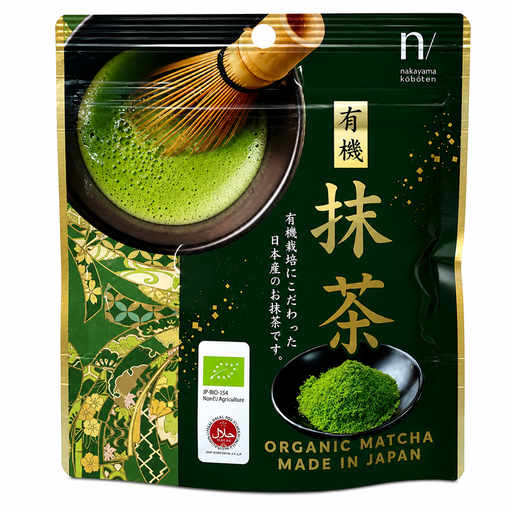 Image unavailable
A matcha powder to consider if you want to prepare and measure out your drink yourself. The product name indicates a 30 g pack.
If you’re drinking it in the evening, consider your sensitivity to the caffeine naturally found in tea. If you require a specific fair trade label, check that this product carries it on the packaging.
No. Organic certification and fair trade schemes are separate. Check the label on the product and, if it contains several ingredients, look for details of which ones are covered.
Matcha naturally contains caffeine, so whether it fits into your evening routine depends in part on your sensitivity and what time you drink it. Anses says caffeine can delay sleep onset and reduce sleep duration or quality.
Read the ingredients list and check the matcha content. Carrefour France states that Carrefour Bio and SIPSTA Premium powders are 100% matcha, compared with 2% in the Pukka blend. The Auchan France listing states that Jardin Bio Étic tea contains 3%.
No. They are separate schemes with different names and standards. If you specifically want Fairtrade/Max Havelaar, check for that exact label on the packaging rather than relying on a general fair trade claim.
For this tea-bag product, the Auchan France listing recommends 200 ml of water at 85 °C and an infusion time of 2 to 3 minutes. These instructions don’t automatically apply to matcha powders or other blends.