Who is this guide for?

Hosts who care about fair-trade credentials

You want to be able to identify a label, standard or information about the supply chain before choosing your coffee. The DGCCRF notes that some fair-trade supply chains do not carry a label, so the absence of a particular logo is no reason to skip reading the product information.

People preparing brunch on the day

You’re looking for a cold drink that doesn’t need to have been brewing since the night before. Espresso or filter coffee poured over ice fits the bill, though you’ll need to bear dilution in mind.

Hosts planning to serve coffee in different ways

You’d like to offer black coffee or coffee with milk, as well as a decaffeinated option for guests who prefer to limit their caffeine intake. In that case, the format and information on each pack matter just as much as the flavour profile.

What should you look for?

For this brunch, first check the coffee’s fair-trade credentials, then consider the preparation time, how you plan to serve it and whether you need a decaffeinated option.

Criterion What to check Who is it for?
Fair-trade credentials The named label or standard, or traceability information. An organic claim alone does not prove that the coffee is fair trade. I want to understand the approach behind the coffee before choosing its flavour; around 36% of consumers would put this check first.
Preparation time The equipment and grind you’ll need: iced coffee can be made quickly, while cold brew takes several hours and needs to be filtered. I need to serve several cups without having started the day before; speed would be the priority for around 29% of consumers.
Flavour and serving style The stated profile of the specific coffee and how you plan to serve it: black over ice or with milk. I want to choose a coffee to suit the drinks my guests will have at brunch; around 21% of consumers would put this pairing first.
Decaffeinated option The ‘decaffeinated’ claim on the product and a format that works with your preparation method. Some guests prefer to limit their caffeine intake, and I want to give them the choice; decaffeinated coffee would be the priority for around 14% of consumers.

Mistakes to avoid

  • Assuming organic means fair trade

    These two claims describe different approaches. Organic coffee does not necessarily meet the fair-trade standards you’re looking for.

    Look for the fair-trade label or standard on the pack, or check the information provided about the supply chain.

  • Planning to make cold brew without allowing enough time

    Cold brew is made by leaving ground coffee in water for several hours, then filtering it. It isn’t a substitute for iced coffee made just before serving.

    Start brewing it before brunch day. Otherwise, make espresso or filter coffee and cool it over ice.

  • Relying on a product without checking your chosen store

    For the Bio Village coffees listed by E.Leclerc, an online product page doesn’t confirm availability at your local store or for Click & Collect.

    Check with your chosen store before planning to serve this coffee at brunch, especially if you’re looking for decaffeinated coffee.

  • Assuming iced coffee is low in caffeine

    Serving coffee cold doesn’t tell you how much caffeine it contains. Anses notes that the effects of caffeine vary from person to person and can, in particular, disrupt sleep.

    If any guests want to limit their caffeine intake, offer a caffeine-free drink or a product explicitly labelled as decaffeinated too.

Brands to know for this choice

Ethiquable

Carrefour lists a 250 g pack of organic, fair-trade ground Arabica coffee from Ecuador.

  • Carrefour’s product page gives details of this coffee’s origin and fair-trade credentials.
  • This information relates to the Ecuadorian coffee listed, not every Ethiquable coffee.

Alter Eco

Auchan lists organic, fair-trade ground coffees from Guatemala and Peru, certified to the Fair for Life standard.

  • The product pages distinguish between the origins and the stated flavour profiles of each coffee.
  • These flavour descriptions appear on the product pages; they are not an independent comparison of the coffees once served cold.

Malongo

Malongo offers fair-trade coffee beans, ground coffee and coffee pods, as well as an iced coffee recipe.

  • The different formats make it easier to find an option to suit your coffee maker.
  • The brand’s recipe doesn’t prove that one Malongo coffee is a better choice than another for every brunch.

Bio Village (E.Leclerc)

E.Leclerc lists 250 g packs of organic, Fairtrade Bio Village ground coffee, including a Peruvian option and a decaffeinated one.

  • The decaffeinated option gives you a specific product to start with if you’d like to offer this choice.
  • Check that your chosen E.Leclerc store or Click & Collect service has the coffee you want in stock.

Carrefour

The retailer lists fair-trade coffees, including an Ethiquable option, as well as its own fair-trade range.

  • The product page for Ethiquable’s Ecuadorian coffee lets you check the details of that specific product.
  • Check the product and its availability at the store where you plan to shop.

Ground coffee to consider on Joybuy

This ground coffee could be used to make iced coffee for brunch. If fair-trade credentials are important to you, check the information on the pack before buying.
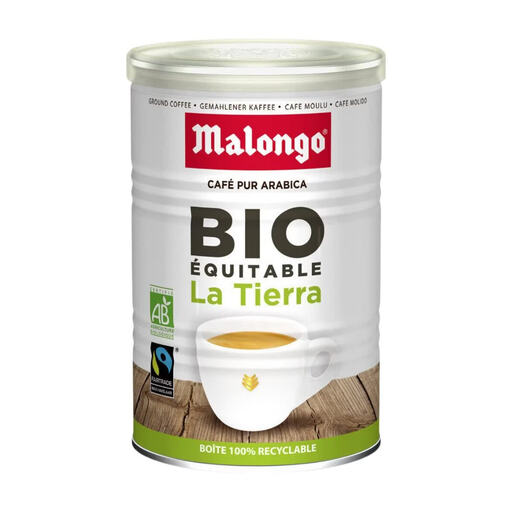
250 g pack of Malongo La Tierra organic ground coffee

Malongo La Tierra organic ground coffee, 250 g

Worth considering if you’d like to make your coffee and serve it cold over ice. This pack contains 250 g of ground coffee. Check the fair-trade information on the packaging and make sure the grind is suitable for your coffee maker.

View on Joybuy

Frequently asked questions

Does fair-trade coffee have to carry the Fairtrade logo?

No. The DGCCRF also describes fair-trade supply chains that do not carry a label. If you want to check the credentials of a particular coffee, read about its standard or supply chain rather than relying on the organic claim alone.

How can I stop iced coffee from becoming diluted?

You could use large ice cubes or ice cubes made from coffee. Nespresso suggests both options to limit dilution when serving coffee over ice.

Is cold brew just hot coffee that’s been left to cool?

No. In the method described by Nespresso, ground coffee is steeped in room-temperature water for several hours before being filtered. Iced coffee, on the other hand, can be made by pouring hot coffee over ice.

When should I have decaffeinated coffee ready for brunch?

Have some ready if any guests want to limit their caffeine intake, but don’t assume that coffee served cold contains less caffeine. Anses says that the effects of caffeine vary from person to person and can, in particular, disrupt sleep.

Does an E.Leclerc product page confirm that a coffee will be available in my store?

No. For the Bio Village products listed, E.Leclerc advises customers to check availability with their local store. Check Click & Collect or contact your chosen store before relying on a particular coffee for brunch.