Families looking for a specific fair-trade label
If Fairtrade/Max Havelaar is a must-have, check the logo on each box and see which ingredients it covers. An organic claim or another certification does not automatically meet the same requirement.


When shopping for a large family, start by choosing an herbal tea with a clearly stated fair-trade label and clearly identified ingredients. If you want to avoid caffeine, check the recipe’s ingredients next, then work out how many tea bags or how much volume your household needs.
If Fairtrade/Max Havelaar is a must-have, check the logo on each box and see which ingredients it covers. An organic claim or another certification does not automatically meet the same requirement.
For an evening drink or if someone in your household is sensitive to caffeine, start with the ingredients. Anses notes that caffeine can delay falling asleep; Carrefour France describes its pure rooibos products as caffeine-free.
The number of tea bags and the net weight can help you plan your next shop. To enjoy a variety of recipes without ending up with lots of boxes that barely get used, choose pack sizes to suit your household’s habits.
For a large family, start by checking what the label covers, then look for tea or maté in the ingredients and check the pack size. Each criterion meets a different need, so none can replace the others.
| Criterion | What to check | Who it matters to |
|---|---|---|
| Fair-trade proof | The exact logo and, for a blend, which ingredients it covers, as shown on the back of the box. Fairtrade/Max Havelaar France explains what its labels cover. | I want to be able to distinguish a Fairtrade product from a general sustainability claim before buying several boxes; around 42% of consumers may put this proof first. |
| Caffeine content | The ingredients list and any caffeine-free claim specific to the recipe, particularly if it contains tea or maté. | If it’s an evening drink, I’d rather choose a recipe explicitly labelled caffeine-free than rely on the product range’s name; around 33% of consumers may share this priority. |
| Pack size | The number of tea bags or the volume, as well as the net weight and pack format available from your chosen retailer. | When several people regularly drink the same herbal tea, I look for a pack size that means I don’t have to restock too often; around 25% of consumers may put pack size first. |
Lipton Teas and Infusions France says that its black and green teas are Rainforest Alliance certified. This does not prove that a Lipton herbal tea carries the Fairtrade/Max Havelaar label.
If this label is essential for you, look for it on the exact product rather than relying on the brand or another certification.
For some blended products, Fairtrade/Max Havelaar France explains that a label with an arrow directs you to the back of the packaging for details of the ingredients covered and their traceability.
Read this information before choosing several boxes of a herbal, fruit or spice blend.
Tea naturally contains caffeine. Anses says it can delay falling asleep and affect the length and quality of your sleep.
For a caffeine-free drink, check the full ingredients list and the claim on the specific recipe you’ve chosen; don’t assume that all rooibos blends are caffeine-free.
The Alter Eco and ETHIQUABLE rooibos products described by Carrefour France come in boxes of 20 tea bags. Households that drink them regularly should factor in this pack size when planning their shopping.
Compare the quantities shown on the packaging and plan when to restock based on how many people drink each recipe.
A brand may offer several types of tea and herbal tea, so check the label, ingredients and pack size of the specific product you choose.
Worth exploring if you’re looking for organic rooibos with an explicit Fairtrade/Max Havelaar claim.
A brand to explore for teas, rooibos and herbal teas with a range of recipes and pack sizes.
Check each herbal recipe individually if the scope of a fair-trade claim matters to you.
A brand whose certifications should be distinguished from the Fairtrade label you may be looking for.
A range of teas and herbal teas to browse recipe by recipe.
This selection includes two herbal teas, a bottled drink and a matcha green tea. When shopping for the family, consider how each one is consumed and check the packaging to make sure it carries the label you’re looking for.
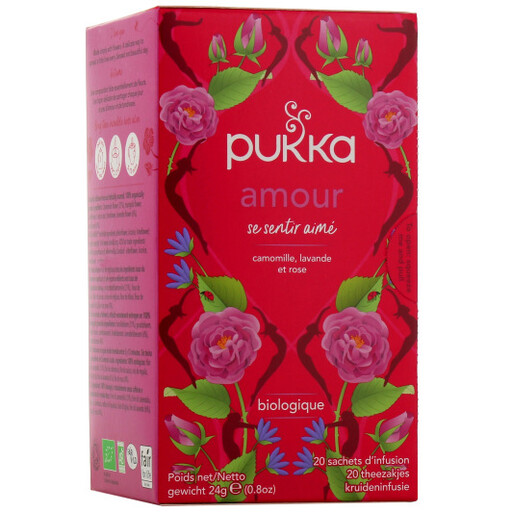 Image unavailable
Worth considering if you’re looking for a caffeine-free herbal tea. Joybuy France’s listing says this 24 g recipe contains organic ingredients from fair trade.
If you specifically require the Fairtrade/Max Havelaar label, check the logo and which ingredients it covers on the box.
 Image unavailable
This ginger herbal tea could be a good choice for households looking to try different recipes. The pack is listed as 36 g.
Before choosing it for its Fairtrade/Max Havelaar credentials or as a caffeine-free option, check the information for this specific recipe on the packaging.
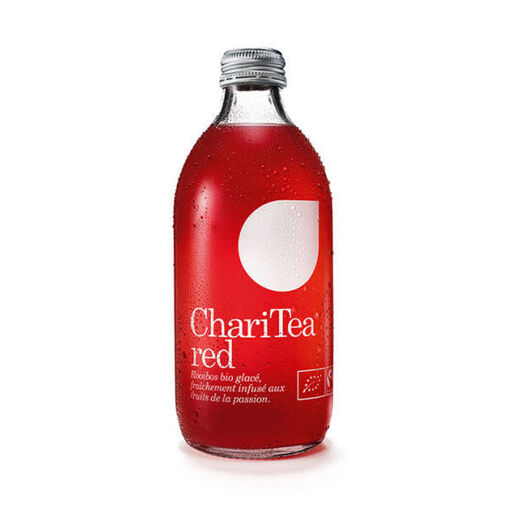 Image unavailable
This 33 cl bottle is designed for a different occasion from a box of tea bags you prepare for several people.
If the scope of the fair-trade claim or the absence of caffeine matters to you, read the ingredients and information on the back of the bottle.
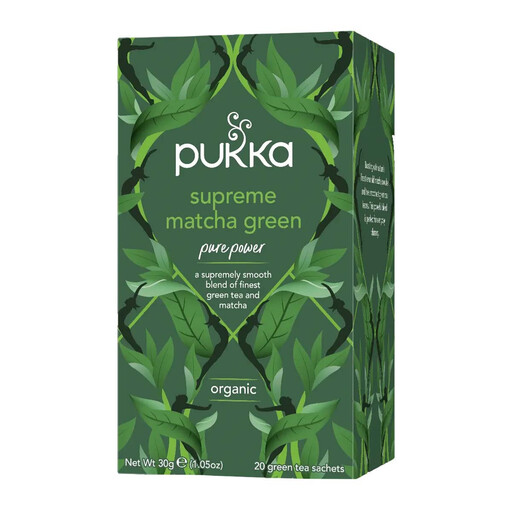 Image unavailable
This is a 30 g matcha green tea, not an herbal tea chosen to avoid caffeine: Anses reminds us that tea naturally contains caffeine.
If you’re looking for the Fairtrade/Max Havelaar label, check the logo on the packaging of this product.
Look for the logo on the exact product, then read the information alongside it. Fairtrade/Max Havelaar France explains that when a label includes an arrow, the back of a blended product provides information about the ingredients covered and their traceability.
No. Organic and fair trade refer to different practices. Some rooibos products described by Carrefour France carry both claims, but check each one on the box you plan to buy.
Choose a recipe explicitly labelled caffeine-free and read its ingredients list. Anses reminds us that tea naturally contains caffeine; Carrefour France describes the pure Alter Eco and ETHIQUABLE rooibos products mentioned here as caffeine-free, but that doesn’t apply to every blend from these brands.
First check the number of tea bags, or the volume for a ready-to-drink option, then estimate how often your household will drink each recipe. Carrefour France lists the Alter Eco and ETHIQUABLE rooibos products mentioned here in boxes of 20 tea bags. This gives you a useful guide for planning when to restock, without assuming all products come in the same size.