Anyone organising a jumble sale with fair trade in mind
If you need to explain what the certification covers when serving the herbal tea, look for the label name and the proportion covered for each product, especially when it’s a blend.


For a jumble sale, choose a herbal tea whose fair trade label and the proportion of ingredients covered are stated for the specific product you’re buying. Carrefour’s product page for Alter Eco Organic Rooibos says that 100% of its weight complies with Fairtrade / Max Havelaar standards. For a blend, check the percentage and standard that apply to its recipe. Then compare the number of tea bags, the flavour and the ingredients: claims such as “organic” or “wellbeing” do not, on their own, prove a fair trade commitment.
If you need to explain what the certification covers when serving the herbal tea, look for the label name and the proportion covered for each product, especially when it’s a blend.
If you’re serving a hot drink at different times of day, you could consider rooibos products described as naturally caffeine-free. Check the flavour and fair trade credentials separately.
If the herbal tea will be served to several people or enjoyed regularly, the list of herbs matters more than recipe names such as “Digestion” or “Relaxation”. In particular, check whether it contains liquorice.
For a jumble sale, check the fair trade credentials of each herbal tea before choosing which recipes and pack sizes to offer.
| What to consider | What to check | Who is it for? |
|---|---|---|
| Fair trade credentials | Look for the standard and the proportion of ingredients covered. If you need the whole recipe to be covered, check for an explicit 100% claim on the specific product. | If I need to explain a herbal tea’s fair trade commitment to the public, I want to be able to show exactly what is certified. Around 36% of consumers put this evidence first. |
| Pack size and variety | Compare the number of tea bags and the type of selection pack. Check the fair trade claim on each product you choose. | If I want to serve several people easily or let them try different recipes, I look for a pack that’s suitable for sharing. This is the top priority for around 29% of consumers. |
| Flavour and caffeine | Check the main ingredient, spices and any caffeine-related claims on the product you choose. | If I’m looking for caffeine-free rooibos or a spicy flavour, the ingredients in the cup guide my choice. Around 21% of consumers prioritise this profile. |
| Ingredients to look out for | Read the list of herbs, especially to check for liquorice before serving a group. | If the herbal tea will be shared or drunk regularly, I want to know what herbs it contains before serving it. Ingredients are the top priority for around 14% of consumers. |
A box of organic herbal teas may offer the variety you’re looking for, but that doesn’t necessarily mean the teas inside carry the fair trade label you want.
Check the organic and fair trade claims separately on every product you plan to buy.
The stated proportion varies by recipe and standard. For example, Carrefour product pages state that Ethiquable’s South African Spices herbal tea contains 90% fair trade ingredients, while Pukka Organic Digestion herbal tea contains 44.5% ingredients verified under Fair for Life.
Check the percentage, which ingredients are covered and the name of the standard. Don’t treat different labels as interchangeable.
According to Anses, high and repeated consumption of liquorice can lead to problems including hypokalaemia and high blood pressure. Some people and certain medicines call for particular care.
Keep the ingredients list handy at the jumble sale, and consider offering another recipe to anyone who wants to avoid liquorice.
One option to consider if you’re looking for organic rooibos made with a single ingredient.
Recipes to consider if you’re looking for French herbs from a fair trade supply chain, or a blend of rooibos and spices.
Compare these herbal blends recipe by recipe, especially if you’re looking for anise and fennel flavours.
Organic tea bag selection boxes to consider if variety is your main priority.
These three Pukka herbal teas let you compare recipes and 36 g or 40 g pack sizes for a jumble sale. If fair trade is essential, check the claim and what it covers on each product: a claim for one recipe does not apply to the others.
 Image unavailable
If you’re serving an herbal blend, this recipe is worth considering. Check its stated fair trade proportion and the ingredients before serving.
Carrefour’s product page for Pukka Organic Digestion herbal tea states that 44.5% of its ingredients are verified under Fair for Life and that 8% of its liquorice is FairWild certified. These claims do not mean the whole recipe is certified Fairtrade / Max Havelaar.
The recipe includes anise, fennel and liquorice. If you’re preparing individual portions, check the number of tea bags on the packaging.
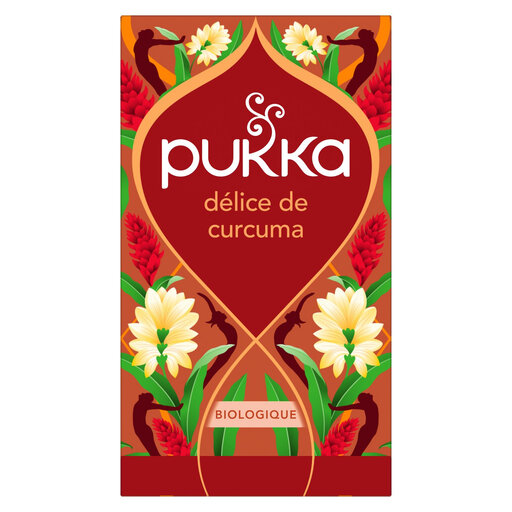 Image unavailable
If you’re looking for a spicy recipe to share, compare its ingredients and the scope of its fair trade claims with what you need for your jumble sale.
Pack size: 36 g. Check the packaging to see which ingredients are covered by each fair trade claim and in what proportion. Also check whether it contains liquorice and how many tea bags are included.
 Image unavailable
If you’re choosing a ginger-based herbal tea, check the full list of herbs and the caffeine claim on the product you plan to serve.
Pack size: 36 g. Check the packaging for the exact wording and scope of the fair trade claim, as well as the number of tea bags and whether it contains liquorice.
Look for an explicit claim that covers the entire product, then check the label and which ingredients it applies to. Fairtrade / Max Havelaar France says that a minimum total content of 20% Fairtrade products may apply to certain composite products. So a product carrying a label does not necessarily mean the whole recipe is covered. For comparison, Carrefour’s product page for Alter Eco Organic Rooibos states that 100% of its total weight complies with Fairtrade / Max Havelaar standards.
No. An organic claim is not a substitute for identifying a fair trade standard. If this matters for your jumble sale, check both claims separately on the product you choose, even if it’s part of a selection box.
Choose a product whose page or packaging confirms this and whose recipe suits the flavour you’re looking for. Carrefour’s product page describes Alter Eco Organic Rooibos as naturally caffeine-free. This claim should not be applied to all hot drinks or blended recipes.
Check the ingredients list for liquorice, and don’t suggest that the recipe is suitable for everyone. Anses warns of the risks of high and repeated consumption, particularly for some people who are sensitive or taking medication. If you have a relevant medical condition, seek advice from a healthcare professional.