To take fair-trade herbal tea with you for lunch, first check that the claim or certification applies to the specific product you’re buying. Then consider whether its preparation suits the water you’ll have access to and the time available. A rooibos described as fair-trade and caffeine-free meets a different need from a Pukka blend made with Fair for Life-certified ingredients, which needs hot water. A cold infusion solves the preparation question, but the brewing method alone doesn’t prove that it’s fair-trade.
Who is this choice for?
Shoppers who want clear proof of fair trade
You want to check the specific product you’re buying, rather than relying on a brand’s or retailer’s general commitment. Fairtrade International advises checking the packaging for details on products with multiple ingredients; Pukka also states the proportion of certified ingredients on its boxes.
People having lunch without access to hot water
If you can’t rely on having a kettle, a blend designed for cold water could work well for your lunch break. Any fair-trade certification is a separate consideration, so check the product itself.
People looking to avoid caffeine
After lunch, you may want a drink that’s explicitly labelled caffeine-free or tea-free. Ethiquable describes its rooibos as tea-free; with a blend, check the ingredients list too.
What should you look for before buying?
When choosing herbal tea to take with you, start by checking the fair-trade information on the box. Then compare the blends based on caffeine content and how you’ll prepare your drink at lunchtime.
| Criterion |
What to check |
Who is it for? |
| Fair-trade proof |
The logo or claim on the specific product; for a blend, check which ingredients are covered and read the information on the back of the box. |
I want to know exactly what the certification covers, rather than relying on a general promise: around 42% of consumers put this first. |
| Caffeine-free |
Look for a “caffeine-free” or “tea-free” claim on the blend, and check its ingredients. |
After a meal, I prefer to avoid caffeine, even if that rules out blends containing tea that I enjoy. This is the main priority for around 33% of consumers. |
| Easy to prepare on the go |
Check the water temperature, brewing time and whether tea bags or loose-leaf tea will suit the equipment you have available. |
If there’s no hot water or I only have a short break, I need to be able to prepare my drink on the spot. Around 25% of consumers would prioritise ease of preparation. |
Mistakes to avoid
-
Assuming “organic” or “sustainable” means fair-trade
A retailer’s commitment alone doesn’t confirm the status of every herbal tea it sells. Fairtrade International also distinguishes between different ways of certifying or sourcing ingredients in products made from multiple components.
Choose the scheme that matches what you’re looking for, then check the logo and any details on the packaging of the product you’re buying.
-
Choosing a hot infusion without planning how to prepare it
An Auchan France product listing for a Pukka ginger blend recommends freshly boiled water and a brewing time of 5 to 15 minutes. By contrast, the Joybuy listing for a Lipton mango and rooibos infusion calls for five minutes in 500 ml of cold water.
Before choosing a blend, think about the water, container and time you’ll have available at lunchtime.
-
Assuming a drink is caffeine-free just because it’s called an “infusion”
A blend can combine herbs with green tea, black tea or matcha. The product name alone doesn’t tell you everything about what’s in it.
If this matters to you, look for an explicit “caffeine-free” or “tea-free” claim and check the ingredients.
-
Overlooking liquorice in herbal tea you drink regularly
Anses warns that high, repeated consumption of products containing liquorice can lead to high blood pressure and low blood potassium levels.
Check the ingredients list for liquorice, especially if you buy this herbal tea regularly.
Brands to know
Pukka
Pukka offers herbal blends and identifies Fair for Life as its certification scheme.
- The brand states on its packaging which ingredients are certified and what proportion of the blend they make up.
- Fair for Life and FAIRTRADE/Max Havelaar are separate schemes, so check the logo on the box. An Auchan France listing for a Pukka ginger blend recommends brewing it in freshly boiled water for 5 to 15 minutes.
Ethiquable
Ethiquable offers a range of teas, rooibos and herbal infusions sourced through fair trade and organic farming.
- The brand describes its mint rooibos as fair-trade, organic and tea-free.
- If you’re taking it with you, choose a format that suits the equipment you’ll have for brewing.
Lipton
Lipton offers a mango and rooibos infusion designed for cold water.
- The Joybuy listing for this product recommends brewing it for five minutes in 500 ml of cold water and describes it as caffeine-free.
- If fair trade is essential to your choice, check the claim on the specific product. Another sustainability initiative doesn’t automatically mean it has Fairtrade certification.
Twinings
Twinings France offers a range of teas and herbal infusions in a variety of blends.
- The range lets you compare ingredients and formats to find what suits your preferences.
- If you’re choosing herbal tea for its fair-trade credentials, check the label or claim on its own packaging.
Herbal teas available on Joybuy
These three Pukka herbal infusions are worth considering if you can make a hot drink while you’re out. Compare the information on their boxes to see exactly what each fair-trade claim covers before choosing a blend.
 Image unavailable
Pukka Organic Gingers, organic herbal tea 36 g
Worth considering if you have access to hot water and enough time to brew it. Check the box to see what proportion of the ingredients is covered by Fair for Life, and whether it contains liquorice if you drink it regularly.
View on Joybuy
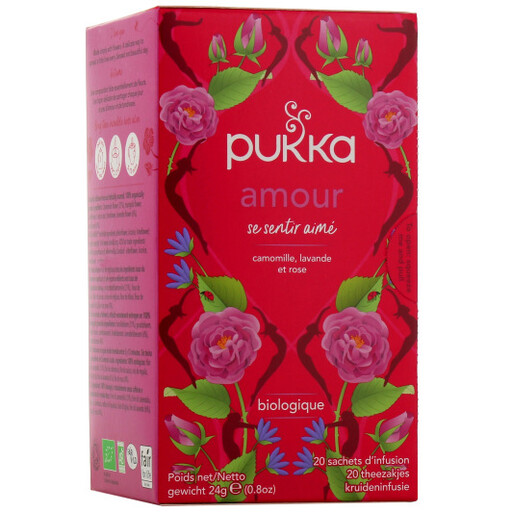 Image unavailable
Pukka Infusion Amour Bio 24 g
If you have access to hot water during your break, check the brewing instructions and which ingredients are covered by the fair-trade claim on the packaging. If liquorice is a factor in your choice, check the ingredients list too.
View on Joybuy
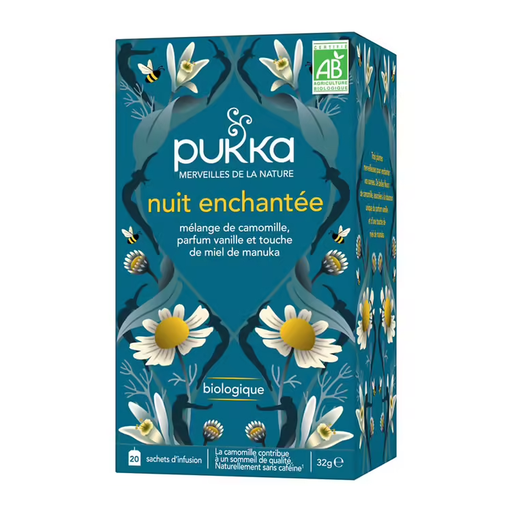 Image unavailable
Pukka Enchanted Night, organic herbal tea 32 g
If you’d like to take it with you for lunch, check how to prepare it and what the fair-trade claim on the box covers. If you want to avoid caffeine, check the information about its caffeine content too.
View on Joybuy
Frequently asked questions
Does the organic logo prove that herbal tea is fair-trade?
No. Organic farming and fair trade are separate schemes. For the herbal tea you’re considering, look for a fair-trade claim or label on the packaging and read the details, especially if it’s a blend.
What does the arrow next to the FAIRTRADE logo mean?
Fairtrade International says it directs you to the information on the back of the packaging. For a product with multiple ingredients, this helps explain which ingredients are covered and how they’re sourced.
Which infusion should you choose if you don’t have hot water at lunchtime?
Choose a blend explicitly designed for cold water. The Joybuy listing for Lipton mango and rooibos recommends brewing it for five minutes in 500 ml of cold water. If fair trade is important to you, check this separately on the specific product.
Why should you check whether herbal tea contains liquorice?
Liquorice deserves particular attention if you drink it regularly. Anses says that high, repeated consumption can lead to high blood pressure and low blood potassium levels, among other effects. Check the ingredients list before making a blend your regular drink.


