For fair trade green tea to enjoy with lunch on deck, look for a fair trade claim or certification and, if the blend contains several ingredients, check which ones it covers. The word ‘organic’ does not answer the same question. If you don’t have an infuser, choose tea bags that clearly state their fair trade credentials. Loose-leaf tea requires the right equipment and preparation for the tea you’ve chosen.
Who is this guide for?
Shoppers looking for clear fair trade credentials
You want to identify the fair trade certification or supply chain behind the specific tea you’re buying. For a blend, check which ingredients are covered and what proportion is stated on the packaging or product page.
People having lunch without any tea-making equipment
If you have a mug and hot water, tea bags are easier to prepare on the go than loose-leaf tea, which needs a filter or infuser.
Fans of flavoured green tea
Jasmine, Earl Grey or ginger and lime: compare the ingredients in the blend you like, then check what proportion is stated as fair trade.
What to look for
| Criterion |
What to check |
Who is it for? |
| Fair trade credentials |
Look for a fair trade certification or claim. For a blend, check the proportion of ingredients covered. |
I want to distinguish a fair trade commitment from a simple organic claim on my tea; for around 50% of consumers, these credentials would be the top priority. |
| Preparation on the go |
Check whether it’s tea bags or loose-leaf tea, and whether you’ll need an infuser while you’re out. |
Without any tea-making equipment for my break, I want to make a cup with hot water; ease of preparation would come first for around 30% of consumers. |
| Flavour and ingredients |
Compare the ingredients and type of flavouring in the specific blend. |
To choose between jasmine, bergamot and ginger and lime, I want to know what’s in each blend; around 20% of consumers would put flavour first. |
Mistakes to avoid
-
Confusing organic with fair trade
An organic claim alone doesn’t tell you whether the tea comes from a fair trade supply chain.
Check the fair trade claim or certification separately for the product you’re buying.
-
Assuming the same proportion of fair trade ingredients applies to every blend
A proportion stated for one flavoured tea doesn’t apply to the brand’s other products. For example, Ethiquable states that 92% of the ingredients in its Earl Grey green tea are from fair trade sources.
Check the ingredients list and stated proportion for the specific blend.
-
Taking loose-leaf tea without planning how to prepare it
Loose-leaf tea needs a way to filter it. Brewing instructions also vary by product: for its ginger and lime green tea, Ethiquable recommends 2 g per 20 cl, water at 80 °C and an infusion time of 3 to 4 minutes.
If you’re making tea on deck, choose packaging that suits the equipment and water you’ll have available.
Brands to consider
These brands offer specific products to compare. Check the fair trade information for each tea rather than assuming it applies to the whole range.
Ethiquable
Flavoured green teas that let you compare the ingredients and the proportion from fair trade sources in each blend.
- Ethiquable states that 92% of the ingredients in its Earl Grey green tea are from fair trade sources. The tea is flavoured with bergamot and orange, among other ingredients.
- This proportion applies to the Earl Grey mentioned here. Check the product page separately for any other blend.
Malongo
A jasmine green tea in tea bags to consider if you want to make a cup without an infuser.
- Malongo presents its organic jasmine tea in a box of 25 tea bags and states that tea from fair trade sources, according to Fairtrade/Max Havelaar standards, represents 100% of the total weight.
- These details apply to this jasmine tea, not to all Malongo teas.
Les Théiers Solidaires
A shop showcasing a selection of organic and fair trade teas, including green teas.
- Les Théiers Solidaires features green teas including Jasmine, Majuli and Nyassa.
- Before treating any of these products as Fairtrade/Max Havelaar-certified tea, check the certification and fair trade details on its own product page.
Matcha green tea on Joybuy
This matcha product is one option to consider when choosing green tea for lunch. To decide whether it’s suitable for making on the go, check its packaging and the fair trade information on the product page.
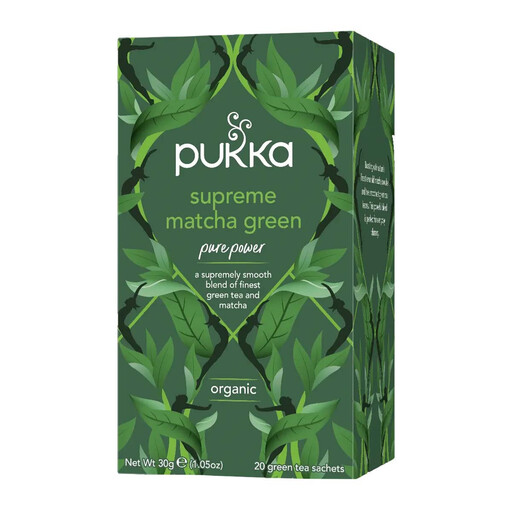 Image unavailable
Pukka Matcha Green Tea organic, 30 g
If you’d like to take matcha green tea with you for lunch, check whether it comes in tea bags or loose-leaf form so you can bring an infuser if needed.
Stated contents: 30 g.
View on Joybuy
Frequently asked questions
How can you tell if green tea is fair trade?
Look for a recognisable claim or certification on the specific product, then check the details about the ingredients if it’s a blend. Fairtrade/Max Havelaar explains that its certification is based on standards covering social, economic and environmental criteria, among other things. Check which certification is actually shown on the tea you’re considering.
Is organic green tea always fair trade?
No. An organic claim alone doesn’t prove that tea comes from fair trade sources. Both details may appear separately on the same product. For example, Ethiquable states on the product page for its organic Earl Grey green tea that 92% of the ingredients are from fair trade sources.
Tea bags or loose-leaf: which should you choose for lunch outdoors?
If you have a mug and hot water, tea bags mean you don’t need to take an infuser with you. Loose-leaf tea is a good option if you can filter it and follow the instructions for the product you’ve chosen. For its ginger and lime green tea, Ethiquable recommends 2 g per 20 cl, water at 80 °C and an infusion time of 3 to 4 minutes.
Does green tea contain caffeine?
Yes. Tea naturally contains caffeine, as the Anses points out. If this matters when choosing a drink for lunch, also take into account any other caffeinated drinks you plan to have.


