For a Christmas drinks party, start by choosing a dark chocolate bar with a recognisable fair-trade label. Then tailor your choice to your guests: a bar containing around 65–70% cocoa avoids launching straight into the very bitter taste of a 90% bar. A bar with almonds and sea salt offers a different way to share chocolate, provided you check the allergens. Whatever you choose, compare the sugar content using the nutritional information, separately from the label.
Who is this guide for?
Hosts who want to check the fair-trade label
If fair trade is important to you, look for a recognisable label on the specific bar you’re buying. Fairtrade/Max Havelaar France explains that, when an arrow appears alongside its label, the back of the packaging specifies which ingredients are covered and what type of traceability applies.
Groups with different cocoa preferences
If your guests don’t all enjoy the same level of bitterness, compare the cocoa percentages rather than automatically choosing the highest. Ethiquable, for example, offers dark chocolate bars with 65%, 70% and 80% cocoa, while Alter Eco’s Peru 90% is aimed at fans of bitter cocoa.
Hosts who pay attention to ingredients
Before serving a chocolate bar to a group, check its ingredients and any allergens highlighted on the packaging. To compare sugar content, use the figures per 100 g rather than looking only at the size of the bar.
What should you look for?
For a party where you’ll be sharing chocolate, start with what matters most to you: evidence of fair-trade practices, the taste of the chocolate or the ingredients you’ll be serving your guests. These checks are useful whatever bar you choose.
| What matters to you |
What to check |
Who is it for? |
| Fair-trade credentials |
Look for the label on the bar. If it has a Fairtrade/Max Havelaar arrow, check the back to see which ingredients and what type of traceability are covered. |
I want to know exactly what the fair-trade scheme covers before serving this chocolate. Around 45% of consumers would make this evidence their priority. |
| Cocoa profile |
Compare the cocoa percentage and any inclusions; save very intense dark chocolate for guests who are looking for that flavour. |
When everyone around the table has different tastes, I want a dark chocolate to share without imposing a pronounced bitterness on everyone. Around 33% of consumers would make taste their priority. |
| Ingredients and allergens |
Check the “of which sugars” figure per 100 g, then look for allergens and any “may contain” warnings on the packaging. |
If I’m serving a recipe with almonds, I need to be able to check its ingredients before everyone helps themselves. Around 22% of consumers would put ingredients, sugars and allergens first. |
Mistakes to avoid
-
Assuming a fair-trade label means low sugar
The label tells you about the supply chain, not the nutritional values. Auchan’s product information for Tony’s Chocolonely 51% dark chocolate with almonds and sea salt lists 41.58 g of sugars per 100 g.
To compare two bars, check the “of which sugars” figure for each on the same per-100 g basis.
-
Expecting every bar to carry a Nutri-Score
According to the French Ministry of Agriculture, Nutri-Score is optional in France. So its absence alone isn’t enough to judge the ingredients in a chocolate bar.
If it appears on the packaging, read it alongside the nutritional information. The DGCCRF points out that a nutrition declaration is compulsory for relevant pre-packed foods.
-
Serving a bar with inclusions without checking the ingredients
The 180 g Tony’s Chocolonely dark chocolate with almonds and sea salt listed by Auchan contains almonds and soya lecithin. It may not be suitable for all your guests.
Check the allergens and any “may contain” warnings on the packaging of the bar you buy, and keep it handy when you serve the chocolate.
-
Using the “soda tax” as a way to choose a chocolate bar
The levy described by Légifrance applies to drinks and liquid preparations for drinks, not to a bar of dark chocolate.
When choosing chocolate, focus instead on its label, ingredients and nutritional values.
Brands to consider
Ethiquable
Ethiquable’s dark chocolate range includes bars with 65%, 70% and 80% cocoa.
- These percentages make it easy to compare different cocoa profiles within the range.
- Ethiquable says that the ingredients concerned come from fair-trade projects; check the label and ingredients list for the recipe you choose.
Alter Eco
According to the brand, Alter Eco’s Peru 90% dark chocolate is for fans of bitter cocoa.
- This bar gives guests who are specifically looking for a very intense taste a point of comparison.
- To check a specific certification, look for the label on the packaging rather than relying solely on the brand’s description of its producer partnership.
Tony’s Chocolonely
Auchan lists a 180 g bar of 51% dark chocolate with almonds and sea salt under the Fairtrade label.
- The almonds and sea salt make it a different choice for sharing from a plain dark chocolate bar.
- This recipe contains almonds and soya lecithin. Auchan’s product information lists 41.58 g of sugars per 100 g, so check the label, allergens and nutritional information separately.
Two almond and sea salt options on Joybuy
These two Tony’s bars combine dark chocolate, almonds and sea salt, but come in different sizes. For sharing at a party, choose the size that suits the amount you need, and check the fair-trade label and allergens on each bar’s packaging.
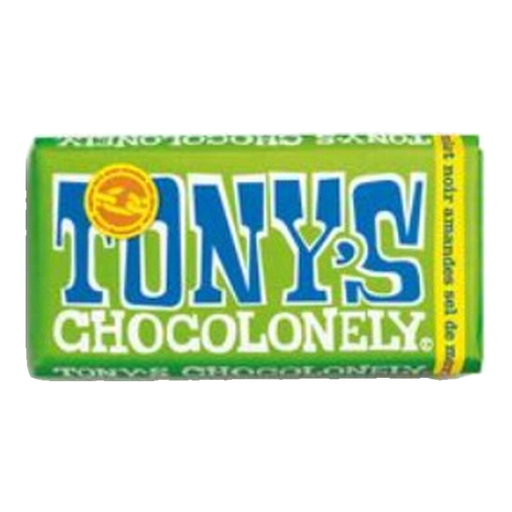 Image unavailable
Tony’s Chocolonely dark chocolate with almonds and sea salt, 180 g
This size can be broken into pieces and shared among several guests. Auchan describes this 180 g, 51% cocoa recipe as Fairtrade; it contains almonds and soya lecithin. Auchan’s product information lists 41.58 g of sugars per 100 g. Check the packaging for allergens, any “may contain” warnings and details of what the label covers.
View on Joybuy
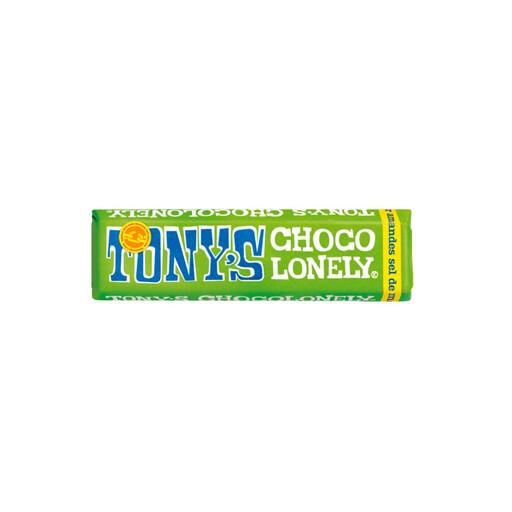 Image unavailable
Tony’s Chocolonely dark chocolate with almonds and sea salt, 47 g
This 47 g size is a good choice if you’d rather offer a small bar than a larger one to break into pieces. It’s described as dark chocolate with almonds and sea salt. Before serving, check the allergens and any “may contain” warnings on its own packaging. If fair-trade certification is a deciding factor, check the label on this bar too.
View on Joybuy
Frequently asked questions
How can I check the Fairtrade label on chocolate with inclusions?
Look for the Fairtrade/Max Havelaar label on the specific product. Fairtrade/Max Havelaar France explains that, if there’s an arrow alongside the label, the back of the packaging provides details of the ingredients covered and the type of traceability. A general statement from the brand isn’t a substitute for checking this information.
Is Nutri-Score compulsory on a bar of dark chocolate?
No. According to the French Ministry of Agriculture, Nutri-Score remains optional in France. The DGCCRF points out that a nutrition declaration is compulsory for relevant pre-packed foods; it lets you check sugars and fat per 100 g, among other things.
What should I check before serving a bar to guests?
Check the ingredients, any highlighted allergens, possible “may contain” warnings and storage instructions on the bar you’ve bought. The 180 g Tony’s Chocolonely dark chocolate with almonds and sea salt listed by Auchan contains almonds and soya lecithin.
Does the “soda tax” apply to bars of dark chocolate?
No. The levy described by Légifrance applies to drinks and liquid preparations for drinks, not bars of dark chocolate. To compare chocolate bars, check their ingredients and nutritional information instead.


