If fair trade is your priority when choosing a chocolate biscuit after exercise, look for a product that specifies which ingredients are covered, then compare the nutritional values per serving and per 100 g. After an intense or prolonged session, consider the biscuit as part of your overall snack or meal, rather than relying on it alone.
Who is this choice for?
Shoppers who care about fair trade
You’d like a chocolate biscuit after exercise, but want to know whether the fair-trade claim applies to the cocoa, the sugar or a larger proportion of the recipe. The percentage shown for a specific product helps you understand how much of it is covered.
Active people who consider their whole snack
After an intense or prolonged session, you don’t want to rely on a biscuit alone. You also consider what’s included in the meal or snack afterwards, including other foods and hydration.
Shoppers who check ingredients and allergens
You compare sugars, fibre and serving sizes across similar biscuits, while also checking the ingredient list and allergen information for the specific product you’re buying.
What should you check?
For a post-exercise snack, check the scope of the fair-trade claim, the biscuit’s ingredients and how it fits into what you plan to eat as separate considerations.
| What matters to you | What to check | Who is this for? |
|---|
| Fair-trade sourcing |
Check which cocoa or sugar is covered, and what proportion is included if this is stated. An organic claim alone doesn’t confirm this. |
You want to know exactly what the fair-trade commitment covers for your chosen biscuit. Around 25 % of shoppers prioritise this evidence. |
| Its place in your snack |
After an intense or prolonged session, consider the meal or snack as a whole, along with the portion of biscuit you’re planning to have. |
If your workout was demanding, you don’t want to treat a biscuit on its own as a complete snack. This is the main concern for around 31 % of shoppers. |
| Nutritional information |
Compare sugars and fibre per 100 g across similar products, then check the values for the portion you’ll eat. |
You’re choosing between several chocolate biscuits and want to compare their ingredients on a like-for-like basis. This is the top priority for around 25 % of shoppers. |
| Allergens and portability |
Read the ingredients and ‘may contain’ statements for the exact product, and check its packaging too. |
You need to account for an allergen or want to take a portion with you after your session. Around 19 % of shoppers put this practical consideration first. |
Common misconceptions to avoid
-
Confusing organic with fair trade
These claims describe different things about a biscuit. Organic packaging doesn’t, by itself, tell you whether the cocoa or sugar comes from a fair-trade supply chain.
For the product you’re considering, look for the ingredient covered by the fair-trade claim and the percentage included, if stated.
-
Applying rules for other products to biscuits
The contribution known as the ‘soda tax’, as described by the Ministry of the Economy, applies to sugary drinks, not biscuits. Santé publique France explains that displaying the Nutri-Score is voluntary, so its absence doesn’t tell you anything about a biscuit’s nutritional profile.
Read the nutritional information and ingredients. If the packaging shows a Nutri-Score, use it as an additional way to compare similar products.
-
Treating a biscuit as your entire post-exercise snack
Choosing a chocolate biscuit doesn’t, on its own, answer the question of what to eat after an intense or prolonged session.
Consider the portion and the other foods you’re planning to have, rather than expecting the biscuit to provide everything you need for recovery.
-
Relying on the brand for allergen information
Ingredients and ‘may contain’ statements can vary between recipes. Information for one biscuit doesn’t necessarily apply to every product from the same brand.
Check the packaging of the product you’re buying, including any ‘may contain’ statements.
Brands to assess product by product
Jardin Bio Étic
For its chocolate-filled biscuits listed by Auchan, the product information states that 26 % of the ingredients of agricultural origin meet fair-trade standards.
- The stated proportion helps you understand how much of this product is covered by the fair-trade claim.
- This percentage doesn’t mean that the entire biscuit is fair trade. The product information lists wheat and warns of possible traces of other allergens.
Bjorg
Auchan’s product information for Bjorg organic dark chocolate-filled biscuits describes a recipe containing wholemeal wheat flour.
- For this product, Auchan states that it contains 5,3 g of fibre and 27 g of sugars per 100 g. Consider both figures together, without taking them as proof of a health benefit.
- Being organic isn’t proof of fair-trade sourcing. Check the chosen product separately for any claim of this kind.
Ethiquable
For an Ethiquable milk chocolate shortbread biscuit, Carrefour’s product information states that 93 % of the total weight is fair trade.
- The fair-trade proportion is clearly stated for this specific product.
- Before comparing it with another biscuit, check its pack size, ingredients and nutritional information. Percentages shown by different brands aren’t necessarily calculated on the same basis.
A chocolate biscuit option on Joybuy
This selection features chocolate-flavoured wafers to consider as a post-exercise snack. If fair-trade sourcing is your deciding factor, check the claim on the specific product before choosing.
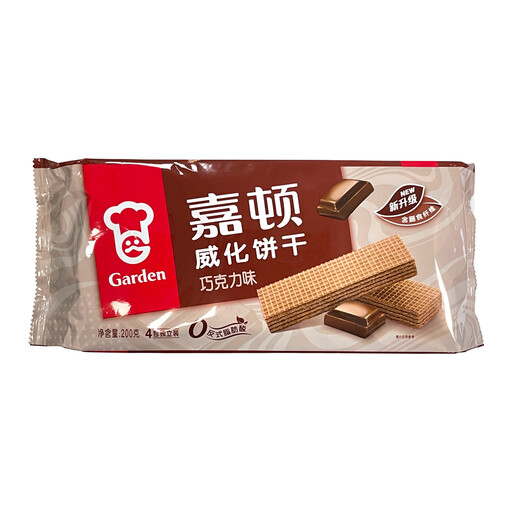 Image unavailable
Garden Wafers, chocolate flavour, 200 g
Chocolate-flavoured wafers to consider if you’d like to take a snack with you after exercise. Check the serving size and nutritional information on the packaging, and check the allergens and any fair-trade claims before you buy.
View on Joybuy
Frequently asked questions
Does the soda tax apply to chocolate biscuits in France?
No. The contribution on sugary drinks described by the Ministry of the Economy applies to drinks, not biscuits. To compare biscuits, check their sugar content in the nutritional information.
Is the Nutri-Score compulsory on a pack of biscuits?
No. Santé publique France explains that displaying it is voluntary. If it appears on the pack, it can complement the nutritional information and ingredient list, but shouldn’t replace them.
How can you check what a ‘fair trade’ claim covers?
Check which ingredient is covered and what proportion of the recipe is included. Auchan’s product information for a Jardin Bio Étic biscuit states that 26 % of the ingredients of agricultural origin are covered, while Carrefour’s information for an Ethiquable biscuit refers to 93 % of the total weight. These percentages aren’t based on the same measure.
Is a chocolate biscuit enough after an intense workout?
Don’t treat the biscuit on its own as a complete snack after an intense or prolonged session. Consider the portion you eat and what else is included in your snack or meal.
Which allergens should you check in a biscuit to take away?
Read the ingredients and ‘may contain’ statements for the specific product. Product information for chocolate biscuits checked by Auchan and Carrefour shows that ingredients and possible traces vary between recipes. The brand name is no substitute for checking the packaging.


