Shoppers looking for fair-trade certification
You want to check for the Fairtrade/Max Havelaar label on each product, rather than relying on a general statement about the cocoa.


If fair-trade certification is your priority, choose a bar with a clear Fairtrade/Max Havelaar label and read the details on the back of the packaging. A brand’s stated sourcing programme alone does not confirm that the specific product you’re buying is certified. For office breaks, compare sugars per 100 g, portion size, allergens and packaging separately; the fair-trade label does not tell you about these.
You want to check for the Fairtrade/Max Havelaar label on each product, rather than relying on a general statement about the cocoa.
You provide bars at the office and need to check the sugars, portion sizes and allergens in each recipe.
You’re looking for individually wrapped bars or a pack to share. A convenient format and a fair-trade label are two separate things to check.
For office breaks, check the bar’s certification first, then its ingredients and packaging.
| Criteria | What to check | Who it matters to |
|---|---|---|
| Fair-trade certification | Look for the Fairtrade/Max Havelaar label on the bar you’ve chosen and read the details on the back about what it covers. | If I want to offer a certified bar at the office, a general statement about the cocoa isn’t enough; around 42% of consumers put verifiable certification at the top of their list of criteria. |
| Sugars, portion size and allergens | Compare sugars per 100 g and the portion size. Also check the allergens highlighted in the ingredients list. | When stocking up for a team, I want to know what’s in each recipe before offering it. Comparing nutritional information and allergens is the main priority for around 33% of consumers. |
| Packaging | Check the bar’s weight, the number of units and whether the bars are individually wrapped. | When several colleagues help themselves from the same stash, I need a format that’s easy to share out. Packaging comes before other criteria for around 25% of consumers. |
The French Ministry of the Economy describes this French levy as applying to sugary drinks, not solid chocolate bars.
When choosing a bar, use its food labelling as your guide rather than rules that apply to drinks.
The DGCCRF says that Nutri-Score is voluntary in France. So, if the logo isn’t there, you can’t infer a score.
Check the nutritional declaration on the pre-packed product, particularly the sugars per 100 g, and then take the portion you eat into account.
Mars and KitKat describe their cocoa-sourcing initiatives, but this information doesn’t prove that a specific bar sold in France carries the Fairtrade/Max Havelaar label.
If this certification is essential, check the label on the packaging of the product you’re buying and read the details explaining what it covers.
Saveurs & Nature lists 46 g of sugars per 100 g for its 30 g certified milk-and-hazelnut bar. This figure applies to that recipe, not to all fair-trade bars.
Check the nutritional information, ingredients and allergens for each bar separately.
The brand offers, among other products, an individually wrapped 30 g milk-and-hazelnut bar, made in France and certified by Max Havelaar.
Ethiquable highlights its fair-trade approach and organic chocolate, including chocolate bars.
Alter Eco describes itself as a brand of organic, fair-trade products.
Kaoka offers organic, fair-trade chocolate, including bars and couverture formats.
Mars describes a cocoa-sourcing programme for its products in Europe, including these brands.
KitKat offers milk chocolate bars and shares information about its cocoa sourcing.
This selection features a 180 g dark chocolate bar to share at the office. If you’re looking for an individually wrapped portion or a specific Fairtrade certification, check these details on the product you choose.
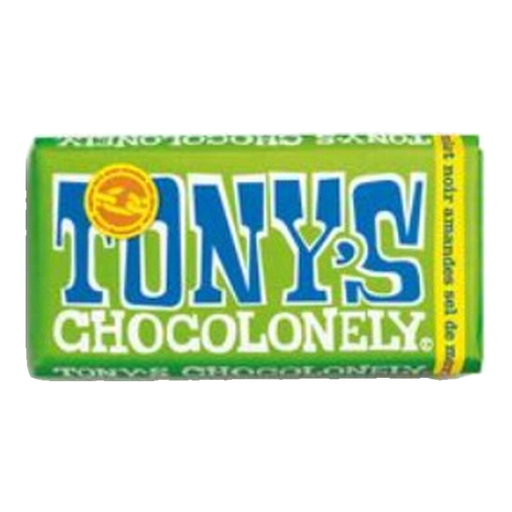 Image unavailable
This 180 g format could be a good choice for sharing at break time, rather than handing out portions that are already individually wrapped. Before choosing it to meet a Fairtrade requirement, check the exact label and traceability details on the packaging. Also check the sugars and allergens in this recipe.
No. The French Ministry of the Economy says that the levy known as the ‘sugar tax’ applies to sugary drinks; it does not apply to solid chocolate bars.
No. According to the DGCCRF, Nutri-Score is voluntary. A nutritional declaration is generally required on pre-packed food, so you can compare sugars per 100 g even if there’s no Nutri-Score logo.
Look for the Fairtrade/Max Havelaar label on the packaging, then read the details on the back about which ingredients are certified and how they’re traced. Fairtrade/Max Havelaar France says that the arrow label on a composite product requires at least 20% of its total ingredients to be Fairtrade; this doesn’t mean that every ingredient is certified.
Check the packaging, portion weights, ingredients list, allergens and nutritional information for each product. Don’t assume that the ingredients or allergen warnings for one bar also apply to another, even if they’re from the same brand.