
Livraison le jour même ou le lendemain

Qualité garantie

Débloquez vos offres de bienvenue: Livraison GRATUITE | Jusqu'à -80 % | 30 jours d'essai gratuits à JoyPlus
Téléchargez l'application
Creating space in your home often means creating space in your mind. The fabric storage cube has become the go-to solution—as simple as it is stylish—for organising our interiors, from living room shelves to walk-in closets. But be warned: their simple appearance can hide pitfalls that quickly turn a good deal into a disappointment. To make the right choice, here are the mistakes you must avoid.
To avoid these disappointments, a few key checks are all you need. You don't have to be an expert: these few technical details will guarantee a product that you'll be happy with for years to come.
The sturdiness of a fabric storage box depends on its internal frame and base. Opt for models that specify thick cardboard or, ideally, fibreboard panels (like MDF). Don't overlook the fabric, either. A non-woven fabric with a density of at least 80?g/m? will offer far superior resistance to wear and tear, especially around the handles.
Before you pull out your credit card, take out a tape measure! Standard dimensions for a shelf storage bin are around 30 x 30 x 30 cm, an ideal format for popular cube shelving units (like the Kallax series). Always check the product's exact measurements: a few centimetres' difference is enough to ruin the visual harmony and practicality. The fact that a storage basket is foldable is a major bonus, as it can be stored flat when not in use.
It's the details that make all the difference. Reinforced, securely stitched handles are essential for moving the cubes without fear of them breaking, especially if they're filled with books or toys. Opting for a set of storage cubes is not only more cost-effective but also ensures a beautiful visual harmony. It's the perfect way to create a closet organiser or bookshelf that is both cohesive and calming.
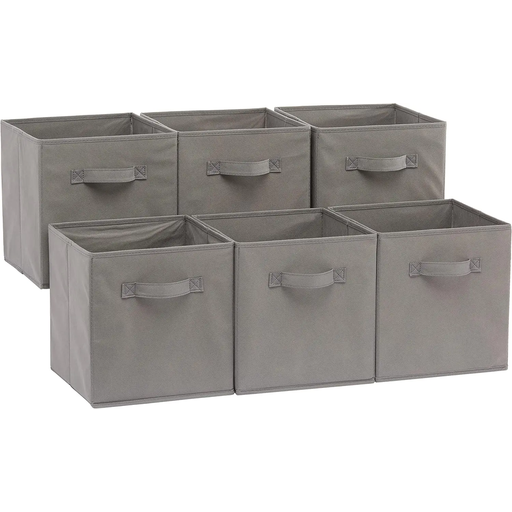
Why we chose it: Perfect for outfitting an entire shelf or organising multiple rooms on a budget. This set of six creates a uniform storage system for clothes, toys, or office supplies.
Its foldable design, with a removable reinforced base, provides enough rigidity for moderate daily use. It won't sag after two weeks like entry-level models.
The set of six offers excellent value, allowing you to set up a complete and harmonious organisation system all at once.
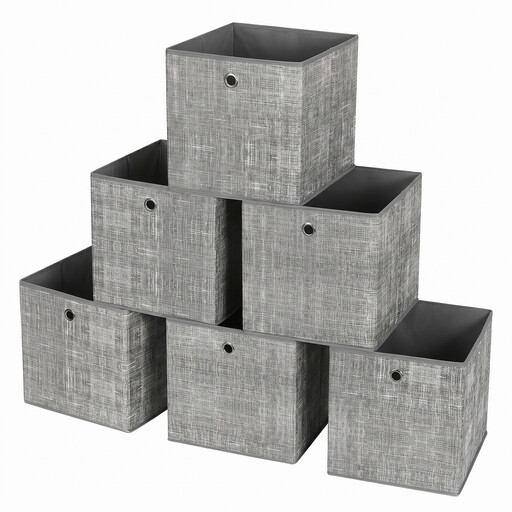
Why we chose it: For those seeking a reliable solution designed for heavy use. Ideal for a child's room, a playroom, or for storing heavier items like magazines or craft supplies.
Its construction with 80 g/m? non-woven fabric and thick cardboard gives it heavy-duty robustness. The static load capacity of 5 kg per box is an excellent guarantee of its sturdiness.
Its standard dimensions of 30 x 30 x 30 cm ensure perfect compatibility with most cube shelving units on the market, for a flawless alignment.
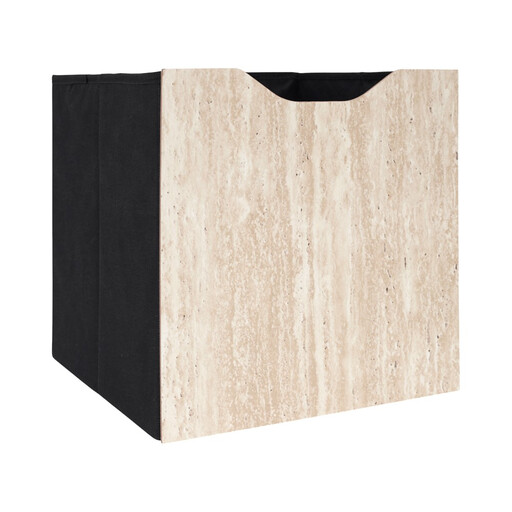
Why we chose it: For those who see storage as a part of their decor. This cube isn't just practical; it brings a touch of modern, understated style to a living room or office.
Beyond its classic foldable structure, it stands out with its textured "stone effect" finish. This detail elevates it from the ordinary, making it a decorative piece in its own right without sacrificing practicality.
Its 30 x 30 cm size and minimalist design allow it to integrate elegantly into any modular shelf, for organisation with style.
While fabric cubes are perfect for living areas, spaces like the garage or laundry room often require more robust solutions. Discover our hand-picked selection of products chosen for their durability and practicality.
Most fabric cubes are not machine-washable due to their cardboard structure. For routine maintenance, wiping with a dry cloth or using a vacuum's brush attachment is sufficient. For stains, use a slightly damp cloth with a touch of mild soap, gently dab the area, and then let it air dry. Most importantly, never soak the fabric!
It all depends on the quality of the materials and how you use it. An entry-level model used daily with heavy items will show signs of wear in less than a year. Conversely, a well-made cube with thick fabric and a solid structure can last for several years without any issues.
It's best to avoid stacking them directly on top of one another unless they are empty. Their structure is not designed to support a vertical load and they would likely collapse. Their proper place is inside the compartments of a shelving unit, where they are fully supported on all sides.