
Livraison le jour même ou le lendemain

Qualité garantie

Débloquez vos offres de bienvenue: Livraison GRATUITE | Jusqu'à -80 % | 30 jours d'essai gratuits à JoyPlus
Téléchargez l'application
A calm mind often starts with a well-organized home. To create order quickly and without breaking the bank, the fabric storage cube has become the go-to solution for our shelves, closets, and living spaces. However, this apparent simplicity often hides some nasty surprises: boxes that sag, handles that rip off on first use, or dimensions that never quite fit.
As editorial experts, our mission is to guide you through the jungle of options to help you make the right choice. Follow this guide to avoid the common pitfalls and finally find storage solutions that live up to their promise, both in terms of style and durability.
The market is full of promises, but not all storage bins are created equal. Here are the three weak points that too often turn a smart purchase into a real regret.
To avoid falling into the trap again, there are a few technical points to check. This is what separates an impulse buy you'll regret from a smart investment in your organisation.
Before you fall for a colour, take out your tape measure and measure the space where the box will go.
The outer fabric is just the tip of the iceberg. True sturdiness comes from the internal frame.
Everyday ease of use comes down to details that are anything but minor.
Because every need is different, here are a few solutions that cater to various profiles, all selected based on our criteria for durability and practicality.
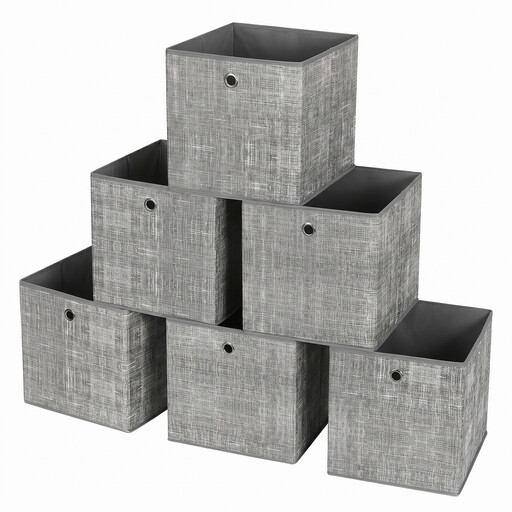
Why we love it: Perfect for families who want to harmonise storage in a playroom or child's bedroom. The 30x30x30 cm format is a versatile fit for most cube shelves, and the set of six allows you to equip an entire unit at a very reasonable cost.
Its thick cardboard structure and 80g/m? non-woven fabric give it good rigidity, preventing it from sagging under the weight of toys or clothes. The dimensions are precise, so there are no nasty surprises upon delivery.
5 kg load capacity per box, verified by our team. The handles are fitted with metal eyelets to withstand repeated use.
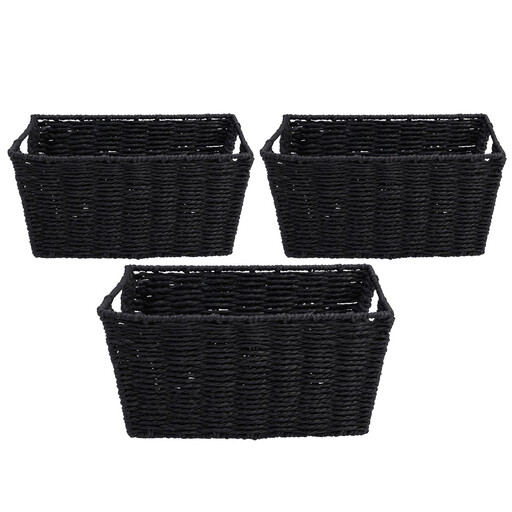
Why we love it: For those who believe storage is an integral part of decor. The woven paper design on a metal frame is much more chic than a simple fabric cube. It will look right at home in a living room or an entryway.
Its sturdy steel frame prevents any sagging. The rectangular shape is perfectly maintained, avoiding the "slumped" look of low-end fabric boxes, even when half-empty.
Shape-retaining structure that makes a style statement. A refined aesthetic that stands in contrast to purely functional solutions.

Why we love it: For when fabric shows its limits. For the garage, laundry room, or seasonal storage, this PP plastic alternative offers far superior protection against moisture and dust. Its load and stacking capacity is in a league of its own.
It bypasses the problem of fragile fabric and cardboard. Its 2.5 mm thick body and reinforcing ribs ensure rock-solid stability, even when loaded with heavy items.
Ultra-stable stacking thanks to the flat lid and textured bottom. The ergonomic handles are integrated into the structure, allowing you to lift heavy loads with no risk of breaking.
We have put together a complete selection of products that meet our quality and safety criteria.
1. How do I clean a fabric storage cube? Most non-woven fabric boxes are not machine washable. For routine maintenance, a simple wipe with a damp cloth is enough to remove stains. Then let it air dry. If there are odours, airing it out for a few hours will do the trick. Avoid aggressive detergents at all costs.
2. What is the lifespan of a fabric storage basket? It all depends on the quality of its structure and how you use it. An entry-level model with thin cardboard will show signs of wear in just a few months. Conversely, a well-made model with thick cardboard and reinforced handles can last for several years.
3. How much weight can a cube shelf bin support? This varies greatly from one model to another. Standard fabric and cardboard versions generally support between 3 and 5?kg. Our advice: always check the maximum load capacity indicated by the manufacturer, especially if you plan to store books, files, or other heavy items. For heavier loads, plastic alternatives are much more suitable.