
Livraison le jour même ou le lendemain

Qualité garantie

Débloquez vos offres de bienvenue: Livraison GRATUITE | Jusqu'à -80 % | 30 jours d'essai gratuits à JoyPlus
Téléchargez l'application
A sauce, grass, coffee or make-up stain can withstand ordinary detergent, especially if it has already dried. However, buying a stain remover at random does not guarantee perfect results. The product format, washing temperature and compatibility with the fabric all play a part.
Before adding anything to your basket, here are the main pitfalls to avoid and the criteria to consider when choosing a fabric stain remover that suits your household.
A stain-removing spray or pre-treatment gel is applied directly to the affected area. This is the ideal format for a localised stain on a collar, sleeve or tablecloth. By contrast, a stain-removing powder is generally added to the drum or detergent drawer to treat the whole load.
Choosing a powder for a single stain can therefore lead to unnecessary consumption. Conversely, applying gel to an entire load is not necessarily the most practical solution.
An active oxygen stain remover can work on certain oxidisable stains. However, this wording does not mean that every type of dirt will respond in the same way. Greasy, protein-based or heavily pigmented stains may also require the action of surfactants or enzymes.
Take the time to check the ingredients. Depending on the product, the options featured here contain oxygen-based bleaching agents, surfactants or enzymes. This information describes the formula, but it is not a universal guarantee of results.
A product advertised as suitable for whites and colours is not automatically compatible with wool, silk, leather or garments that must be dry-cleaned. The temperature, contact time and care-label instructions remain decisive.
Before first use, test the product on a concealed area of the fabric. Do not allow a pre-treated garment to dry and never mix different household cleaning products.
If you often wash at 20 or 30 °C, check that this temperature is clearly stated by the manufacturer. Some products in this selection can be used from 20 °C, while others are intended for use from 30 °C.
An effective low-temperature stain remover should be used with the recommended dose and programme. Increasing the temperature is not always necessary: contact time, dosage and the type of stain can also affect the result.
For coloured clothing, look for wording relating to colour protection and always test the colourfastness first. For whites, a powder containing oxygen-based bleaching agents may be suitable, provided you follow the restrictions shown on the packaging.
Delicate fabrics require particular care. If you want to treat wool or silk, the product information must explicitly say that it is suitable. In all cases, the garment’s care label takes precedence over any marketing claims.
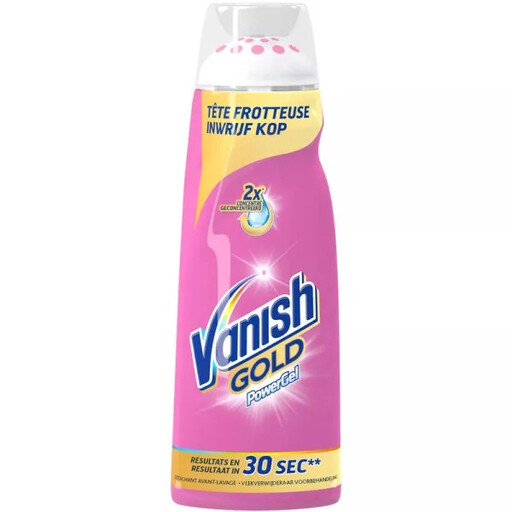
Why it suits this profile : Its compact size is ideal for a first purchase and for treating localised stains on everyday clothing.
The applicator targets the stained area directly, so there is no need to use a large quantity of powder to tackle a single stain.
A concentrated 200 ml gel, free from chlorine bleach, designed for application in 30 seconds with a maximum leave-on time of 5 minutes.
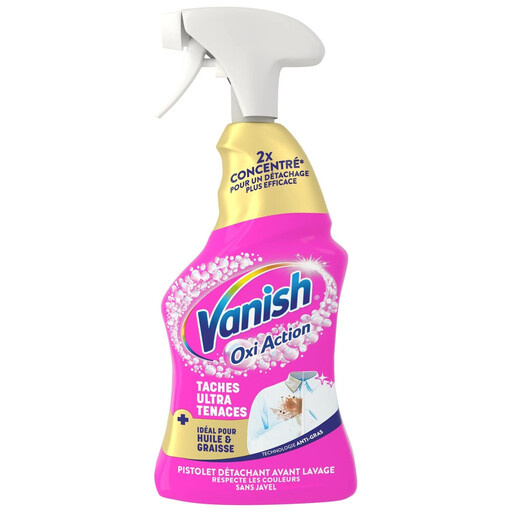
Why it suits this profile : This spray is designed for households that want to pre-treat stains quickly and precisely before washing.
The instructions recommend spraying the product onto the stain and then washing the fabric. The spray is therefore not presented as a universal solution for an entire load of laundry.
A 500 ml format, free from chlorine bleach, designed for everyday stains as well as ingrained marks on white or coloured fabrics.
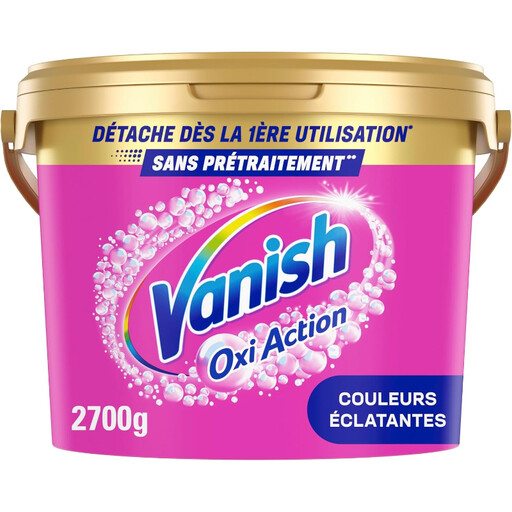
Why it suits this profile : Its large format is aimed at families who do laundry frequently and want a versatile product.
The instructions distinguish between use in the washing machine, soaking and pre-treatment, with specific doses and leave-on times for each method.
A 2.7 kg powder that can be used from 20 °C, free from chlorine bleach and advertised as suitable for whites and colours.
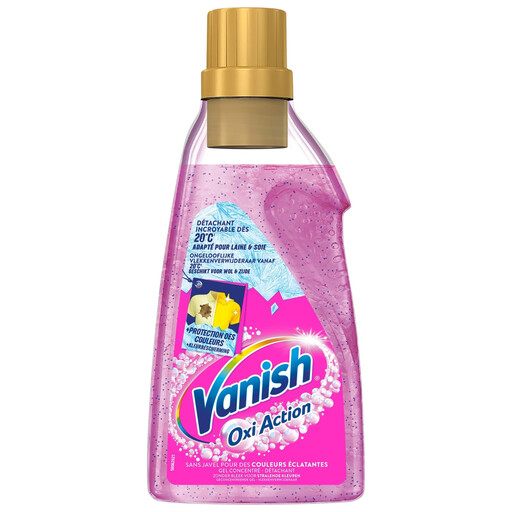
Why it suits this profile : The product information states that it can be used on wool and silk, provided the garment’s care instructions are followed.
The instructions for a standard stain remover may not necessarily apply to delicate materials. This product clearly specifies its intended area of use, which is worth checking before you begin.
A concentrated 1.5 l gel, with a dose designed for use in the washing machine and an advertised action from 20 °C. The formula also pays particular attention to colours.
We have put together a complete, real-time updated list of products that meet these strict selection criteria, as well as European safety regulations.
To avoid unpleasant surprises, it is best to follow a simple method :
Powders containing oxygen-based bleaching agents may require the use of gloves, particularly if you have sensitive skin. In the event of contact with the eyes, rinse thoroughly and follow the safety instructions on the label.
Choose a product whose information explicitly states that it is suitable for whites and colours, or that it offers colour protection. Always carry out a preliminary test: colourfastness also depends on the dye and the fabric of the garment.
Some products are advertised as suitable for use from 20 °C, including several powders and gels in the Oxi Action range. However, the result depends on the type of stain, dosage, contact time and wash programme. It is better to follow the instructions than to use too much product.
Check the shelf life on the packaging, along with the expiry date and batch number. Store the powder in its original container, tightly closed and protected from moisture, heat and light. Powder that has absorbed moisture may be more difficult to measure and use correctly.