
Livraison le jour même ou le lendemain

Qualité garantie

Débloquez vos offres de bienvenue: Livraison GRATUITE | Jusqu'à -80 % | 30 jours d'essai gratuits à JoyPlus
Téléchargez l'application
A coffee stain on a tablecloth, grease on a garment, or wine on a carpet – each requires a different approach. Yet many products claim to be all-purpose without specifying which fabrics they're suitable for, the correct temperature, or the precautions you need to take. To avoid buying the wrong product, compare the formula, the format, and the surface you need to treat.
This guide will help you choose a fabric stain remover for your home, a hotel, a restaurant, a laundry service, or property management.
A laundry stain remover designed for a washing machine isn't necessarily suitable for a sofa, carpet, or rug. Similarly, a formula intended for carpets and upholstery may not be recommended for wool, silk, leather, or garments that require dry cleaning.
Always read the list of permitted surfaces and those to avoid on the label. Testing on an inconspicuous area is strongly advised, especially on coloured or delicate fabrics.
Wine or coffee stains, blood or chocolate marks, grease or oil spills – they don't all respond to the same agents. A formula may contain enzymes, surfactants, or active oxygen, each playing a different role.
The nature of the stain, how long it has been there, and the fibre in question all affect the result. Acting quickly, respecting the recommended dwell time, and rinsing properly often matter just as much as the product you choose.
A large pack is only good value if the dosage matches how often you use it. For occasional use, a ready-to-use fabric stain remover spray can help reduce waste. For a laundry or accommodation business, a 1 kg fabric stain remover powder is often more practical, provided you stick to the recommended dosage.
Also check the hazard pictograms, whether gloves are needed, and the storage conditions. Never mix several products unless the manufacturer explicitly says you can.
A phosphate-free formula may suit a personal preference or a professional specification. That doesn't mean you can skip reading the instructions and usage restrictions.
Fabric stain remover powder is generally used by hand or in a machine. It requires precise dissolving or dosing and can suit both large families and professionals.
Fabric stain remover spray lets you target a visible stain directly. It's suitable for pre-treatment or spot-cleaning a carpet, rug, or upholstery fabric, when the manufacturer allows it.
A small bottle can serve as a top-up solution for grease, sauce, or chocolate stains on clothing. Its value depends mainly on how often you use it and the surface you need to treat.
A stain remover that works from 30 °C can be useful for low-temperature washes, but this information must be confirmed on the packaging. The maximum temperature the fabric can withstand remains the priority.
Wool and silk require special attention. Several of the products shown below explicitly exclude these fibres, as well as leather in some cases. Check the garment's care label and test on an inconspicuous area before applying.
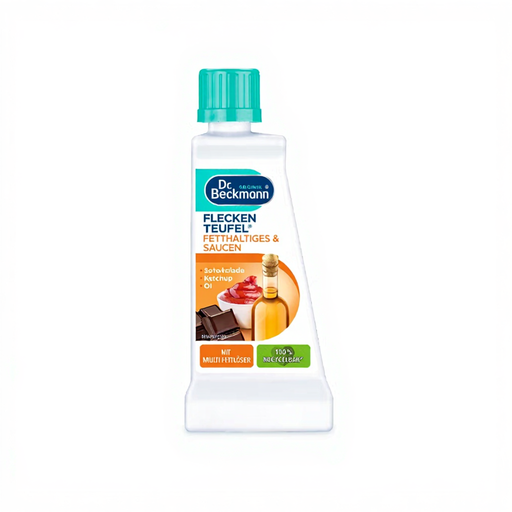
Why this choice suits this profile: Its small size is ideal for households that occasionally treat butter, oil, sauce, ketchup, or chocolate marks on clothing.
The formula targets greasy stains rather than promising universal use. It is not intended for carpets or leather, so its limitations are clearly defined.
50 ml bottle, direct application, and stated compatibility with textiles and colours, except for carpets and leather.
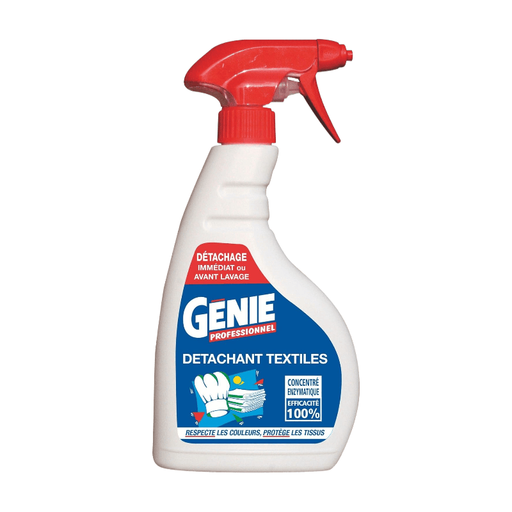
Why this choice suits this profile: This ready-to-use spray is designed for those who want to quickly treat visible textiles in a well-kept home.
The product page specifies its possible uses on fabrics, carpets, and rugs, as well as for pre-treatment or spot stain removal. A prior test is still recommended.
500 ml spray format, targeted application, and stated use on wine, coffee, blood, red berry, and make-up stains.
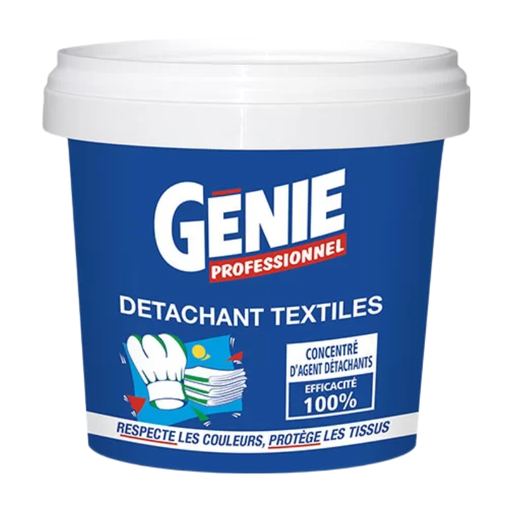
Why this choice suits this profile: Its packaging and intended professional use make it suitable for laundries, hotels, restaurants, and property managers.
The product page distinguishes several agents — active oxygen, enzymes, and surfactants — and states it can be used from 30 °C. Wool and silk are excluded.
1 kg powder, stated phosphate-free formula, use by hand or in a machine, and compatibility with several stain families.
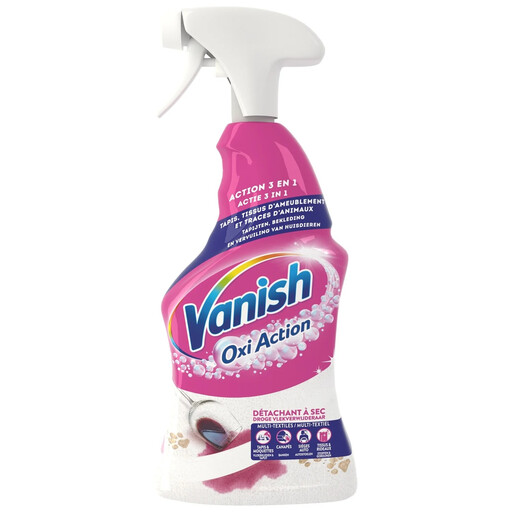
Why this choice suits this profile: This dry spray is designed for carpets, rugs, and upholstery that need a targeted treatment.
It is not a replacement for a laundry product: its product page states it is intended for carpets, fabrics, and rugs, excluding wool, silk, and leather.
500 ml spray, direct application, short action time stated by the brand, and use without a separate pre-treatment step.
We have put together a comprehensive, real-time selection of products that meet these strict criteria and comply with European safety regulations.
Wear gloves if the label recommends it. Keep products out of reach of children, avoid contact with eyes, and never ingest them. For professional use, keep the packaging and safety data sheets available for staff.
A product with a targeted formula, such as the DR BECKMANN bottle shown above, can be suitable for clothing stained with butter, oil, sauce, or chocolate. Check its compatibility with the fibre and carry out a test first.
It depends on the formulation and the information on the packaging. The words "colours" or "colour safe" provide useful guidance, but testing on an inconspicuous area is still best. Do not use the product on wool or silk if these fibres are excluded.
The shelf life depends on the product and the batch. Check the date or information on the packaging. Store the powder in a dry place and keep the spray closed, away from heat, humidity, and direct light.