
Livraison le jour même ou le lendemain

Qualité garantie

Débloquez vos offres de bienvenue: Livraison GRATUITE | Jusqu'à -80 % | 30 jours d'essai gratuits à JoyPlus
Téléchargez l'application
A fabric softener can make clothes softer, reduce static cling and give them a pleasant fragrance. But choosing one isn't just about a nice scent or a big bottle. With varying dosages, promises of long-lasting freshness and formulas designed for sensitive skin, there are several things worth checking before you buy.
A 1.5-litre bottle doesn't necessarily give you more washes than a concentrated fabric conditioner of 700 or 800 ml. To compare prices, look at the number of cycles stated on the pack and the recommended dosage, rather than just the volume on the shelf.
Water hardness, washing machine capacity and the amount of laundry can also affect how much you use. A concentrated format can be handy in a flat or small utility room, as long as you stick to the stated dose.
A long-lasting fabric softener or a scented one can leave a noticeable smell for several days. However, the result depends on the fabric, drying method and storage conditions. An intense fragrance doesn't automatically mean the product is suitable for all your clothes.
Absorbent fabrics, sportswear, thick towels and certain technical materials can react differently. Always check the garment label and the manufacturer's recommendations.
Fabric softener should be poured into the designated compartment, never directly onto dry laundry. Overdosing can leave a film on the fibres, weigh down certain fabrics and increase the flammability of clothes. Lenor product sheets, for example, advise against using it on children's nightwear, items with flame-retardant treatment and certain fluffy textiles.
Fabric softener sheets for tumble dryers serve a different purpose. They are placed in the dryer drum, usually one sheet per cycle as directed, and don't automatically replace a liquid softener.
Compare the stated number of washes, the net volume and the recommended amount per cycle. For example, Lenor Fresh Air concentrated 700 ml is presented as providing up to 50 washes, while L'Arbre Vert concentrated softener 800 ml is stated as 53 washes. These figures correspond to the conditions on the packaging and may vary depending on the dosage you use.
For a busy household, a 1.35-litre bottle stated as 64 washes, like some Soupline references, can reduce how often you need to buy. A professional 3-litre container can also suit a large family, a holiday let or a small business, provided you have enough storage space.
Fragrances are usually made up of several scented substances. Those with sensitivities can check the ingredients list, particularly for any fragrance substances flagged on the label.
A hypoallergenic fabric softener, a baby fabric softener or a softener for sensitive skin should be chosen based on the product's official information. The claim should not be taken as a medical guarantee. L'Arbre Vert Baby states a formula without colourants, without MIT and without skin-allergenic substances listed in Annex III of Regulation (EC) No 1223/2009. Meanwhile, the Soupline Baby sheet mentions a colourant-free formula and dermatological testing. Read the label before each use, especially for baby laundry.
Some products are stated as effective in cold water or from 25 °C, which can fit into a low-temperature washing routine. However, don't confuse this feature with an automatically measurable reduction in environmental impact: electricity consumption also depends on the programme, washing machine and drying method.
To reduce packaging impact, look for refillable formats or recyclable bottles. The Soupline Grand Air eco-refill 600 ml is designed to refill a reusable bottle. L'Arbre Vert also offers packaging stated as recyclable on some references. These details should be checked on the packaging available at the time of purchase.
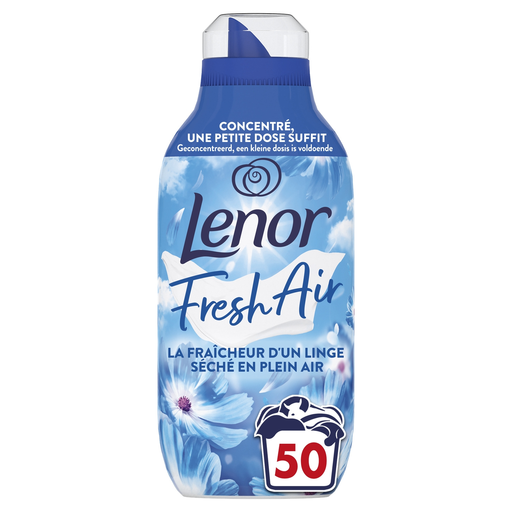
Why this suits this profile: Its small concentrated format is ideal for households wanting to save space, while offering a product stated as providing up to 50 washes.
The stated number of washes makes it easy to compare with larger bottles. However, the dosage must still follow the label.
Stated SolarDry technology, protection against odours during indoor drying and a bottle made from recycled plastic, excluding the cap and associated parts.
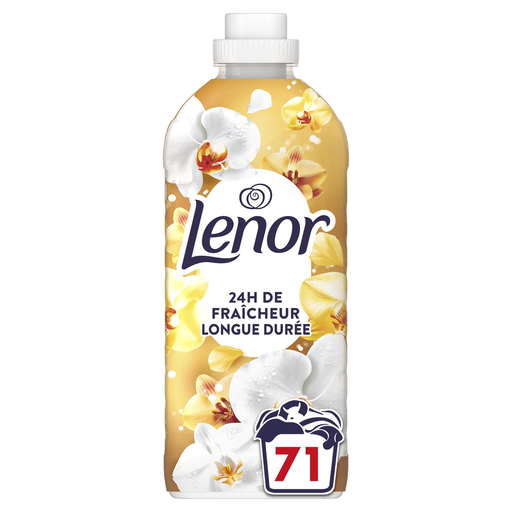
Why this suits this profile: Its amber and floral fragrance appeals to users who place great importance on the scent of their laundry.
The product sheet states it can be used in cold water and on short cycles, rather than reserving the fragrance promise for long programmes.
Stated freshness for up to 24 hours and a fragrance designed to intensify on contact with clothes. The sheet indicates less than 5% cationic surfactants.
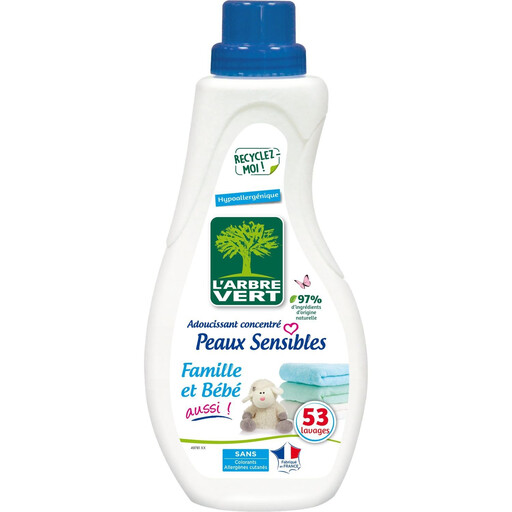
Why this suits this profile: The product sheet states it is intended for baby laundry and sensitive skin, with a format stated as 53 washes.
The stated formula without colourants, MIT or skin-allergenic substances listed in Annex III allows you to rely on precise criteria.
97% naturally derived ingredients stated and a recyclable bottle with a corresponding refill. A skin reaction is still possible in some individuals.
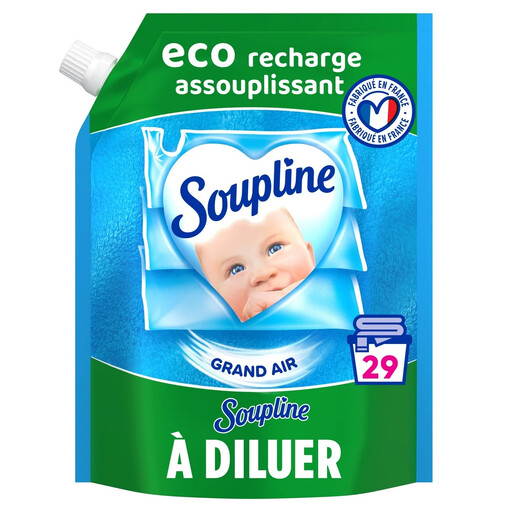
Why this suits this profile: The eco-refill is ideal for households that want to keep a reusable bottle and reduce packaging from repeat purchases.
The format clearly states it is a refill. If you already have the suitable container, you avoid paying for a new bottle every time.
600 ml, formula stated with 92% naturally derived ingredients and use from 25 °C according to the product sheet.
We've put together a comprehensive, real-time updated list of products that fully meet these strict selection criteria and European safety regulations.
Yes, certain products are marketed for baby laundry, such as L'Arbre Vert Baby or Soupline Baby formulas. However, always check the ingredients list, warnings and recommendations on the packaging. If you have particular sensitivities, seek advice from a healthcare professional.
The durability date, batch number and storage conditions are on the packaging. Keep the bottle closed, in a cool, dry place away from sunlight and out of reach of children. Any change in smell, texture or colour should prompt you to check the manufacturer's instructions.
The cost mainly depends on the price you pay, the stated number of washes and the dosage you actually use. For a meaningful comparison, calculate the price per cycle, then add the drying cost if relevant. A concentrated product or a refill can reduce the cost per use, but only if you avoid overdosing.