
Livraison le jour même ou le lendemain

Qualité garantie

Débloquez vos offres de bienvenue: Livraison GRATUITE | Jusqu'à -80 % | 30 jours d'essai gratuits à JoyPlus
Téléchargez l'application
A fabric softener makes clothes softer, reduces static cling and gives them a pleasant fragrance. But the choice goes far beyond the scent on the label. From long-lasting freshness claims to concentrated formulas or products designed for sensitive skin, several factors have a direct impact on the price and everyday use.
A large bottle isn't necessarily more economical. A concentrated softener requires a smaller dose and can deliver more washes with a smaller volume. To compare two products, check the stated number of washes, then calculate the cost per cycle.
Some formats claim, for example, 64 washes, while a 750 ml bottle might be designed for 33 uses. The amount you pour each cycle is therefore a decisive factor.
Claims like "long-lasting freshness" or "long-lasting softener" generally refer to a technology or experience claimed by the brand. They don't guarantee the same result in every household. The outcome varies depending on dosage, fabric type, indoor drying and cupboard ventilation.
A very strong laundry scent can also bother people sensitive to fragrances. Always check the ingredient list and any fragrance allergens mentioned on the packaging.
Fabric softener is not recommended for certain technical garments, absorbent fabrics, flame-retardant items or very fluffy textiles. It can also affect the properties of some sportswear or reduce the absorbency of towels.
Read the garment label and the manufacturer's recommendations. Never pour the product directly onto dry laundry: use the designated compartment in your washing machine.
The number of cycles stated is more meaningful than the bottle volume alone. An 800 ml concentrated softener claiming 53 washes could suit a household looking to save space. For regular use, compare the cost per wash and adjust the dose to the load size and water hardness.
Professional 3-litre formats can be worthwhile for a large family, a shared residence or a laundry business. However, they require more storage space and more careful handling.
If you have reactive skin, look for a product labelled as hypoallergenic fabric softener or softener for sensitive skin, without taking this as a medical guarantee. Claims like "free from dyes, MIT or BIT" can help you compare formulations, but only reading the full label gives you a clear picture.
A baby fabric softener should be chosen with care. Opt for a formula clearly intended for infant laundry, stick to the recommended dosage and follow the instructions on the packaging. If a skin reaction occurs, stop using it immediately and seek advice from a healthcare professional.
For tumble dryers, dryer sheets are placed directly in the drum. They can help reduce static cling and lightly scent the laundry, but they are generally single-use and not suitable for fabrics that can't go in the dryer.
For machine washing, a fabric softener refill can save you buying a new bottle if you already have a reusable one. Products highlighting a proportion of naturally derived ingredients, claimed biodegradability or recyclable packaging should be compared using the precise details on the label. These claims don't automatically mean the product has no environmental impact.
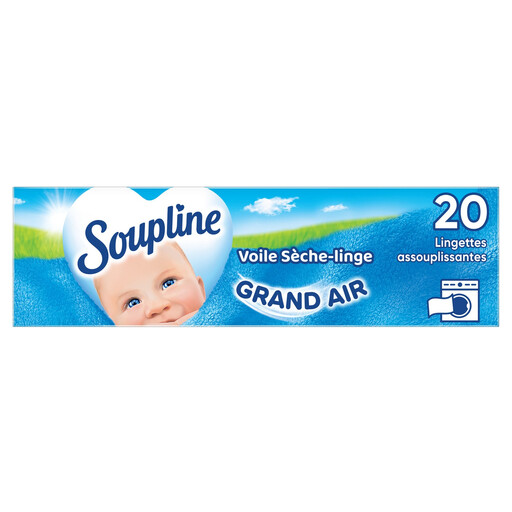
Why this choice suits this profile: The pack of 20 sheets lets you try a tumble dryer solution without investing in a large bottle of liquid softener. Simply add one sheet to each cycle, then dispose of it after use.
The dosage couldn't be clearer: one sheet per load. So there's no risk of overdosing on a concentrated liquid.
Sheets designed for tumble dryers, a claimed anti-static effect and a formula free from dyes according to the product sheet.
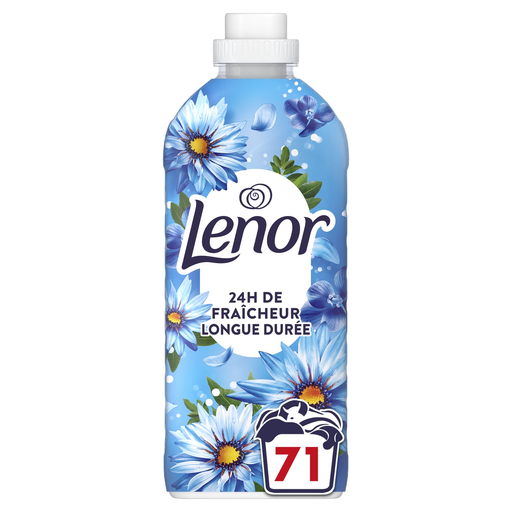
Why this choice suits this profile: Its marine fragrance and freshness that reactivates on touch are aimed at people who place great importance on laundry scent and fabric feel.
The product sheet states it can be used in cold water and on short cycles: the promise is therefore based on clearly identified usage conditions.
A 1.491-litre capacity, cationic surfactants at less than 5% and freshness claimed for up to 24 hours by the brand.
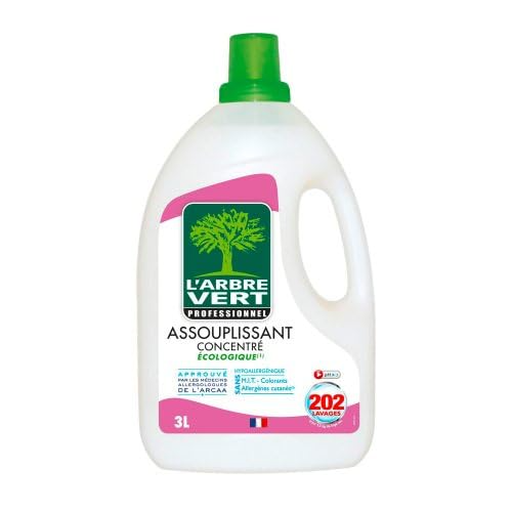
Why this choice suits this profile: The 3-litre format is ideal for establishments that wash laundry regularly, such as hotels, restaurants or laundries, as well as households that do frequent washes.
The dosage must be adjusted to the load and water hardness. A large bottle shouldn't be treated as a ready-to-pour product without measuring.
A professional 3-litre format, fragrance and static reduction claimed in the product sheet.
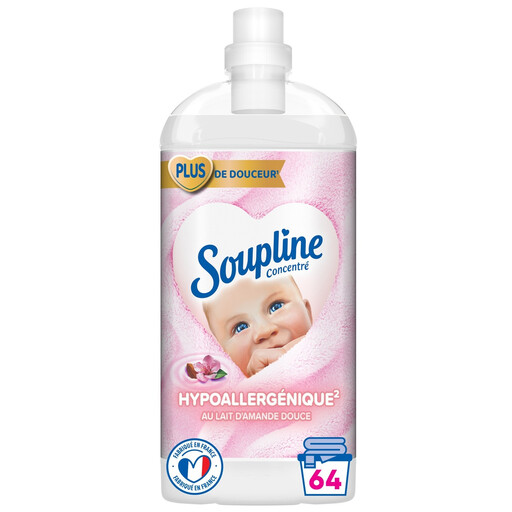
Why this choice suits this profile: This product is presented as suitable for sensitive skin and baby laundry. It offers a claimed 64 washes and a gentle almond scent.
The label mentions it's free from dyes and is dosed for 64 washes: two concrete details to check, rather than a vague general promise.
1.35 litres, 64 claimed washes, 92% naturally derived ingredients according to the product sheet and can be used in cold water from 25°C.
We've listed the products that meet these selection criteria and European safety regulations, in a complete list updated in real time.
Compare products labelled hypoallergenic, free from dyes and certain preservatives or allergens listed on the label. These details describe the formula but do not constitute a medical guarantee. For baby laundry, use the minimum recommended dose and monitor the skin's reaction.
The shelf life depends on the product and the information on the packaging. Store the bottle closed, away from sunlight, heat and frost. A noticeable change in smell, colour or texture may be a sign that it's best not to use the product any longer.
Not necessarily. Sheets are easy to dose, but each cycle generally requires one sheet. To compare their price with a liquid softener, calculate the cost per load based on the stated number of washes, the purchase price and compatibility with your equipment.