
Livraison le jour même ou le lendemain

Qualité garantie

Débloquez vos offres de bienvenue: Livraison GRATUITE | Jusqu'à -80 % | 30 jours d'essai gratuits à JoyPlus
Téléchargez l'application
A fabric softener can make textiles softer, reduce static cling and give them a pleasant scent. But some purchases fall short: an overpowering fragrance, confusing dosage instructions, an impractical format or a formula that doesn’t suit your clothes or sensitive skin.
Before you fill your basket, take the time to separate marketing claims from genuinely verifiable information on the label. Here are the criteria to consider when choosing a concentrated fabric conditioner, a baby-friendly product, a more eco-friendly alternative or a large format intended for professional use.
A long-lasting fabric softener can leave a noticeable fragrance for several days. That doesn’t mean it will suit all fabrics or every member of your household. Some fragrances contain substances that may trigger an allergic reaction in sensitive individuals. A strongly scented laundry product should therefore be chosen based on your household’s habits.
For everyday use, it’s better to opt for a light scent when clothes are worn directly against the skin or when several fragranced products are used at the same time.
A large bottle isn’t necessarily the most economical. Instead, compare the stated number of washes, the recommended dosage and your machine’s capacity. Some concentrated formats claim up to 50 or 64 washes, while a bulkier product may require a larger dose per cycle.
Overdosing doesn’t necessarily make laundry softer. It can leave residue, increase the cost per wash and add to the environmental impact.
Liquid fabric softeners aren’t suitable for all garments. Some labels advise against using them on fluffy fabrics such as fleece, velvet, towelling or chenille. They can also reduce the flame-retardant properties of certain clothing.
Fabric softener sheets for tumble dryers serve a different purpose: they are only for use with a compatible tumble dryer and should not be reused. Always check the garment label and the manufacturer’s instructions.
A concentrated fabric softener typically allows you to use less product per cycle. In particular, check:
For a household that runs regular washes, the cost per wash is far more meaningful than the price on the bottle.
A formula described as hypoallergenic fabric softener, baby fabric softener or fabric softener for sensitive skin may specifically claim to be free from dyes, isothiazolinones or certain listed allergens. These claims describe the product’s composition or the tests carried out by the brand; they do not constitute a universal medical guarantee.
Read the ingredients list and pay particular attention to the presence of fragrances and fragrance allergens. If you have reactive skin, choose a subtle scent, follow the dosage carefully and run an extra rinse cycle if your machine allows it.
To choose an eco-friendly fabric softener, look for concrete details: recyclable packaging, eco-refill, percentage of naturally derived ingredients, environmental certification or information about biodegradability. A formula described as biodegradable still requires you to stick to the correct dosage and avoid any direct release into the environment.
Hotels, restaurants and laundries should compare large formats, the number of cycles and compatibility with their professional equipment. A 3-litre bottle can reduce the frequency of reordering, but you’ll need suitable, secure storage space.
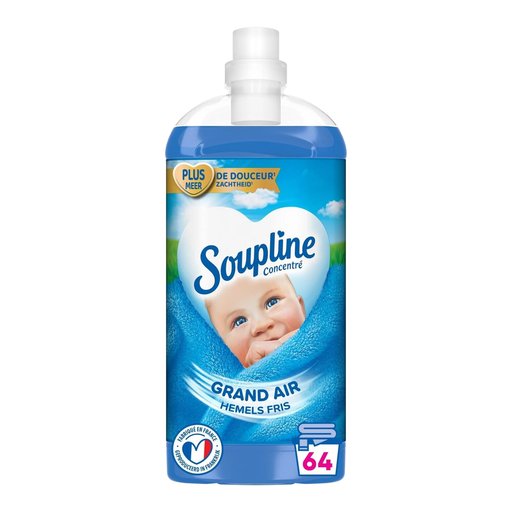
Why this choice suits this profile: Its 1.35 L format is stated to deliver 64 washes. Its formula is said to be effective from 25 °C, an appealing feature for a regular family routine.
The stated number of washes makes it easy to calculate the cost per cycle and avoids choosing a bottle based solely on its volume.
Concentrated format, Grand Air fragrance and claimed effectiveness at low temperatures.
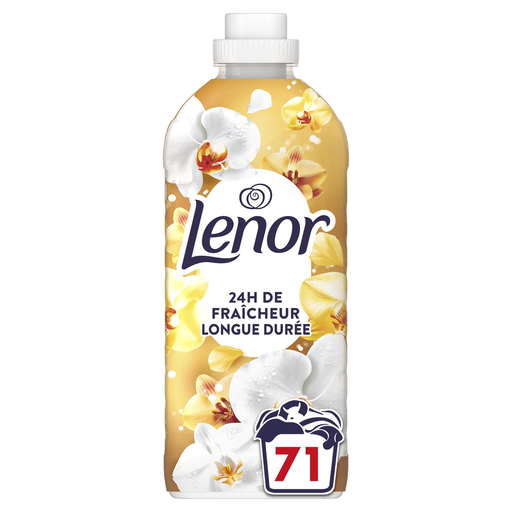
Why this choice suits this profile: Its amber and orchid fragrance, along with the freshness released on touch, appeals to those who place great importance on the scent of their laundry.
The product page details usage precautions, particularly for fluffy fabrics and flame-retardant clothing.
1.491 L capacity, amber and orchid fragrance, claimed effectiveness on short cycles and at low temperatures.
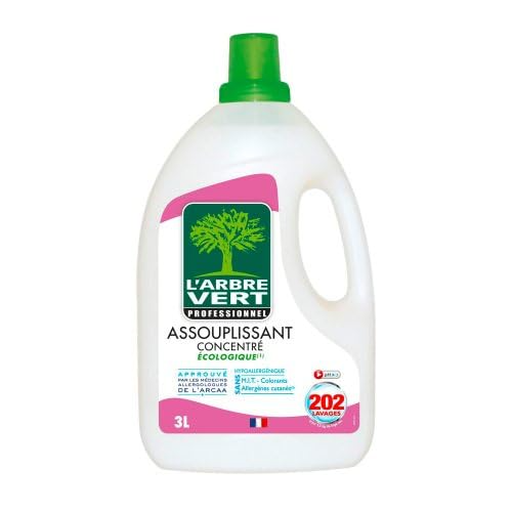
Why this choice suits this profile: Its 3 L bottle is presented as suitable for hotels, restaurants and laundries that handle large volumes of laundry.
The product page recommends adjusting the dosage to the load and pouring the product into the designated compartment rather than directly onto the laundry.
Large professional format, delicate fragrance and claimed anti-static action.
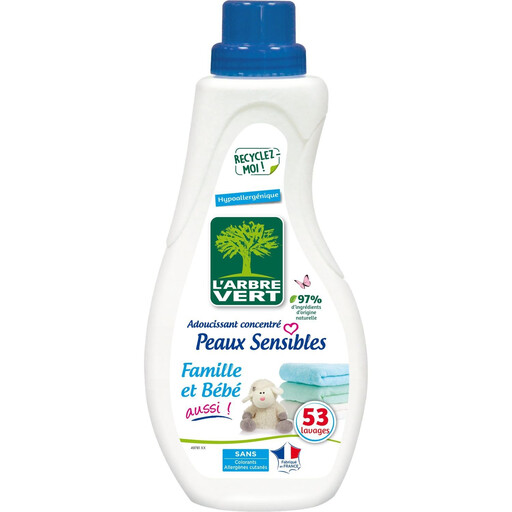
Why this choice suits this profile: The product page mentions a formula free from dyes and MIT, made from 97 % naturally derived ingredients, for baby laundry and sensitive individuals.
The description specifies which ingredients have been excluded from the formula, enabling a more meaningful comparison than a simple promise of “softness”.
Concentrated 800 ml format, 53 stated washes and a recyclable, reusable bottle.
We’ve compiled a comprehensive, real-time selection of products that meet these strict criteria and the requirements of European safety regulations.
Yes, provided the product and the textiles in question allow it. Follow the dosage and check the instructions on your garment labels. Certain technical, absorbent or flame-retardant fabrics require special treatment.
Compare formulas that state they are free from dyes, certain preservatives or fragrance allergens. A baby fabric softener or hypoallergenic product is still a cleaning product: use it according to its label. Moderate dosage and an appropriate rinse cycle can help limit residue, but they cannot guarantee the absence of a skin reaction.
Not necessarily. Calculate the price per wash by taking into account the volume, the stated number of cycles and the recommended dosage. A concentrated formula can reduce the amount of product transported and stored, but the actual saving depends on its price and the dose you actually use.