
Livraison le jour même ou le lendemain

Qualité garantie

Débloquez vos offres de bienvenue: Livraison GRATUITE | Jusqu'à -80 % | 30 jours d'essai gratuits à JoyPlus
Téléchargez l'application
A fabric softener can make your laundry feel softer, reduce static cling and add a pleasant fragrance. But choosing one isn't just about how strong the scent is. From concentrated formulas and long-lasting freshness claims to products for sensitive skin and tumble dryer solutions, there are real differences that affect your daily laundry routine.
To avoid buying the wrong product, check the number of washes stated on the pack, the fragrance composition and whether it's suitable for your fabrics. Here are the key things to look at before you add one to your basket.
A big bottle doesn't always mean more washes. A concentrated fabric softener may need only a small dose, whereas a diluted formula requires a larger amount per cycle. To compare two products, look at the number of washes stated on the packaging and, if the price is available, work out the cost per use.
For example, a 750 ml bottle claiming 33 washes can't simply be compared to a 1.5 litre bottle. The recommended dosage, your water hardness and the size of your load can all affect how much you actually use.
Claims like "long-lasting freshness" or "touch-activated scent" describe the experience the brand expects under its own test conditions. They don't guarantee the same intensity on every fabric, after every wash cycle or in every storage environment.
A scented fabric softener may also contain several fragrance ingredients that could irritate sensitive skin. It's worth reading the ingredients list and any warnings, especially for baby clothes or garments worn directly against the skin.
Fabric softener isn't suitable for all materials. It can reduce the absorbency of towels and affect the performance of technical sportswear. Several Lenor products also advise against using them on children's nightwear, items with flame-retardant treatment or certain fluffy fabrics.
Always check the garment's care label and the product's instructions before each use.
The number of cycles stated on the pack is a handy way to compare different formats. Products labelled as concentrated fabric softeners or ultra-concentrated are great if you're short on storage space or do laundry frequently.
Check three things:
For a household that washes often, a product claiming 53 to 64 washes can cut down on how often you need to restock. For a single person or a first-time buyer, a smaller size lets you try the scent without committing to a large bottle.
Preferences vary between a subtle cotton scent, a floral note, a fresh marine fragrance or a stronger perfume. Claims of freshness lasting up to 24 hours or several weeks in the wardrobe should be taken as the brand's indication, not a guaranteed result in every home.
Scented laundry pearls offer another way to customise the fragrance intensity. You pour them directly into the empty drum before adding your clothes. They don't necessarily replace a fabric softener, as their main job is to boost the scent.
A hypoallergenic fabric softener or one for sensitive skin should be chosen after carefully reading the label. Terms like "free from dyes", "free from MIT" or "dermatologically tested" describe specific product features, but they aren't a universal medical guarantee.
For baby clothes, choose a formula that's clearly intended for that use and stick to the recommended dose. Even products designed for family laundry can contain fragrance and fragrance allergens. If you notice a skin reaction, stop using the product and speak to a healthcare professional.
An eco-friendly fabric softener may stand out for its biodegradable formula, naturally derived ingredients, recyclable packaging or a refill system. Check each of these claims separately: a formula with a high proportion of natural ingredients doesn't automatically mean the packaging is fully reusable.
Dosage is still key. Using more product than recommended increases consumption and waste, without necessarily making your laundry any softer.
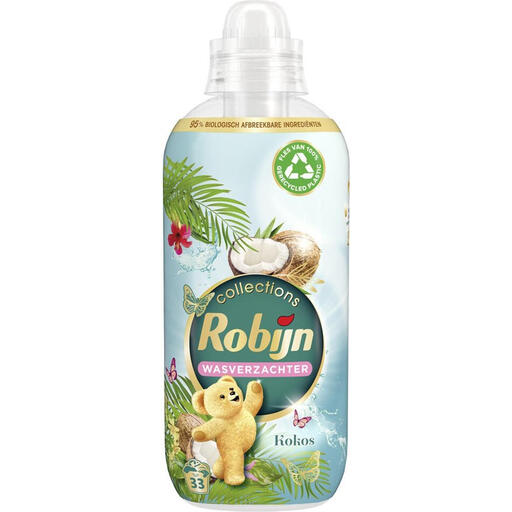
Why this suits this profile: Its 750 ml size, stated for 33 washes, makes it easy to track your usage and try a coconut scent without committing to a large bottle.
The number of washes is clearly stated, so you can compare value rather than just the bottle volume.
Coconut fragrance, claimed 95% biodegradable formula and garment protection highlighted by the brand.
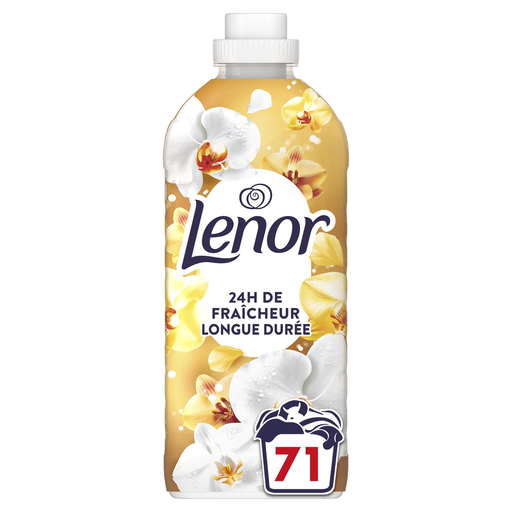
Why this suits this profile: This formula combines an amber and floral fragrance with a promise of freshness for up to 24 hours, including, according to the product page, on short cycles and in cold water.
The claimed duration comes with clear instructions: dosage, fabrics to avoid and a warning about increased flammability risk.
Large 1.491 l format, amber and orchid fragrance, touch-activated freshness according to the brand's information.
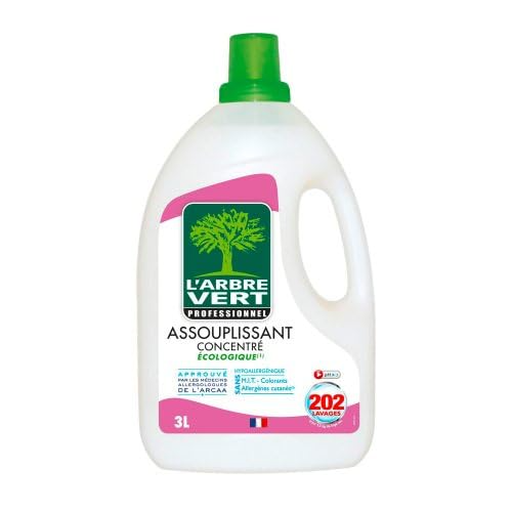
Why this suits this profile: Its 3-litre pack is ideal for busy households as well as hotels, restaurants and professional laundries.
The professional format makes stock management easier, as long as you stick to the dose stated on the label.
Concentrated formula, light fragrance and claimed anti-static action.
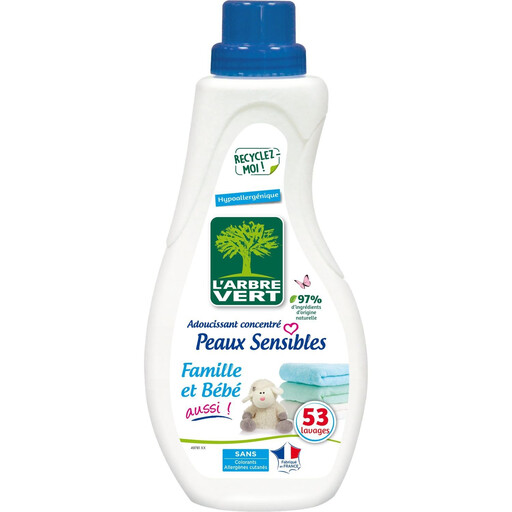
Why this suits this profile: The product page states a formula designed for sensitive skin and baby laundry, with 53 washes claimed and a recyclable, reusable bottle thanks to a matching refill.
The claims "free from dyes" and "free from MIT" should be checked on the packaging; they don't replace the need to follow the dosage and usage precautions.
Claimed 97% naturally derived ingredients, 53 washes and stated to be made in France.
Tumble dryer sheets are placed directly in the drum, usually one sheet per load. They can help reduce static cling and add a light fragrance to your laundry. They aren't suitable for silk or fabrics that can't be tumble dried. Soupline sheets sold in a box of 20 offer a simple solution if you already own a tumble dryer.
Scented laundry pearls, on the other hand, are poured into the washing machine drum before you add your clothes. They let you adjust the amount you use, but they add an extra step and don't replace the softening action of a liquid product.
We've put together a complete, real-time updated list of products that fully meet these strict selection criteria and European safety regulations.
No. Whether you use it depends on the fabric, how soft you want your laundry to be and your sensitivity to fragrance. Avoid it on towels if you want to keep them absorbent, and on certain technical garments. Always stick to the recommended dose.
Not automatically. Compare the number of washes stated and the dose per cycle rather than the bottle volume. A small, ultra-concentrated bottle can give you many washes, while a large bottle may need a bigger amount each time.
Look for a product whose label mentions use for baby clothes or sensitive skin, then check the fragrances, allergens and warnings. A product described as hypoallergenic isn't a medical guarantee: dosage and rinsing are still essential.