
Livraison le jour même ou le lendemain

Qualité garantie

Débloquez vos offres de bienvenue: Livraison GRATUITE | Jusqu'à -80 % | 30 jours d'essai gratuits à JoyPlus
Téléchargez l'application
A fabric softener makes textiles more pleasant to the touch, helps reduce static and gives them that unmistakable freshly washed scent. However, not all products are equally suitable for every use. A highly fragranced formula may not be suitable for sensitive skin, while a large bottle is not necessarily economical if the dose per wash is high.
Before buying a concentrated fabric softener, a fragranced fabric softener or fabric conditioner sheets, there are three common pitfalls to watch out for.
A large container may seem like good value. However, the genuinely useful figure is the number of washes stated by the manufacturer. Also compare the recommended dose based on the amount of laundry and the hardness of your water. A concentrated formula may take up less space while requiring a smaller dose for each cycle.
A powerful fragrance does not guarantee that it will linger in your wardrobe. Claims such as ‘long-lasting’ or ‘freshness activated by touch’ refer to features highlighted by the brand, rather than a promise that applies in every situation. The result depends in particular on drying, ventilation, the type of fabric and the amount used.
Fabric softener is not necessarily suitable for every garment. Several products advise against using them on children’s nightwear, flame-retardant fabrics, fleece, velvet or towelling. Fragrances may also contain allergenic substances listed on the label.
If your skin reacts easily, check the ingredients and choose a formula clearly described as hypoallergenic or suitable for sensitive skin. However, this wording does not constitute a medical guarantee.
First, look at the number of washes. Some products state 33, 53 or 64 washes, while an ultra-concentrated 700 ml product may provide up to 50 uses, according to the details on its product page. To compare the true cost, divide the product price by the stated number of washes. Then use the dosing cap and never pour fabric softener directly onto dry laundry.
Liquid fabric softener goes into the designated compartment, usually marked with a flower symbol. Fabric conditioner sheets are used in a tumble dryer, at a rate of one sheet per cycle depending on the product. Scent booster beads for laundry are placed directly into the empty drum before adding the laundry. They enhance the fragrance but do not replace a fabric softener designed to soften fibres.
2-in-1 laundry capsules combine washing detergent and fabric softener in a single product. They simplify your routine, but their pre-set dose offers less flexibility for a small load or lightly soiled laundry.
Fabric softeners generally contain cationic surfactants, fragrances and sometimes fragrance allergens. Check the hazard warnings, particularly the risks of eye irritation or skin reactions. Do not mix cleaning products and keep bottles out of children’s reach.
For a more environmentally considerate approach, look for concrete features such as a flexible refill pouch, recyclable packaging, a formula made with ingredients of natural origin clearly stated on the label, or an EU Ecolabel. These claims do not mean that the product has no environmental impact: the dosage, discharge into water and packaging recycling still make a difference.
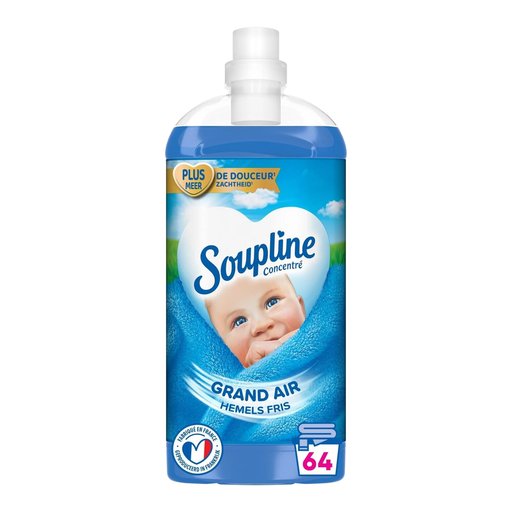
Why this choice suits this profile : Its 1.35 l format and stated 64 washes make it easy to track the yield, including for regular family use.
The number of washes is stated clearly. This makes it possible to compare the cost per use rather than relying solely on the bottle size.
The product page states that it can be used from 25 °C, provides 64 washes and has a formula made with 92% ingredients of natural origin.
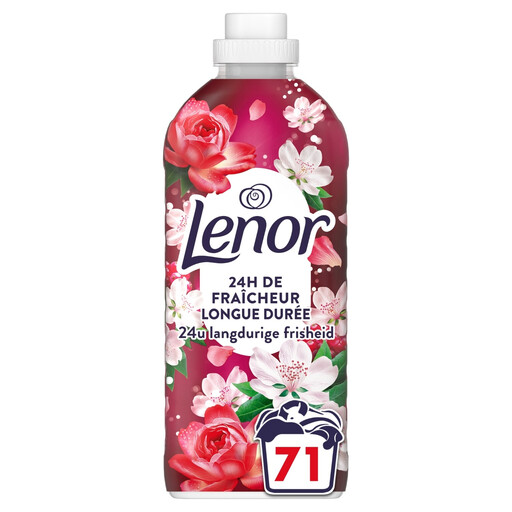
Why this choice suits this profile : This product is aimed at anyone looking for a fragranced fabric softener with floral notes of jasmine and May rose.
The claim of freshness lasting up to 24 hours is presented as a product feature, rather than a guaranteed duration regardless of conditions.
Concentrated 1.491 l format, floral fragrance and stated suitability for both cold water and short cycles.
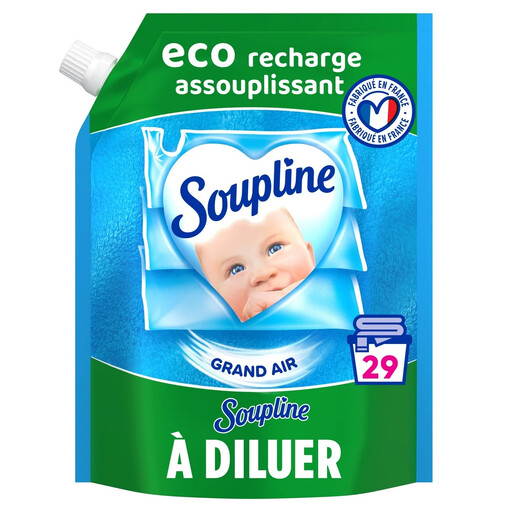
Why this choice suits this profile : This refill format is suitable for households that want to keep and reuse a bottle while avoiding bulky packaging.
The packaging is clearly identified as a refill. There is therefore no risk of mistaking a small container for a formula that is necessarily better value.
600 ml, a refill designed for a reusable bottle, a formula stated to be 92% of natural origin and active from 25 °C.
No, it is optional. It can improve the feel of laundry and reduce static, but some textiles, such as towels and sportswear, may lose some of their absorbency or technical properties. Alternating washes with and without fabric softener may work well for many households.
The main difference is the amount required per cycle. A concentrated fabric softener generally requires a smaller dose, but you should compare the stated number of washes, not just the container size. The term ‘concentrated’ does not mean you can ignore the instructions on the packaging.
Start with a formula clearly identified as hypoallergenic fabric softener or suitable for sensitive skin, then check the ingredients list and warnings. Even a light fragrance may not suit everyone. For a baby’s laundry or that of someone with sensitive skin, use the minimum recommended dose and stop using the product at the first sign of discomfort.