
Livraison le jour même ou le lendemain

Qualité garantie

Débloquez vos offres de bienvenue: Livraison GRATUITE | Jusqu'à -80 % | 30 jours d'essai gratuits à JoyPlus
Téléchargez l'application
Choosing an eyeshadow palette seems simple… until you find that some shades remain untouched, glitter migrates under your eyes, or all the colours end up blending into one indistinguishable hue. Whether for everyday makeup or an evening look, the number of pans alone isn't enough to judge the quality and versatility of an eye palette.
Here are the criteria to consider before making a purchase, along with a selection suited to different profiles.
A large eye makeup palette isn't necessarily the most practical. When it groups together too many similar colours or several shades that are difficult to wear, its use often boils down to just a few eyeshadows. A nude palette of four to seven well-coordinated shades can meet more needs than a much larger assortment.
Make sure it includes at least one light shade to even out the eyelid, a mid-tone colour for the crease, and a darker shade to define the eye. A satin or shimmer eyeshadow provides the perfect touch of light for evening makeup.
A shadow that's very intense on the first swipe isn't necessarily easy to blend. Conversely, a buildable formula allows you to start with a light veil, then gradually intensify the result. For beginners, ease of blending matters just as much as colour payoff.
Matte and iridescent shadows don't always work the same way. Matte powders generally require more effort to create smooth transitions, while shimmer textures are often easier to apply with a finger or a suitable brush.
Claims like "long-lasting", "vegan" or "transfer-proof" should be considered in the context of the information on the packaging and product page. They don't replace the need to check the ingredients list or follow the usage precautions.
For a cosmetic product sold in the European Union, check for the required regulatory information, including the identity of the manufacturer or the responsible person in the EU, the INCI list, the net weight and any warnings. If you have sensitive skin, it's best to do a patch test on a small area before full application. Avoid direct contact with the eye and stop using immediately if irritation occurs.
For everyday use, shades like beige, taupe, brown, rose or copper generally offer plenty of pairing possibilities. A Korean eye palette often focuses on soft gradients and subtle glitter effects, while a glittery, colourful eye palette will be better suited to creative or party looks.
Judge the coherence of the range rather than the total number of shades. Four complementary colours can be enough to create a light makeup look, a smoky eye or a bright touch in the inner corner of the eye.
Matte shadows are used to create transitions and define the crease. Satin finishes give a subtle glow, while iridescent or metallic shadows draw attention to the centre of the eyelid. Loose or highly reflective glitters may need a specific base to adhere better and minimise fallout.
A dual-ended liquid formula, with a matte side and a shimmer side, can be very handy for touch-ups or quick makeup looks. However, it should be applied in small amounts to prevent it from settling into creases.
The claim long-lasting eyeshadow isn't a guarantee that works the same for every eyelid. Longevity also depends on preparation, skin texture, heat and humidity. An eyeshadow primer can improve adhesion and intensify certain shades.
Also remember to compare the net weight. A 14 g palette intended for eyes and cheeks isn't directly comparable to a 4 g quad or a 1.5 g single shadow. If you regularly use just one shade, a single pan can also help reduce waste.
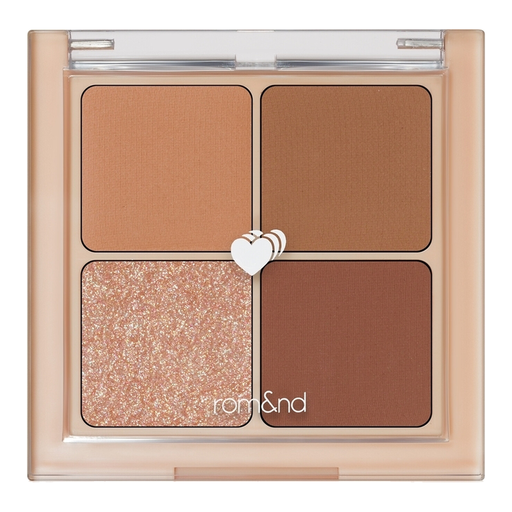
Why this choice suits this profile: Four brown and beige shades, including three mattes and one shimmer, allow you to create your first gradients without being weighed down by colours that are hard to pair.
This compact composition limits unused shades and clearly distinguishes the base, transition, definition and highlight.
6.5 g format, coordinated shades and a mix of matte and shimmer finishes.
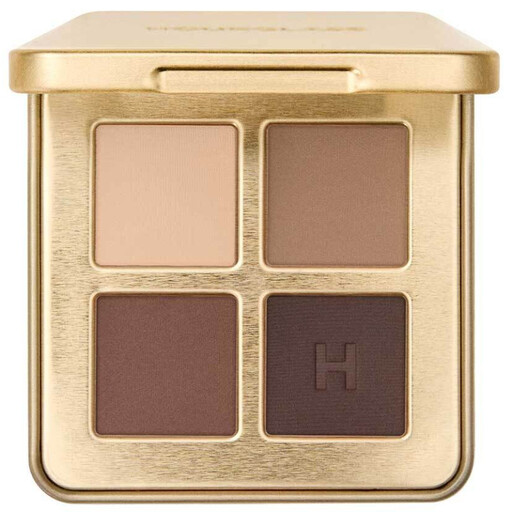
Why this choice suits this profile: This quad focuses on four matte, neutral shades in a compact format that suits a structured routine and a polished makeup look.
The all-matte range avoids paying for shimmer effects you might rarely use and focuses on defining the eye.
Powders advertised as talc-free, four matte shades and a formula listed as vegan on the product page.
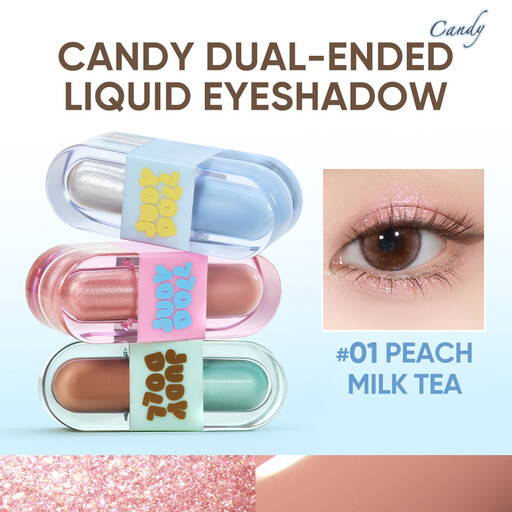
Why this choice suits this profile: The dual-ended design pairs a matte liquid shadow with a shimmer highlighter, perfect for quick touch-ups or layered looks.
The liquid texture allows you to adjust the intensity and separates the base colour from the glittery touch, rather than blending everything together.
3 g format, application with finger or brush and wear claimed up to 12 hours on the product page.
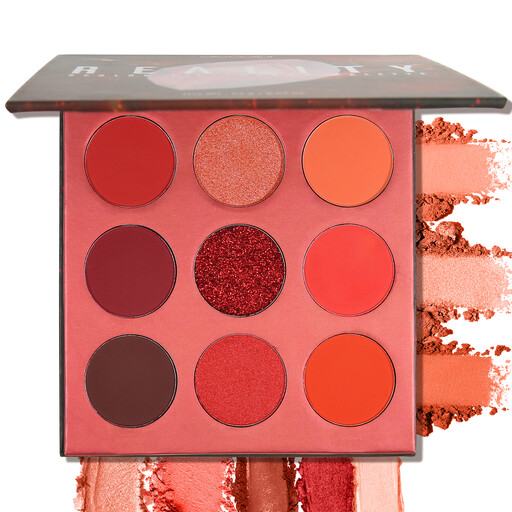
Why this choice suits this profile: This glittery eye palette brings together nine red shades, from light tones to deep pinks, for more expressive creations.
This clearly defined colour family makes it easy to create cohesive looks, while reserving the glitter for occasions that suit it.
Nine shades, a mix of matte and iridescent finishes, with glitter to apply gradually.
We've put together a comprehensive, real-time updated selection of products that meet these exacting criteria, while complying with European safety regulations.
Go for a palette of four to six coordinated shades, with at least two matte shades, a transition colour, a dark shade and a luminous finish. A nude or brown palette will generally be easier to blend and wear every day.
Apply your makeup to a clean, dry eyelid, then use an eyeshadow primer if needed. Pick up a small amount of product, build up the layers gradually and press shimmer shadows onto the eyelid rather than rubbing them.
The shelf life depends on the formula, the symbol indicating the period after opening and the instructions on the packaging. Close the palette after each use, store it away from moisture and heat, and replace it if its smell, texture or appearance changes.