If a dedicated duct for your extractor hood can vent outdoors and a suitable air supply is possible, consider ducted extraction first. Otherwise, look at recirculation and check which filters are compatible and how they need to be maintained. Then choose a style that suits the space available, installation clearances and noise levels in the mode you’ll use. A wall-mounted hood, an integrated model and a hob with a built-in extractor all have different requirements.
Who is this choice for?
People who cook regularly
If you often prepare meals at home, look for an extractor hood with a position and operating mode that suit your hob. The French Agency for Food, Environmental and Occupational Health & Safety (Anses) advises switching on the hood while cooking, particularly to help limit humidity in the home.
People without a suitable outdoor vent
Recirculation lets you use an extractor hood without a duct that vents outdoors. However, check that the model supports this mode and find out which charcoal filters or accessories it requires. Elica points out that not all extractor hoods can be converted.
People with an open-plan or compact kitchen
Cabinet space, how visible the hood is and noise levels can matter just as much as its style. Check the dimensions and installation clearances for the model you’re considering before choosing between a wall-mounted hood, an integrated model, a canopy hood or a venting hob.
Which features should you prioritise?
First, check whether air can be vented outdoors. Then compare the different styles and their features for your chosen installation method.
Ducted extraction
Consider this if: you can install a duct that vents outdoors, follow the instructions and provide a suitable air supply.
What to bear in mind: the duct route and air supply need particular attention if you have an appliance that relies on air from the room for combustion, as Electrolux points out.
Recirculation
Consider this if: it isn’t possible to install a suitable outdoor vent for the hood; filtered air is returned to the kitchen.
What to bear in mind: Elica advises checking that the model is compatible and allowing for maintenance of the relevant charcoal filters.
| What matters |
What to check |
Who is it for? |
| Extracting while you cook |
Width and position in relation to the hob; stated extraction rate in the intended mode. |
If I cook often, I want to capture steam and odours above the hob rather than choosing based on the hood’s appearance alone. Around 36% of consumers would make extraction performance their top priority. |
| Compatibility with your home |
Duct route and outlet, air supply, and any appliances that rely on air from the room for combustion. |
If I’m not sure whether outdoor venting is possible, I need to check whether installation is feasible before choosing a model. This would be the main concern for around 29% of consumers. |
| Fit and noise |
Cabinet dimensions, installation clearances and noise level in the mode you’ll use. |
In an open-plan or compact kitchen, I want to make the most of the available space without overlooking noise at mealtimes. Around 21% of consumers would put this balance first. |
| Filters and maintenance |
Compatible filter reference, what’s included in the kit and the maintenance requirements in the instructions. |
If I choose recirculation, I’d like to know which filters I’ll need to maintain or replace to keep using the hood. Around 14% of consumers would make this their top priority. |
What to avoid before you buy
-
Assuming an existing vent is suitable for ducted extraction
An existing vent doesn’t confirm that the duct is suitable for an extractor hood. Ducted extraction also requires a suitable air supply, particularly if you have an appliance that relies on air from the room for combustion.
Check whether there’s a possible route to the outside, and if in doubt, get the configuration checked in person rather than assuming it’s compatible just because there’s a vent.
An unsuitable installation may mean changing the operating mode or revising your installation plans.
-
Assuming every model can be used in recirculation mode
Elica points out that not all extractor hoods can be converted. The charcoal filters and kits required vary by model reference.
Check the operating mode specified in the instructions, the reference of the compatible filter and which accessories are included with your chosen model.
With recirculation, maintaining the filters and replacing or regenerating them, depending on the type, are all part of using the hood.
-
Comparing figures for different operating modes
An extraction rate stated for ducted mode and a noise level stated for recirculation mode don’t describe the same setup. For example, the figures for the Electrolux LFG615X canopy hood vary depending on the mode.
Compare extraction rates and noise levels for the mode you’ll use, at similar speeds.
-
Choosing a style before measuring the space
A wall-mounted hood, an integrated model and a canopy hood use wall and cabinet space in different ways. The stated width doesn’t replace the minimum clearances specified in the instructions.
Measure the hob, cabinet or wall, and available height, then check the installation requirements for your chosen model.
Brands to consider, depending on the model
Bosch
Bosch offers wall-mounted extractor hoods that support ducted extraction or recirculation, depending on the model, as well as accessories for recirculation.
- Bosch states that its 60 cm DWK65DK60 wall-mounted hood can be used in ducted or recirculation mode.
- For recirculation, check which kit is required for your chosen model. The DWK65DK60’s features don’t apply to other models.
Elica
Elica’s range includes wall-mounted and integrated extractor hoods, as well as hobs with built-in extraction. The available operating mode depends on the product.
- These styles offer different options for your kitchen layout, whether you’re looking at a wall, a cabinet or the hob itself.
- Elica says that not all its extractor hoods can be converted. Check the operating mode, dimensions and filters for each model reference.
Electrolux
Electrolux offers decorative extractor hoods and canopy hoods, among other products. Check the installation requirements for each model.
- Electrolux provides separate figures for ducted extraction and recirculation for its LFG615X canopy hood, making it easier to compare the mode you’re considering.
- Follow the instructions and installation clearances for your chosen model. The LFG615X figures don’t cover the whole range.
Extractor hoods and venting hobs available on Joybuy
These options include wall-mounted extractor hoods to compare based on your preferred width and installation method, as well as an induction hob with a built-in extractor for a fitted kitchen.
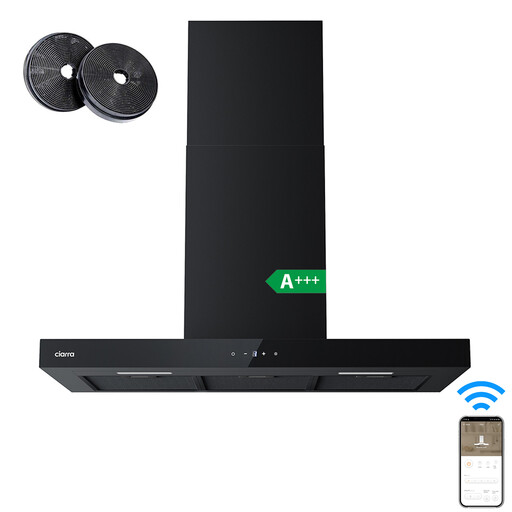 Image unavailable
Ciarra 90 cm wall-mounted extractor hood, Wi-Fi
Worth considering if your hob is against a wall and you’re looking for a 90 cm hood. The title states an extraction rate of 650 m³/h and Wi-Fi touch controls. Check the extraction rate and noise level in the intended mode, as well as the installation clearances. It’s also worth confirming the number of speeds before you buy.
View on Joybuy
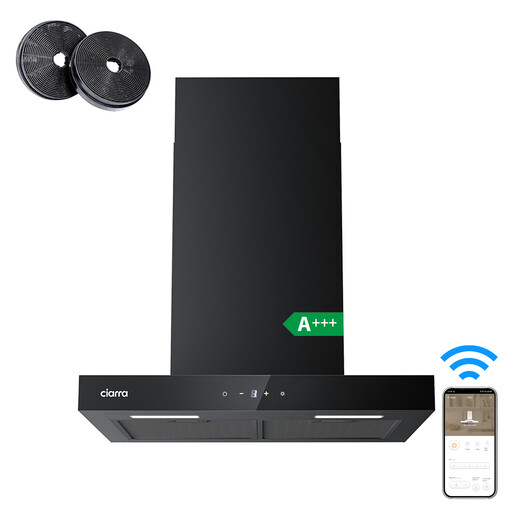 Image unavailable
Ciarra 60 cm wall-mounted extractor hood, Wi-Fi
Consider this for a wall-mounted installation where a width of 60 cm would suit your space. The title states an extraction rate of 650 m³/h and Wi-Fi touch controls. Check the extraction rate and noise level for your chosen mode, the number of speeds and the space needed for installation.
View on Joybuy
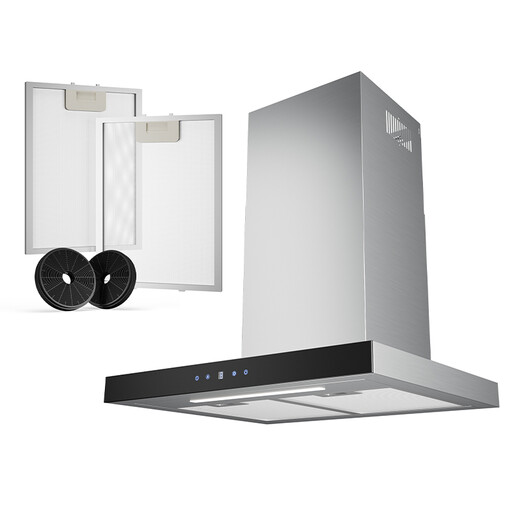 Image unavailable
Heinrich's HDU 7631 IX, 60 cm wall-mounted extractor hood
This wall-mounted hood is worth considering if a width of 60 cm suits your space. The title states an airflow rate of 611 m³/h and ducted and recirculation modes. Before choosing either mode, check the noise figures, installation instructions and reference of the compatible charcoal filters.
View on Joybuy
 Image unavailable
Ciarra CBCS6765B, 60 cm angled wall-mounted extractor hood
Its angled design may suit a hob positioned against a wall. The title states an extraction rate of 580 m³/h, three speeds, and ducted and recirculation modes. Check the performance for your chosen mode, the installation clearances and which filters are actually included.
View on Joybuy
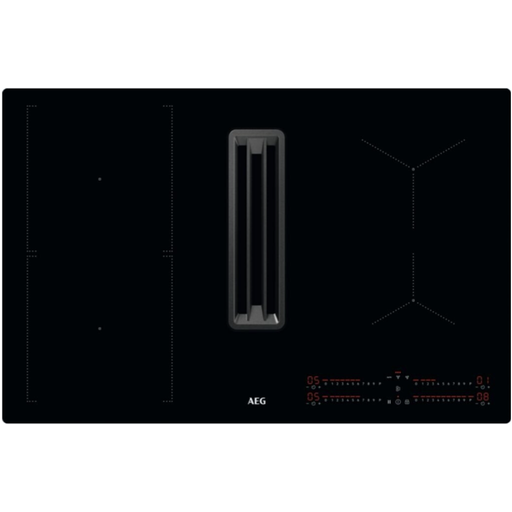 Image unavailable
AEG CCE84543CB, 80 cm venting hob
Worth considering if you’d like to combine an induction hob and extractor in an 80 cm kitchen layout, rather than fitting a hood above the cooking zones. Check the intended ventilation mode, cut-out dimensions, electrical connection and any accessories needed for installation.
View on Joybuy
Frequently asked questions
Should you always choose a ducted extractor hood if you cook often?
No. Consider ducted extraction if it’s possible to install a duct to the outside, fit the hood appropriately and provide the necessary air supply. If not, recirculation is another option, as long as you check that the hood supports this mode and allow for charcoal filter maintenance.
What should you check if you have a stove, fireplace or gas water heater?
Before installing a ducted extractor hood, get the air supply and the setup of any appliances that rely on air from the room checked. Electrolux warns that extraction without enough incoming air can affect how they work and pose a risk of toxic fumes.
When should you maintain the filters in a recirculating extractor hood?
Follow the instructions for the filter compatible with your model. How often it needs attention depends on its design and how it’s used. For the CFC0141563 charcoal filter, which is designed for certain models, Elica recommends a lifespan of 3 to 4 months. Metal grease filters also need regular cleaning.
Is an integrated extractor hood or canopy hood necessarily quieter?
No. The style alone doesn’t tell you how noisy it will be. Compare the stated noise levels at similar speeds and in the mode you’ll use, whether ducted extraction or recirculation. For example, Electrolux publishes different figures for each mode for its LFG615X canopy hood.


