You’re replacing a built-in hob
Measure the cut-out and the space beneath the worktop before choosing an extractor hob. UFC-Que Choisir notes that 70 to 80 cm extractor hobs are better suited to a new installation than to replacing an existing hob.


To choose between a hob with a separate extractor hood and an extractor hob, first check the space available, whether air can be ducted outside and whether your cookware is suitable for induction. An extractor hob frees up the space above the hob, but takes up room beneath the worktop and needs filters when used in recirculation mode. If you rule out induction, a ceramic hob is another cooking option, to be paired with separate ventilation.
Measure the cut-out and the space beneath the worktop before choosing an extractor hob. UFC-Que Choisir notes that 70 to 80 cm extractor hobs are better suited to a new installation than to replacing an existing hob.
An extractor hob frees up this space. However, check how much room it needs in the cabinet below, and choose the extraction mode based on whether ducting outside is actually possible.
Check their bases before choosing induction: UFC-Que Choisir points out that an induction zone won’t switch on if the pan doesn’t have a ferromagnetic base. If you rule out induction, consider a ceramic hob and plan for separate ventilation.
Start with anything that could limit installation, then look at the maintenance required for your chosen ventilation solution.
| Priority | What to check | What you need |
|---|---|---|
| Cookware | Check that every pan you plan to use with induction has a ferromagnetic base. If you rule out this technology, compare other types of hob and remember to consider ventilation. | I’d like to keep my saucepans and frying pans rather than replace my cookware when I get a new hob. |
| Installation | Compare the cut-out, worktop depth and clearance beneath the hob with the model’s installation diagram. If you’re choosing a built-in separate hood, measure the space for it too: UFC-Que Choisir points out that built-in hood dimensions aren’t standardised. | I’m keeping my worktop or cabinets, so I want to know what changes might be needed before I order. |
| Ducting | Check that there’s a suitable route to the outside before choosing this mode. If there’s no usable opening, make sure the extractor hob supports recirculation and that the planned air outlet will work with your cabinet. | I want to deal with cooking fumes and odours without assuming an external duct can be added to my kitchen. |
| Filters and ventilation | For recirculation, check which kit and filters are compatible, then read their care instructions. Make sure you don’t block air outlets or the home’s ventilation system during the work. | I’d like to know what maintenance to expect and avoid disrupting the existing ventilation with a new appliance. |
The extraction unit takes up space beneath the hob, and the existing cut-out or a drawer could get in the way of installation.
Compare the installation diagram for your chosen model with the cut-out, worktop depth, clearance beneath the hob and duct route. Have any necessary connection or drilling work checked by a professional.
Installation may require changes to the worktop, cabinet or ducting, as well as model-specific accessories.
An extractor hob in recirculation mode filters the air it draws in, then releases it back into the room. It doesn’t do the same job as the kitchen’s air outlets and the home’s ventilation system.
Don’t block existing vents or ducts. Before making any changes, ask a professional to assess the installation.
Depending on the model, an odour filter or a specific kit may be needed. Cleaning and replacement requirements vary from one system to another.
Check which accessories are compatible and follow their care instructions; don’t assume your hob needs the same maintenance schedule as a different filter.
Allow space for the accessories and for filter maintenance.
As UFC-Que Choisir points out, a pan without a ferromagnetic base can’t be used on an induction zone.
Check the saucepans and frying pans you want to keep. If you rule out induction, consider a ceramic hob with separate ventilation.
If you choose induction but want to keep using incompatible pans, you’ll need to replace them.
These examples show configurations to check for each individual model; they don’t cover every hob or hood from each brand.
Bosch offers extractor hobs and separate accessories for their installation.
Whirlpool’s range includes an induction extractor hob and a separate hood that can be configured in different ways.
Electrolux offers hobs with integrated induction and extraction.
These hobs are ceramic options if you decide against induction. Whichever one you choose, plan for a separate ventilation solution that suits your kitchen.
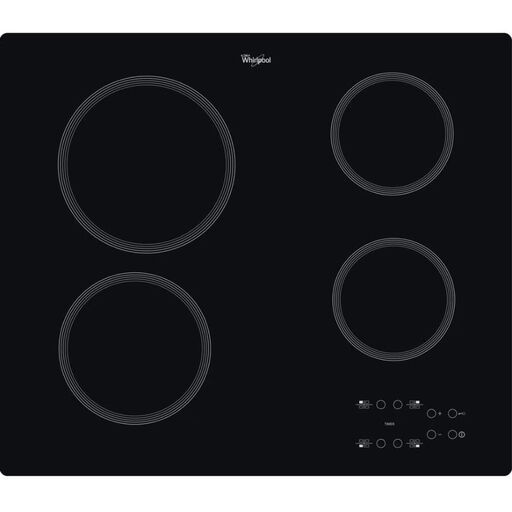 Image unavailable
This ceramic hob is an option if you rule out induction. Before replacing your hob, check the cut-out dimensions and connection requirements; you’ll need to arrange ventilation separately.
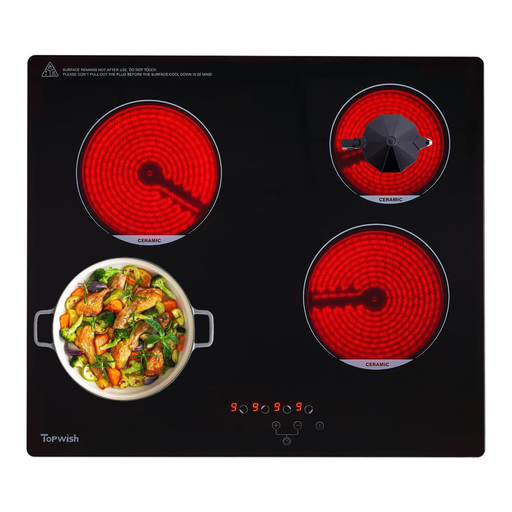 Image unavailable
With touch controls, this hob offers a way to cook without induction. Compare its cut-out dimensions with your worktop and get the electrical specifications confirmed before installation. It requires separate ventilation.
No. It filters the air it draws in, then releases it back into the room. Air outlets and the home’s ventilation system serve a different purpose, so don’t remove them when redesigning your kitchen.
Not necessarily. UFC-Que Choisir points out that 70 to 80 cm extractor hobs are better suited to a new installation than to a replacement. Measure the cut-out, worktop depth and space beneath the hob, then compare them with the installation diagram for your chosen model.
Follow the instructions for the filters and kit you have installed, as maintenance requirements vary by model. For example, Whirlpool recommends replacing its UCF017 universal filter every three months, while Electrolux lists a washable and reusable OdourClean Plus filter for the KCC8344 hob.
No. It avoids having an extraction unit beneath the hob, but you still need to make room for it in the designated cabinet. UFC-Que Choisir notes that built-in hood dimensions aren’t standardised, so check the measurements of the hood and cabinet, as well as the duct route.